


When you see an analytical chemist confidently swagger through the laboratory, you cannot help but ask yourself “is he/she using SPME Arrows?” You say this now, because you know that the SPME Arrow bolsters copious amounts of confidence, which all stems from the increased mechanical robustness and phase volumes, over traditional SPME fibers that is. But let us get a little more detailed about the SPME Arrow size. The following Figure and accompanying Table provides you with everything you need to know:
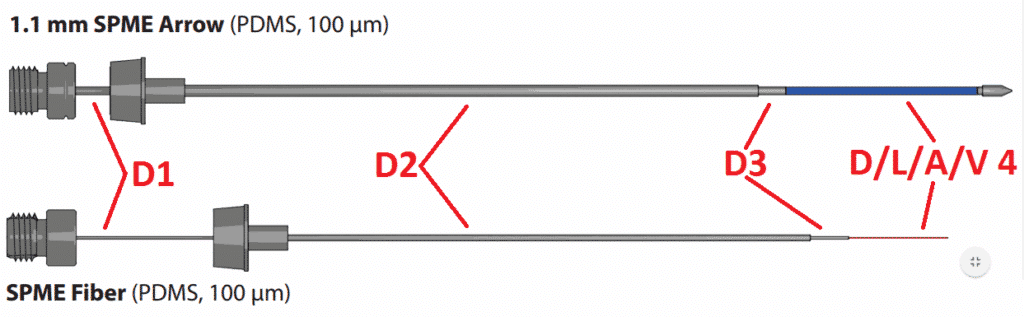
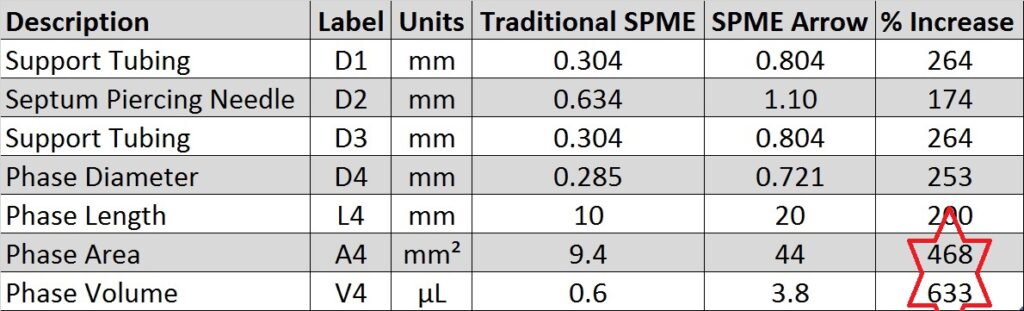
I will not bore you with discussing the nitty-gritty details, so let us talk about what this all really means. For me it means two things. The first is that I can have a lapse in judgement and decide to close my SPME Arrow as if it were a retractable (clicker) ball-point pen by pushing the Arrow tip down on the laboratory bench. It looks like so after:
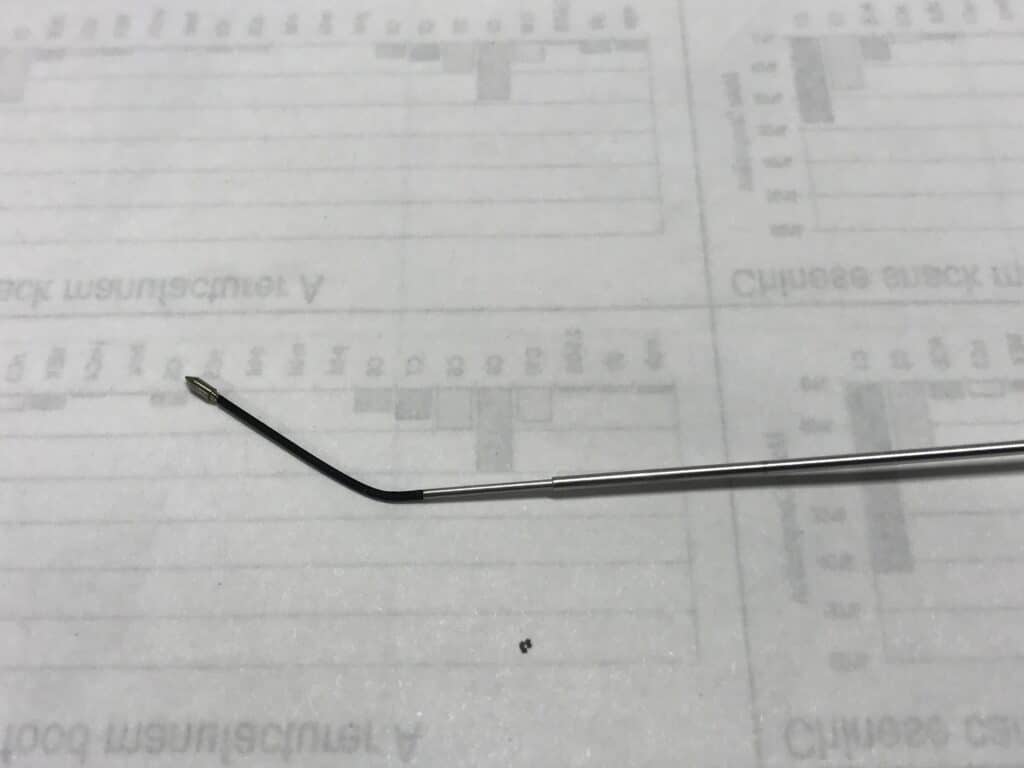
But that is okay, because I always carry my Victorinox SwissTool for moments like this. So, I simply bent the Arrow back like this:
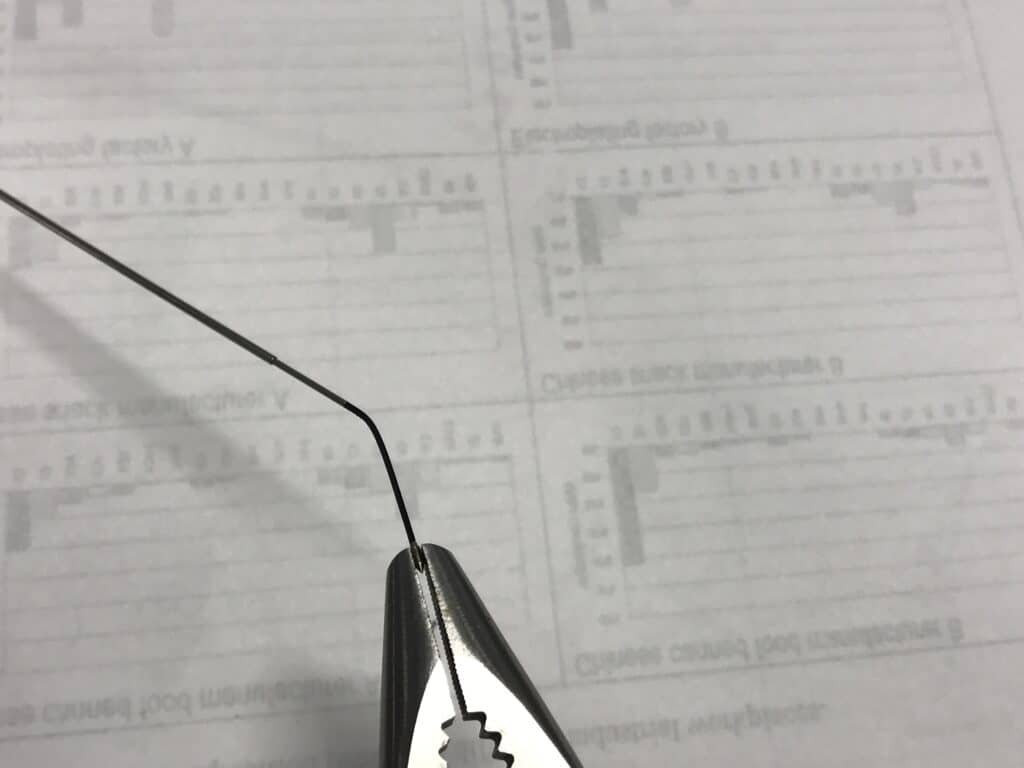
Ultimately my Arrow looked like this when I was done:
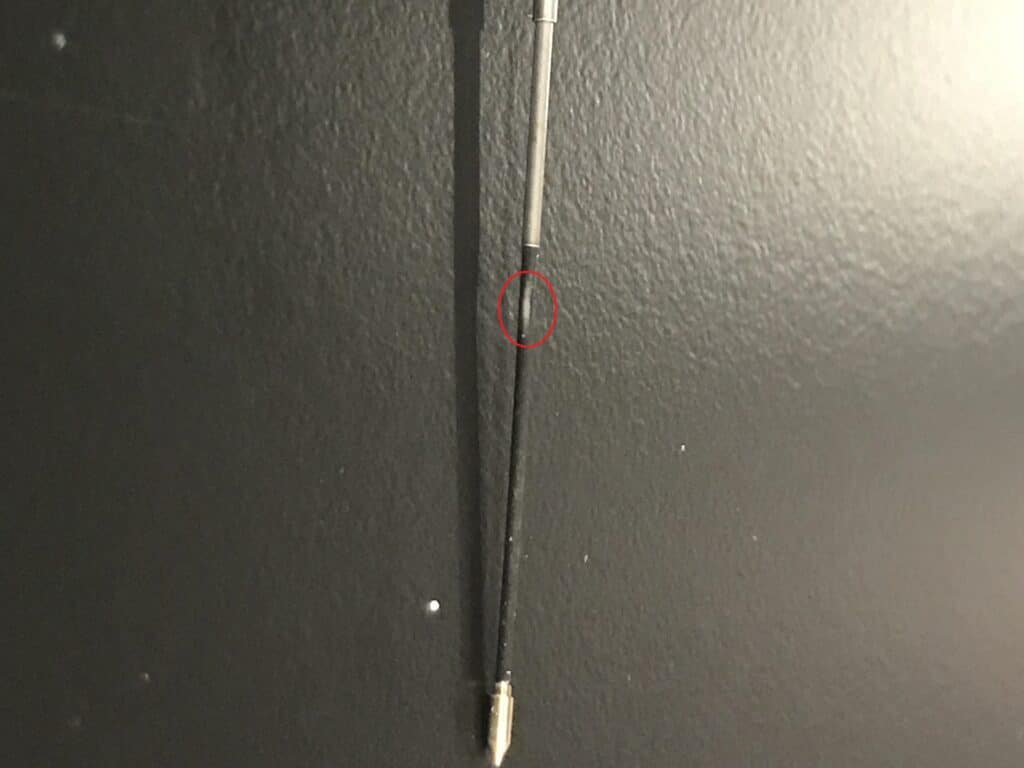
You will notice I circled the one part of the Arrow. This is the back side of the bend, and during the bend and repair the carbon was clearly discolored in this section. But I still took this very Arrow and racked it up and ran it just like I had done before the bend. And I still had close to 100% collection efficiency. Try that with your Traditional SPME… I dare you!!! When you have this kind of SPME mechanical robustness, you cannot help but strut across the lab. Stay tuned for next time where I talk more about SPME Arrow dimensions and how this corresponds to an increase in sensitivity and even more swagger.