



If the use of hydrogen is not an option for speeding up, and we cannot afford to lose any efficiency, the only option we have is to use a shorter column with a smaller diameter.
The efficiency is proportional with decreasing column diameter, meaning that a column with a 2x smaller diameter can be 50% shorter and will deliver exactly the same number of theoretical plates.
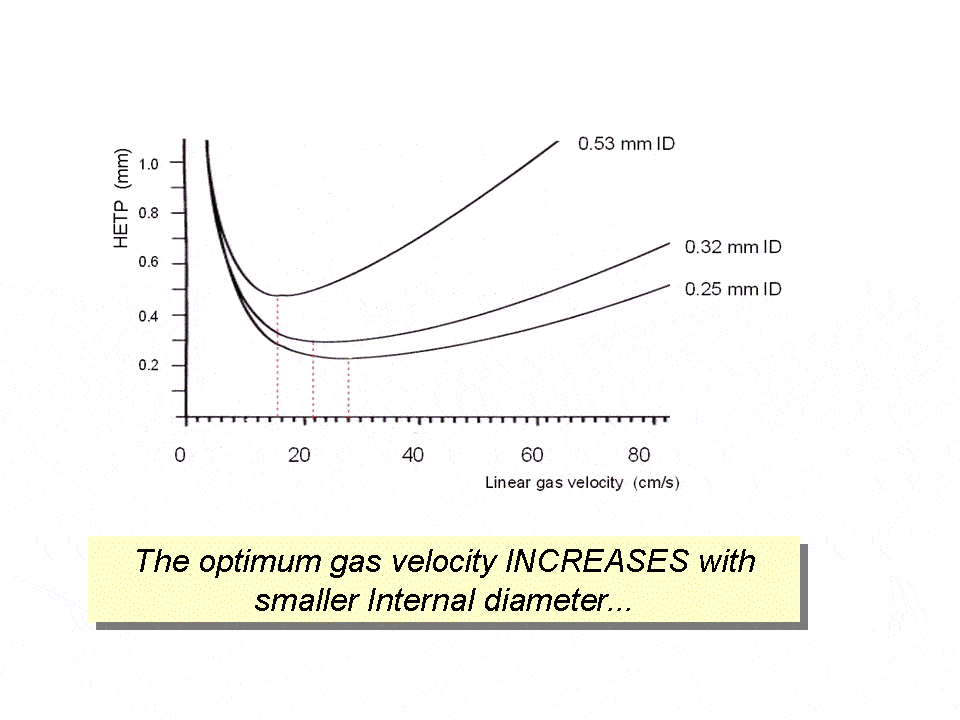
Most widely used are the 0.25 mm and 0.32 mm ID columns. In order to speed up the analysis, more than 25 years ago the 0.1 mm ID columns were developed and commercialized. Compared with a 25 m column, they showed comparable efficiency and analysis time could be up to 3x shorter. This was also due to the higher optimum linear gas velocity for the smaller bore columns (see fig. 1). The generations of GCs, like 6890, were all developed to accommodate the application 0.1 mm columns. Pressures are much higher, gas and oven controls must be more accurate, and also the detector sample rate had to fast enough to measure the narrow peaks produced by the 0.10 mm.
Figure 1: Influence of Column Diameter on Optimal Gas Velocity and HETP: The Smaller the Diameter, the Higher the Optimum Linear Velocity
Practically, the use of 0.10 mm columns did not meet expectations for many as these columns have limitations:
- For compositional analysis where we can use high split ratios, the columns work fine. For trace analysis, where we have to use splitless injection, the story is different. In splitless injections, the liner volume must be transferred on to the column. Column flow in a typical 0.1 is very low; helium flow at a velocity of 30 cm/s at the outlet is 0.3 mL/min. As the gas is under a pressure of 217 kPa at the inlet, it is compressed to a factor 3. That means that the volumetric flow at the inlet is only 0.1 mL/min. To transfer the full liner volume in a splitless injection will take considerable time. This adds to analysis time but also impacts injection volume. Therefore a “pressure pulse” has to be considered.
- Sample capacity is very low. The average 0.1 mm column can be coated with max 0.2-0.4 micrometer film. Injection of 5 ng will often already show signs of peak skewing.
- Using 0.1 mm columns, we have to work with relative high inlet pressures: The risk for septum leaks/discrimination will increase, especially with huge pressure pulses.
- Because columns are very short, for optimal results, very fast temperature programs are required. Ovens do have limitations here as max programming rate is dictated by oven size and design.
- Use of MS is not always possible. Ion traps need a certain minimal flow. Also the eluting peaks can be <0.5 seconds in width. We need enough data collection speed, and newer MS systems will meet this.
- Because of small ID and thin film, the 0.1 mm ID columns need more frequent maintenance as the column inlet will contaminate faster. Guard columns play a bigger role.
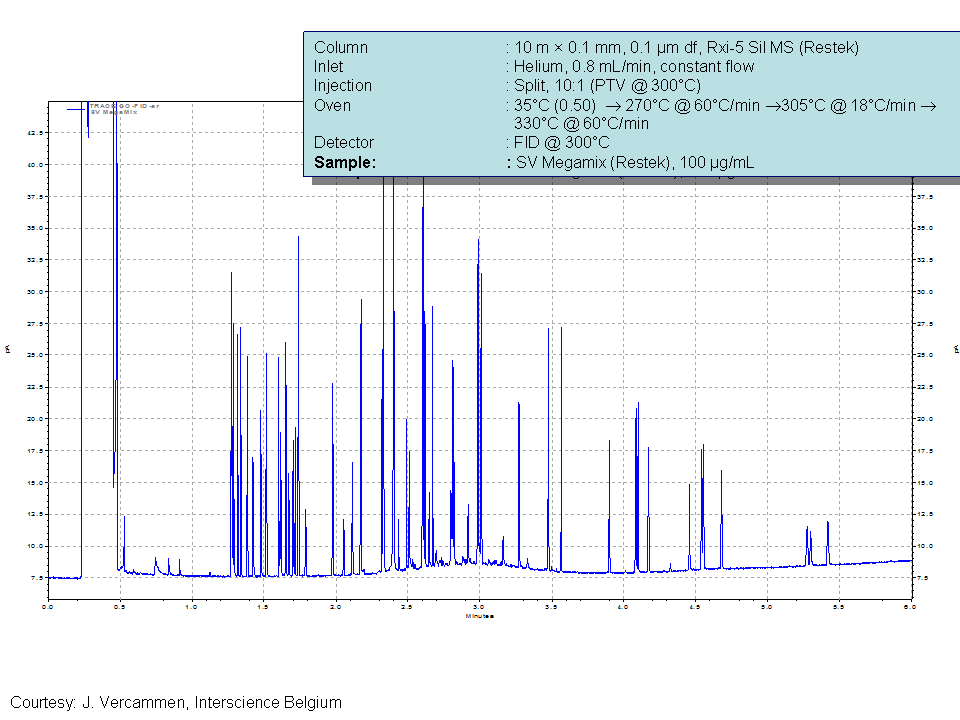
If all conditions are considered properly, one can do fast GC using the 0.1 mm columns. Figure 2 shows a semi-volatiles analysis in only 5.5 minutes using a 10m x 0.1 mm Rxi-5Sil MS column.
Figure 2: Semivolatiles in Less than 5.5 Minutes Using 10 m x 0.1 mm Capillary Column with 0.1 um Rxi-5Sil MS
Many of the issues listed above could be overcome by using columns of 0.15 mm ID. This diameter capillary seems to provide a very practical balance between all common column parameters. The reduction in run time we can achieve using 0.15 mm is a factor 2.
Instead of a 30 m x 0.25 mm, we use a 20 m x 0.15 mm. The efficiency of a 20 m x 0.15 mm is about 10% higher then the 30 m x 0.25 mm. By length only, we will be able to run 66% faster if we would use the same gas velocity. Because we have 10% higher efficiency we will operate the 0.15 mm column at a 30% higher velocity (50 cm/s instead of 36 cm/s). By doing this, we will lose some efficiency, but that’s acceptable as we end up with similar efficiency as the 30 m x 0.25 mm, but with 2x shorter run time.
For this conversion, we ideally must use columns with the same phase ratio (beta). A 0.25 μm film in a 0.25 mm ID column must be replaced by a 0.15 μm film in a 0.15 mm ID column.
As we have seen in the previous blogs, when we change column length and linear gas velocity, we need to set a different temperature program, to get similar peak elution order. (we need the same elution temperatures). Figure 3 shows an easy calculation to do that. This is generic calculation as compressibility of gases is not included. Dr. Leonid Blumberg has done a great job making software for such conversions. (available as freeware from the web).
Figure 3: Formula for Calculation Temp. Program and Iso Times to Get the SAME Elution Temperatures. Valid for Columns Having the SAME Phase Ratio (Beta)
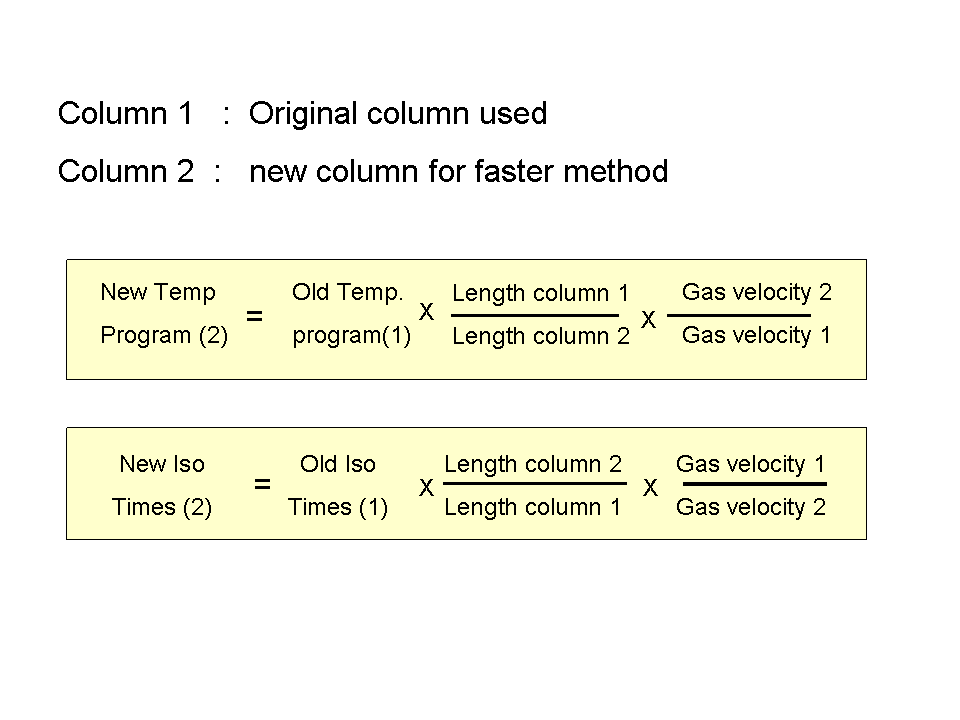
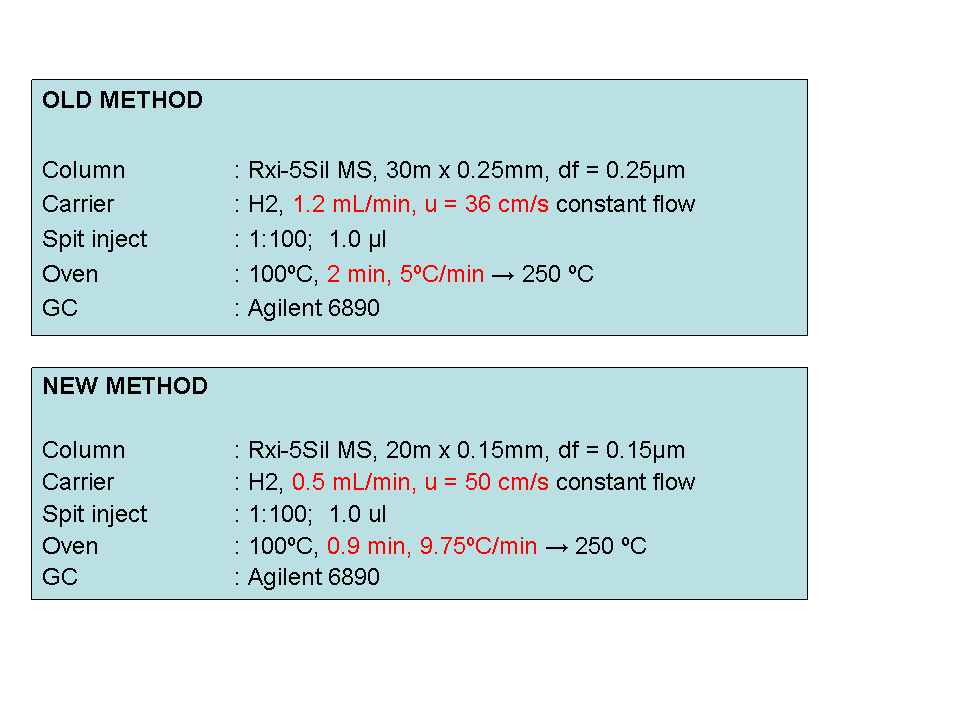
Figure 4 shows a complex perfume analysis where we converted the analysis from a 30 m x 0.25 mm to 20 m x 0.15 mm column. Conditions are listed in figure 5. We get similar peaks sequence, but 2x shorter run time.
Figure 4: Analysis of Perfume” Eternity Moment” on Two Systems with Comparable Efficiency (The 20 m x 0.15 mm column is 2x faster.)
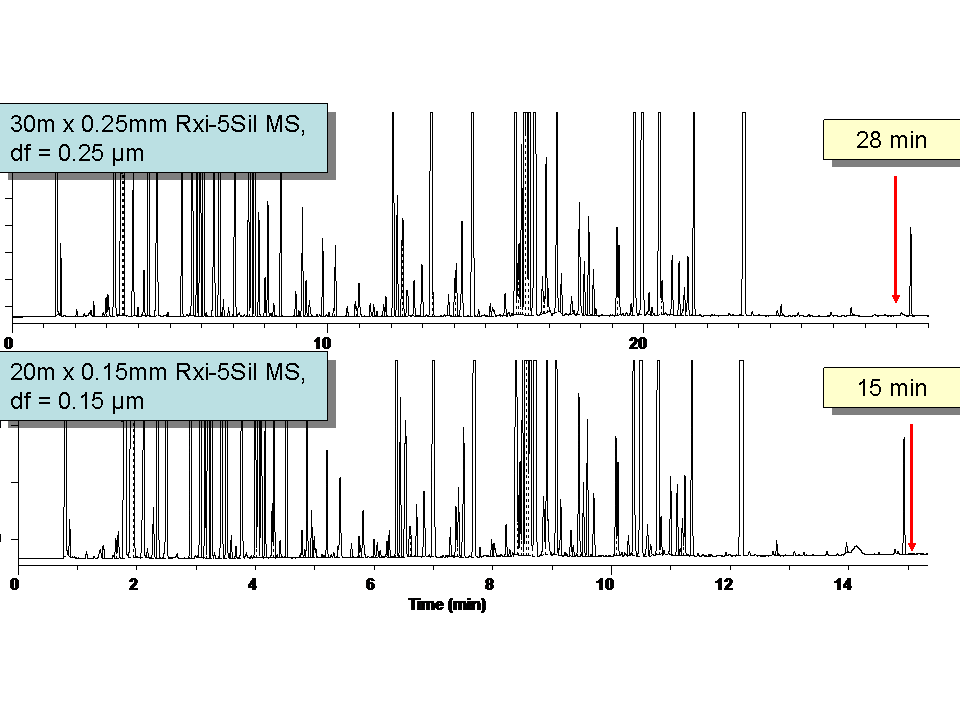
Figure 5: Conditions for 30 m x 0.25 mm and 20 m x 0.15 mm Rxi-5Sil MS Columns (The 0.15 mm column is operated above its optimum linear velocity.)
An interesting detail we also should mention is that the peaks from the 0.15 mm column will be 2x higher. We can use that for sensitivity, but it may be better to inject only 50% of the sample. By doing that, we contaminate our system 2x less, meaning that we can do twice the number of analysis before maintenance.
If the sampler cannot inject 0.5 μl (instead of 1 μl), you may consider diluting the sample 1:1 and still get the benefit.