



In our previous blogs we discussed the use of a shorter column and higher gas velocity to reduce run time. For both approaches we had to adjust our oven temperature program to benefit maximal in time and to get similar peak elution order.
Sometimes we can also change the oven temperature program using the same column and the same carrier gas velocity.
For instance, if we have a chromatogram where we have no peaks of interest in the first section of the chromatogram (after the solvent has eluted), we can safely ramp the oven to a higher temperature and start the programming from there. Also to elute late, non-interesting peaks, we can “bake-out” the column by running it to a higher temperature. In this case the HT phases are especially of interest as they can be used up to 380/400C. ( I would also add a flow program to speed up elution).
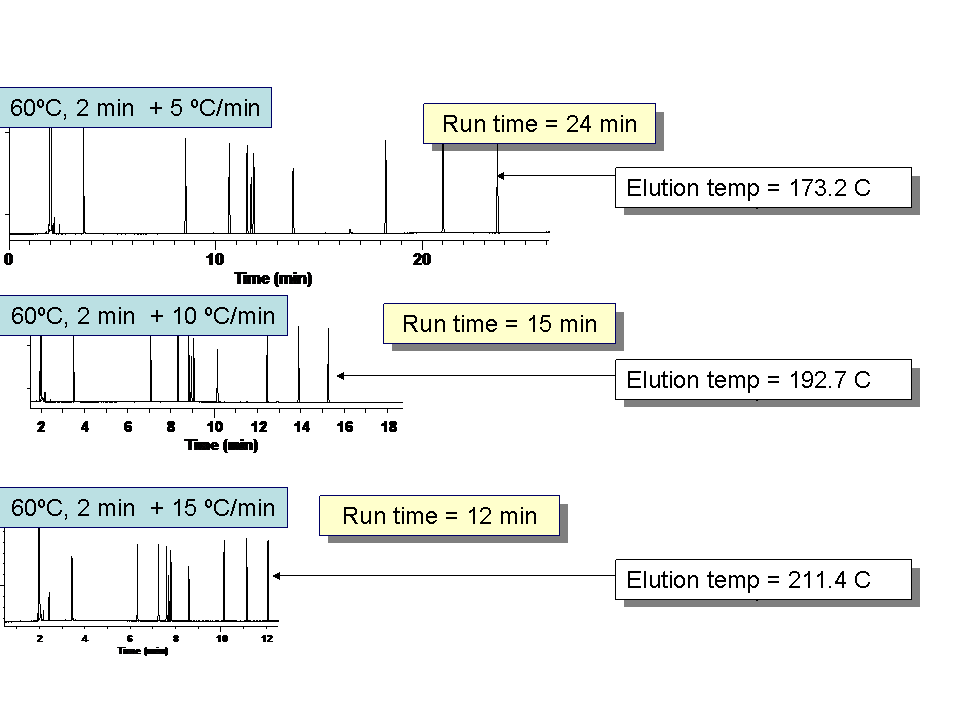
Fig. 1 Enough resolution: using a faster temperature program at the same linear gas velocity; 3x higher temperature program reduces run time a factor 2, but elution temperature increases with more then 30C.
If the temperature program is deliberately changed while keeping other parameters constant, we will get a faster analysis, but also different elution temperatures. Fig.1 shows what happens with the analysis time when I use a program rate of, 5, 10 and 15 C/min. By increasing the program rate 3 times, the elution time reduces a factor 2. The elution temperature for the components is now at least 30 ºC higher. For simple mixtures this is no problem at all, but if there are compounds present with a different polarity, there may be a bigger impact. Example is shown in fig.2 where pesticides are separated on a highly selective phase, the Rtx-Cl-Pesticides.
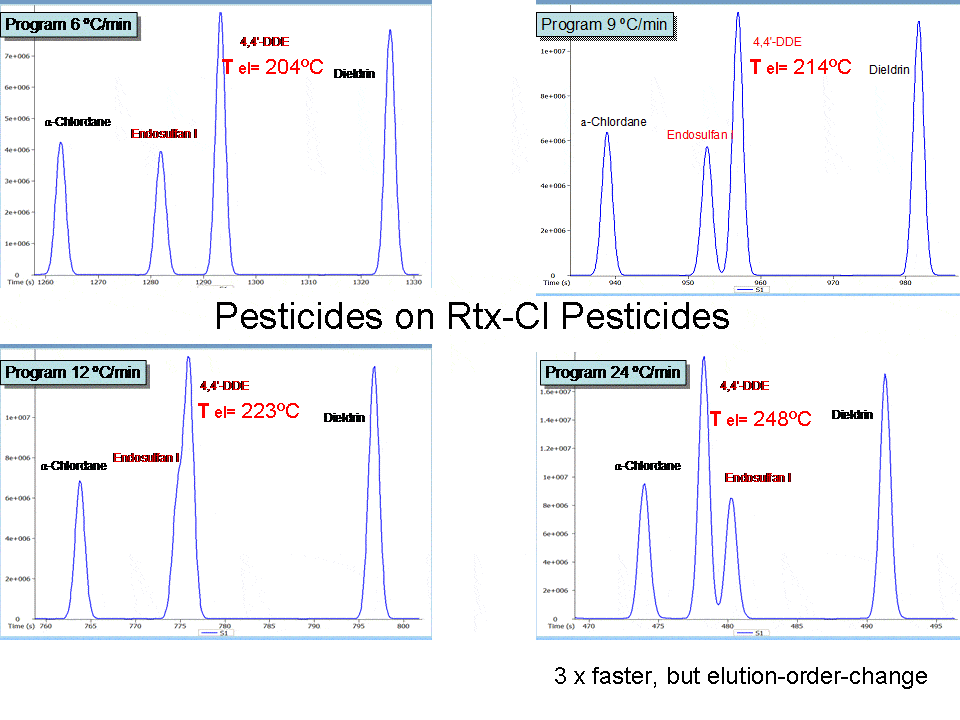
Fig. 2 Peak elution order change of pesticides using different temperature programs. Because elution temperature changes, the peak elution changes.
Because this phase is designed to be very selective for chlorinated pesticides, it is also polarizable by temperature. This means that peak elution can be tuned by using different elution temperatures, which can be achieved using a different flow, a different program rate or a combination.
It’s clear to see that with increased temperature program rate, the elution temperature of 4,4’-DDE is increasing. This makes this component elute relative faster compared to the Endosulfan I. Programming with 12ºC/min makes both peaks co-elute, but using a program of 24ºC/min, the 4,4’-DDE elutes BEFORE the Endosulfan I and we get full base line separations and .. a 3 times shorter run time!
One needs to be aware that sometimes we cannot operate GC oven at very high ramp-rates, simply because the “real” oven temperature cannot keep up with the “set” value. Fig. 3 shows example of 7 repeated analysis of pesticides using 20, 30, 40 and 50 C/min. temperature programs. Conditions are listed in fig. 4.
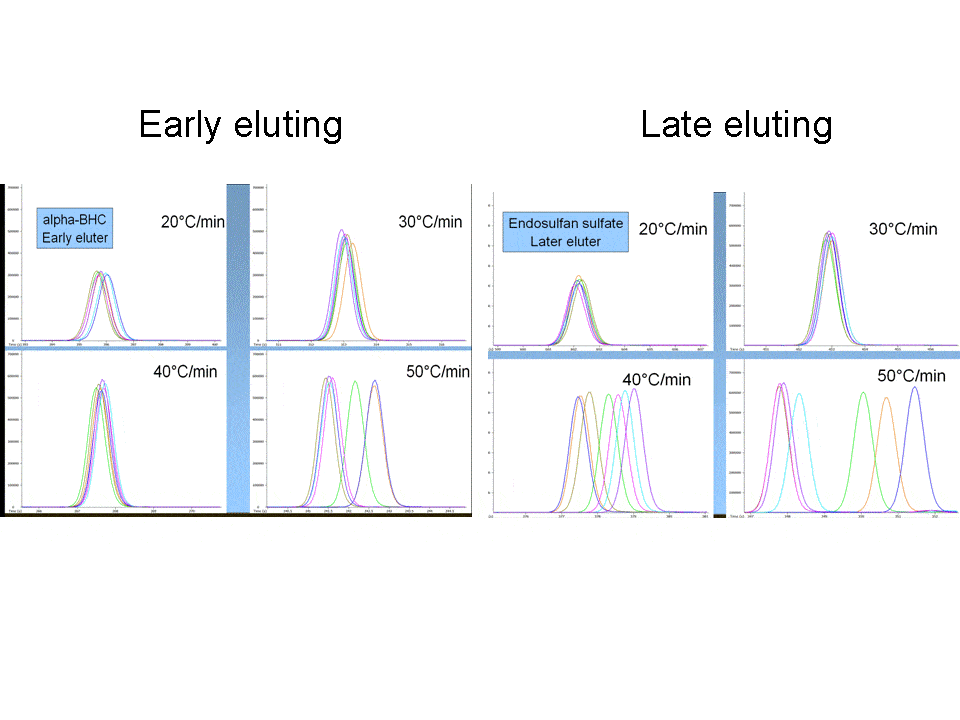
Fig. 3 Impact of programming rate on retention time reproducibility. If “real” oven temperature is not matching the “set” values, retention times will show higher variation. This will be observed especially for late-eluting compounds
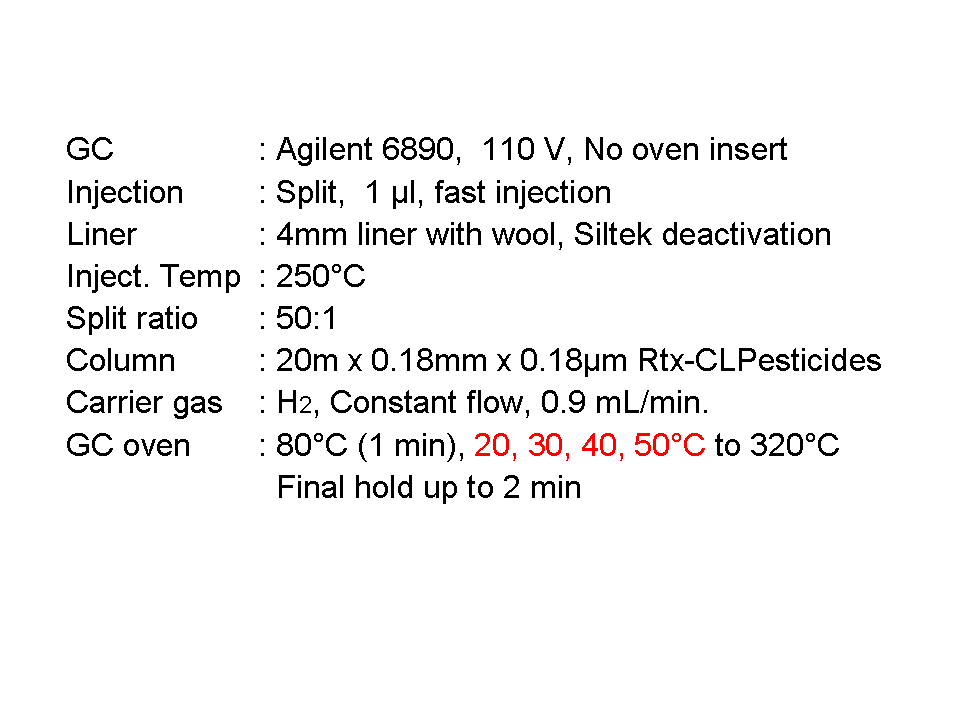
Fig.4 Conditions used for oven performance experiment
For the early eluting pesticides, like alpha BHC, retention times are reproducible up to programs of 40ºC/min. The later eluting pesticides, like endosulfan, are eluting under conditions where the real oven temperature cannot meet the set values. As a result there is more deviation on retention times which allows only a max program speed of 30 ºC/min.
If one wants higher speed programming, you have to look at the specifications of the GC. The 220/240V versions can program faster then the 110V versions; Also for some brands that cannot keep up the high program speed, there are oven-inserts available. By reducing the oven size, the speed of programming can be increased considerably.
Another development that is related to the faster programming, are the direct heating systems, see fig. 5. Columns are heated directly by an electric heating wire(resistor). Some systems use the Restek MXT – metal columns and direct apply a voltage. This allows temperature programs up to 1000ºC/min. to be controlled. Such systems will produce very short run times. Example in Fig.6 shows a simdist application on a Rtx-5 column, which was realized within 2 minutes. Such high temperature programs will have big impact on peak elution order, which always needs to be verified. Eluting peaks will also be very narrow. (0.1-0.2sec is not unusual), for which the detection systems needs to be able to produce enough data points.
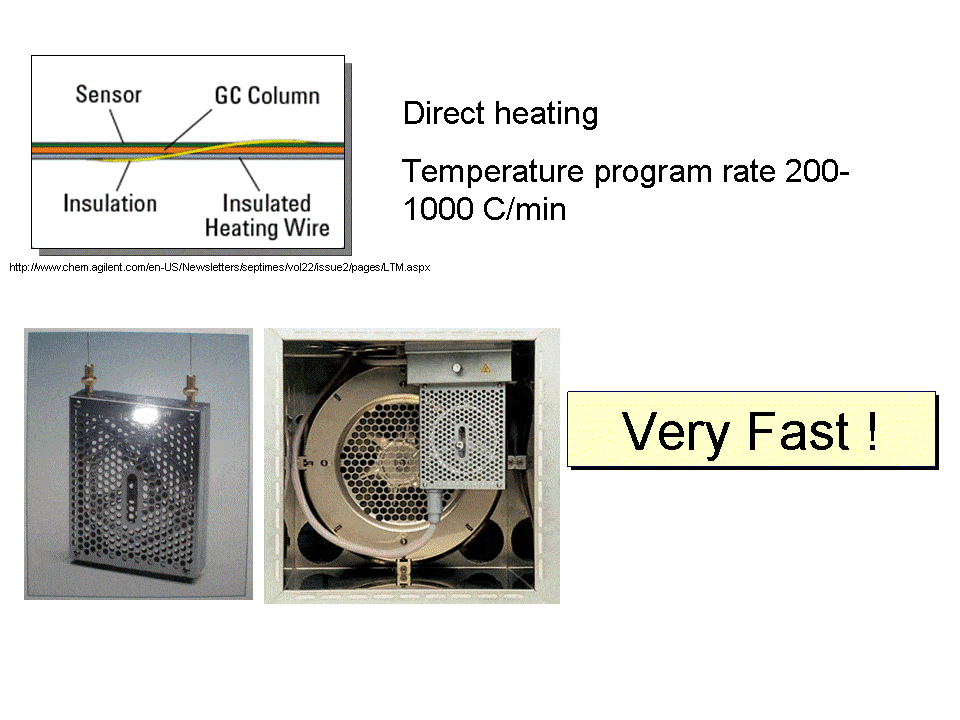
Fig.5 Direct heating modules: shown Interscience (Thermo) Ultra Fast GC
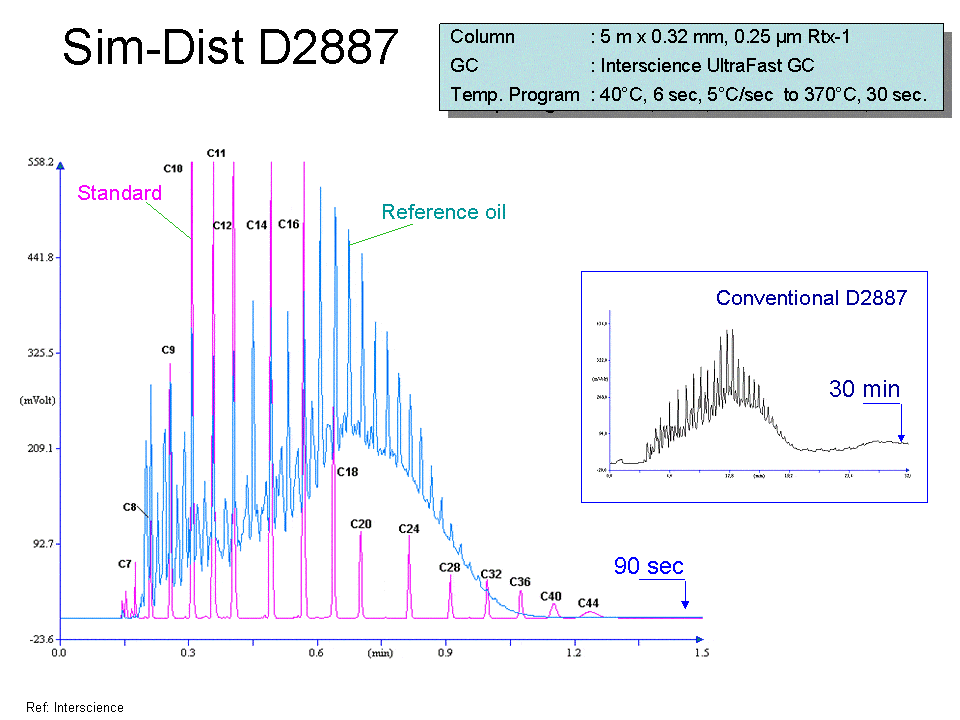
Fig. 6 Direct heating allows very short run times. Conventional methods can be 15x faster
Direct heating systems are good for simple applications where the sample matrix is known. Maintenance can be more challenging as one cannot cut a piece of the analytical column, so one needs to replace the whole unit or work with guard column make extra couplings.