


AOAC




Featured Solutions
Cannabis
Restek’s Analytical Solutions for Hemp & Cannabis Analysis
LC & GC columns, sample prep, standards, chromatograms, and more.→
Accurately Analyze Metal-Sensitive Compounds with Inert Hardware
Maximize Performance with Inert LC Columns and Guards
Struggling with poor peak shape or low sensitivity? Inert LC columns may be the solution.→

Comprehensive Mycotoxin Analysis in Food by LC-MS/MS
Learn about this method for simultaneous analysis of 37 regulated and emerging mycotoxins.→
Convenient & Comprehensive Multiresidue Pesticide Standard Kits
203 and 204-compound kits for GC and LC.→
An Introduction to Low-Pressure GC-MS (LPGC-MS)
Leverage your MS vacuum to significantly speed up analyses.→
Comparison of Conventional vs. LPGC-MS Pesticides Analysis→
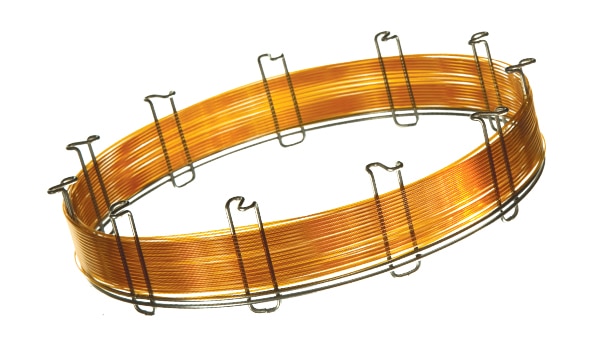
Faster Nitrosamines Analysis with LPGC-MS→
Browse Our Full LPGC Resource Collection→
PFAS
Your Partner in PFAS Analysis
Access app notes, webinars, chromatograms, and more on our dedicated PFAS portal.→
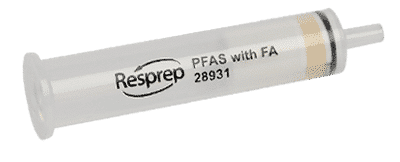
Streamline Your Sample Prep with Dual-Bed Resprep PFAS Cartridges
A convenient, two-in-one solution designed specifically for PFAS analysis.→
Lab Supplies for PFAS Analysis
A method-based reference to lab supplies for PFAS testing.→
Advanced Analytical Solutions for PFAS
Browse columns, reference standards, sample prep products, and more.→
Phthalates and More
Analyzing Phthalates Using an Inert LC Column
See how LC-MS/MS method development was explored for phthalic acid and six widely used phthalates.→

Eliminate Hardware Effects from Your LC Column
See how Restek’s Inert LC columns can help ensure your chromatography is the best it can be.→
Increasing Sensitivity and Mitigating Contaminants When Analyzing Phthalates in Food Packaging and Toys→
Presentations
Breakfast Seminar
Streamlining Method Development for PFAS and Pesticides Using a Virtual Tool
Tuesday, August 26, 7:30-8:00 a.m. | Location TBD
Presenter: Melinda Urich
View Details
Developing methods can be time-consuming and costly, particularly when addressing complex, multiclass panels. Many factors impact method performance, from instrument/system effects and temperature to column selection. Employing the use of virtual tools allows users to customize parameters, model separations, and subsequently transfer them to the instrument for analysis. This approach provides rapid method development, improves resource efficiency, and promotes a greener solution to method development. Attendees will learn how to use virtual tools to streamline method development for compound classes, such as PFAS and pesticides.
Chaired Session
Cannabis Pesticides Testing: Analytical Challenges and Addressing Evolving Regulatory Gaps in Consumer Safety
Tuesday, August 26, 3:00-4:30 p.m. | Town & Country D
Chairs: Dan DeLurio1, Erik Paulson2
1. Restek Corporation, 2. Infinite Chemical Analysis Labs
View Details
Since the establishment of state cannabis programs, contaminants testing of cannabis and its derivatives has become a typical regulatory requirement intended to protect patients and consumers. Pesticide residues particularly, a common contaminant, may pose significant and often undetermined risks to cannabis users who regularly ingest or inhale a wide variety of products available on the market. Currently, pesticide testing regulations vary widely from state to state, with discrepancies in the lists of pesticides tested and the number of targets analyzed. This inconsistency has raised concerns among industry experts about the adequacy of pesticide testing scope. In addition to state-to-state variation, there is also growing concern that some states’ pesticide regulations may fail to address the full range of risks associated with cannabis products on the market. Without an evolving and comprehensive testing framework, many consumers may unknowingly be exposed to harmful pesticide residues. This session will explore these challenges within the current testing and regulatory landscape by presenting real-world pesticide data that characterizes ongoing risks to public health and key industry stakeholders. Attendees will gain insight into emerging analytical challenges related to expanding pesticide testing in complex cannabis matrices as well as methods and techniques to overcome these laboratory hurdles.
Orals
Improving Detection for Metal-Sensitive Pesticides and Mycotoxins in Cannabis Flower
Tuesday, August 26, 3:00-4:30 p.m. | Town & Country D
Presenter: Melinda Urich
View Details
Similar to other crops, cannabis flower can contain contaminants that are harmful to humans, two of the most common being pesticides and mycotoxins. Low limits of detection are necessary for this type of contaminant testing. However, achieving limits of parts per billion can be challenging due to the complexities of cannabis as well as certain analyte properties. These analyte properties include poor ionization and chelation to metal surfaces. Recently, the commercial availability of inert columns has increased in order to address this issue with metal-sensitive compounds seen in traditional stainless-steel column hardware. In this work, a selection of pesticides and mycotoxins were chosen for evaluation with attention to both traditionally good and poor performing analytes. Two separate LC methods, one for pesticides and one for mycotoxins, were developed and used to compare traditional stainless steel to inert LC hardware for peak shape and sensitivity. Using >15% (w/w) THC content cannabis, samples were prepared using a simple dilute-and-shoot method. In-matrix calibration curves were prepared by post-spiking cannabis extracts with target analytes at various concentrations. Accuracy and precision were assessed. Improvement was notable in both peak shape and peak height when comparing out-of-the-box performance. Results show inert hardware provides a robust analytical solution to improve sensitivity for pesticides and mycotoxins.
Integrating Ultrashort-Chain Compounds into Comprehensive PFAS Analysis in Ready-to-Feed Liquid Milk by LC-MS/MS
Tuesday, August 26, 3:00-4:30 p.m. | Town & Country C
Presenter: Shun-Hsin Liang
View Details
Ultrashort-chain (USC) per- and polyfluoroalkyl substances (PFAS) are highly polar compounds with carbon chains shorter than C4. Their widespread occurrence in aquatic environments has raised growing concerns about potential contamination in food products, particularly ready-to-feed liquid milk. To fully assess PFAS contamination, it is essential to include USC compounds in PFAS analysis of milk samples. This study introduces a simple and reliable workflow for the simultaneous analysis of C1 to C14 perfluoroalkyl carboxylic and sulfonic acids, along with other PFAS classes, in various liquid milk matrices. The chromatographic analysis was performed using an inert-coated, polar-embedded reversed-phase LC column. Method verification was conducted using three different milk types (dairy milk, almond milk, and infant formula) to demonstrate the workflow’s applicability for measuring 41 PFAS in diverse milk samples. This streamlined procedure was evaluated by accuracy and precision analysis at five fortification levels, ranging from 0.01 to 0.25 μg/kg, equivalent to 10 to 250 ng/L in the final sample solution for LC-MS/MS analysis. Eighteen isotopes, serving as quantitative internal standards, were added to the sample before extraction to ensure accurate quantification by correcting variations in sample preparation and matrix effect. All analytes exhibited recovery values within 30% of the nominal concentration across all fortification levels. Satisfactory method precision was demonstrated with %RSD values below 15%. The established workflow was then applied to the analysis of additional milk samples collected from various grocery stores, providing a comprehensive profile of PFAS contamination across a diverse range of milk matrices.
Posters
Comprehensive Review of Low-Pressure Gas Chromatography Applications
Wednesday, August 27 | W012
Author: Dörte Lohrberg
View Details
Low-Pressure GC (LPGC technique) has been successfully used for the analysis of pesticide residues; monochloropropane diols (MCPDs); phthalates; arylamines; nitrosamines; and alkylamines, as examples. In addition to these applications, a variety of different stationary phases have been evaluated to include “5-type,” high phenyl-type, trifluoropropyl, and cyano-phenyl columns. Applications have demonstrated that using both 0.53 mm internal diameter columns, as well as 0.32 mm internal diameter columns, can be successfully used for many different applications. The use of Concurrent Solvent Recondensation Large Volume splitless injection (CSR-LVSI) has been used with LPGC injecting up to 25 μL with significant increases in sensitivity and minimal peak distortion. The LPGC techniques provided reductions in run times (up to 3.3x faster runs) and helium consumption reduction (up to 81% less helium used), while keeping an acceptable resolution. This presentation will review applications, use of different column dimensions and phases, and will review the ability to inject large volumes to increase sensitivity.
Homogenization, Extraction, Stability and Testing by LC-UV of Psychoactive Alkaloids Found in Psychedelic Mushrooms
Wednesday, August 27 | W048
Author: Melinda Urich
View Details
Microdosing is the practice of regularly administering very low doses of a psychoactive substance. Recent studies have indicated microdosing shows promise for the management and treatment of anxiety, depression, and other mental health disorders. Emerging research has been focusing on microdosing psilocin and psilocybin, both of which are frequently found in psychedelic mushrooms. With recent legalization of psilocybin and psilocin in certain areas of the United States, there is a growing interest among research and production labs to understand more about the stability and testing of these compounds. This study examines four distinct strains of psilocybe mushrooms, focusing on the processes of homogenization, extraction efficiency, and extract stability. Primary analysis was performed using LC-UV. A total of seven psychoactive alkaloids commonly found in psychedelic mushrooms were monitored using a simple gradient on a Force Inert Biphenyl column with a total cycle time of eight minutes.