



Content previously published in Petro Industry News
Separation of light hydrocarbons and volatile compounds can be done very effectively with adsorption chromatography. Using highly retentive adsorbents in packed columns, unique separations can be obtained at higher temperatures. Additionally, adsorbents are difficult to destroy, resulting in long column lifetimes. Most analysts still employ traditional packed columns for light hydrocarbon analysis, but many adsorbents are also available in micropacked and porous layer open tubular (PLOT) column formats. Recent advances in PLOT column technology indicate that they are a better option when greater efficiency is required, while packed columns still are preferred when higher sample loadability is needed. While both traditional packed and PLOT columns can be used effectively, micropacked columns offer intermediate performance and are a good alternative when both efficiency and sample loadability are desired.
Advantages of Micropacked Columns
Packed columns are made with a wide variety of adsorbent materials, including alumina, molecular sieves, and porous polymers. Columns packed with these adsorbents offer good selectivity and retention for volatile compounds, but they are lower in efficiency than capillary columns. Lower efficiency can lead to broad peaks and less resolution, which can make it difficult to accurately quantify individual analytes in complex mixtures. Many of these adsorbents can also be coated in capillary tubing creating PLOT columns. In PLOT columns, the adsorbent is not packed into the column; instead, it is deposited as a 5–50 μm layer on the internal capillary surface. Since less adsorbent material is used, PLOT columns offer much higher efficiency and better separations can be obtained. However, if greater sample loadability is needed, packed columns are preferred as they are less likely to be overloaded by concentrated samples. Micropacked columns present intermediate characteristics and are a good option for separating components in light hydrocarbon streams.
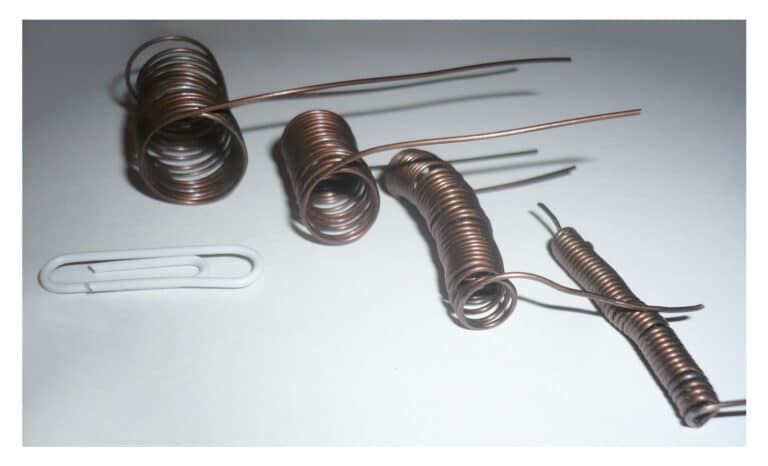
In addition to their balance of efficiency and capacity, micropacked columns are relatively inexpensive, very durable, and easy to install and operate. Micropacked columns from Restek are extremely inert as they are packed in Siltek treated stainless steel tubing, which can be coiled in extremely small diameters to fit small ovens (Figure 1). In addition, Siltek-treated, braided-wire end plugs keep packing intact, even under intense pressure surges during valve switching. Standard Restek micropacked columns are 1 meter or 2 meters long and 0.75 mm or 1.00 mm inner diameter (ID). Restek has also recently developed unique 0.53 mm ID micropacked columns, which are available with a variety of adsorbent packings.
Micropacked Columns for Petrochemical Applications
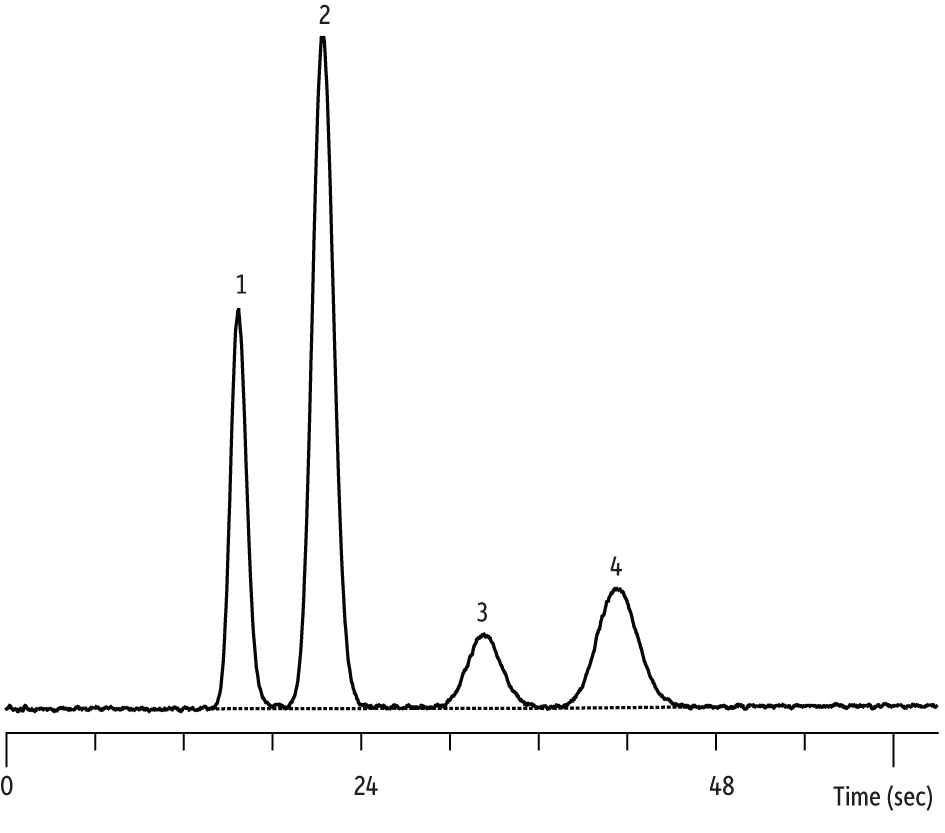
Molecular sieves and porous polymers are among the most useful adsorbents for petrochemical analyses. For example, permanent gases can be separated to baseline in less than one minute using a 1 m x 0.53 mm MXT-Molsieve 5A column (Figure 2). The Molsieve 5A adsorbent is highly retentive and selective for gases, so good separation is obtained very quickly and, if greater resolution is desired, this can easily be accomplished by lowering the oven temperature. For example, since the position of carbon monoxide is temperature dependent, it can be moved further away from methane when a lower oven temperature (e.g., 80 °C) is used. Note that 0.53 mm ID MXT micropacked columns can be installed in any standard capillary instrument using standard 0.8 mm ID ferrules. These columns are operated with flows of 2-5 mL/min and can be used with split injection systems, providing very small injection band broadening.
GC_PC1234
Peaks
| Peaks | |
|---|---|
| 1. | Oxygen |
| 2. | Nitrogen |
| 3. | Methane |
| 4. | Carbon monoxide |
Conditions
| Column | 80/100 mesh, MXT-Molsieve 5A (custom), 1 m, 0.53 mm ID |
|---|---|
| Standard/Sample | Permanent gases |
| Conc.: | 2-5% in helium |
| Injection | |
| Inj. Vol.: | 15 µL split (split ratio 30:1) |
| Oven | |
| Oven Temp.: | 120 °C |
| Carrier Gas | He, constant pressure (26 psi, 179.3 kPa) |
| Detector | µ-TCD |
|---|
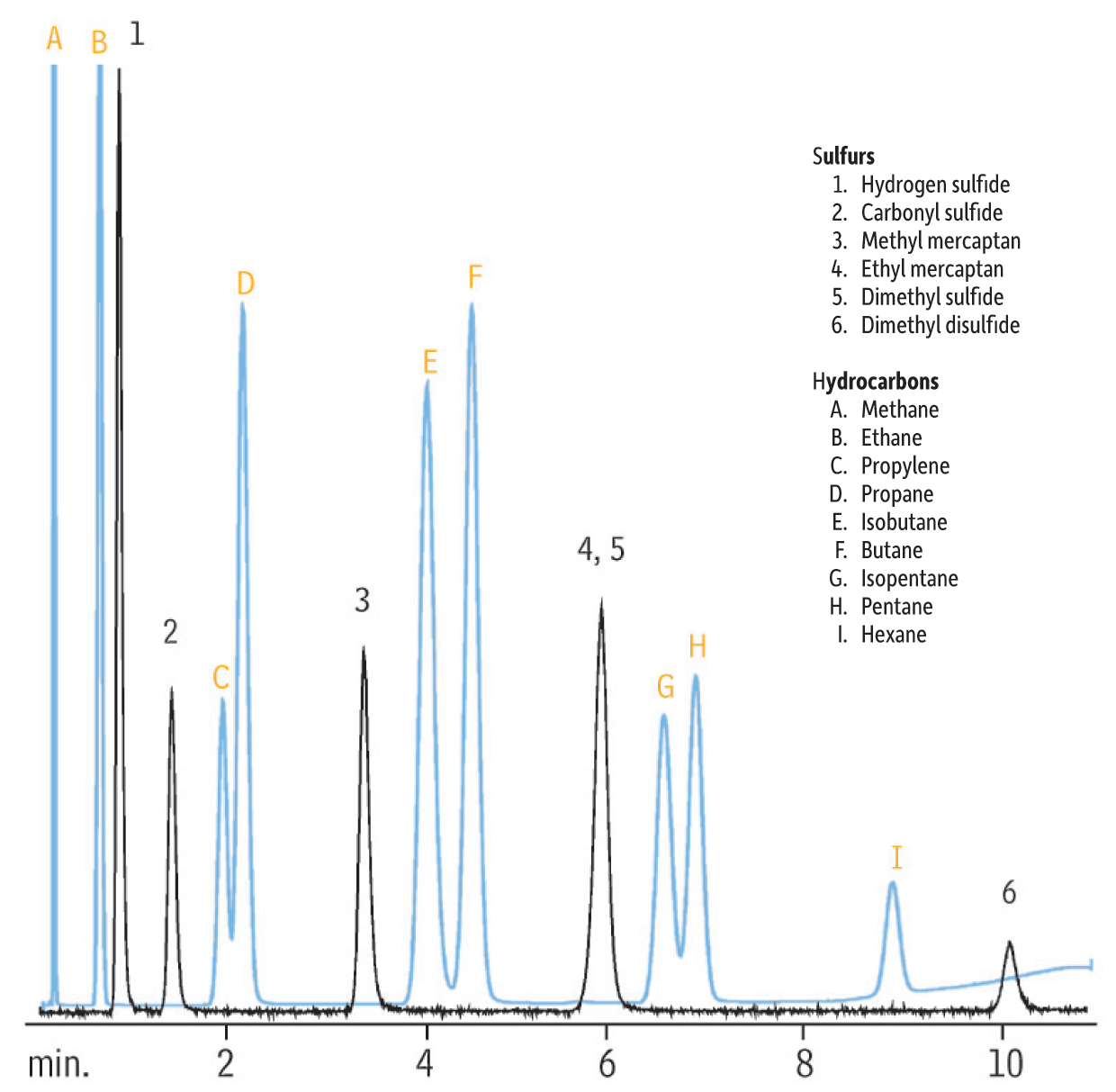
In addition to molecular sieves, porous polymer adsorbents are also available in a micropacked format. Of the many available types of packing, Rt-XLSulfur and HayeSep Q adsorbents are among the most interesting for petrochemical testing. The Rt-XLSulfur is a unique packing designed for ppb level sulfur analysis. This porous polymer phase features a unique surface modification, which results in excellent peak symmetry and thermal stability up to 300 °C. The overlaid sulfur and hydrocarbon chromatograms in Figure 3 show a highly selective separation of light hydrocarbons and sulfur compounds. This is important because even though sulfur-specific detectors are generally used, when high levels of hydrocarbons elute through the detector simultaneously with sulfur compounds, the signal for sulfur is quenched and area counts are nonlinear. Column inertness is also very important as reactive sulfur compounds, such as hydrogen sulfide and methyl mercaptan, are easily adsorbed by undeactivated surfaces, which can result in inaccurate quantification of these catalyst-damaging compounds. Rt-XLSulfur micropacked columns provide the retention and inertness required for reliable analysis of active sulfur compounds in hydrocarbon streams.
GC_PC00436
Conditions
| Column | Rt-XLSulfur, Siltek, 1 m, 0.95 mm OD, 0.75 mm ID (cat.# 19806) |
|---|---|
| Standard/Sample | |
| Conc.: | 50 ppb each |
| Injection | packed not on-column |
| Oven | |
| Oven Temp.: | 60 °C to 230 °C at 15 °C/min |
| Carrier Gas | He, constant flow |
| Flow Rate: | 9 mL/min |
| Detector | SCD/FID |
|---|---|
| Acknowledgement | Sulfur standards courtesy of DCG Partnership 1 Ltd., Pearland, TX. |
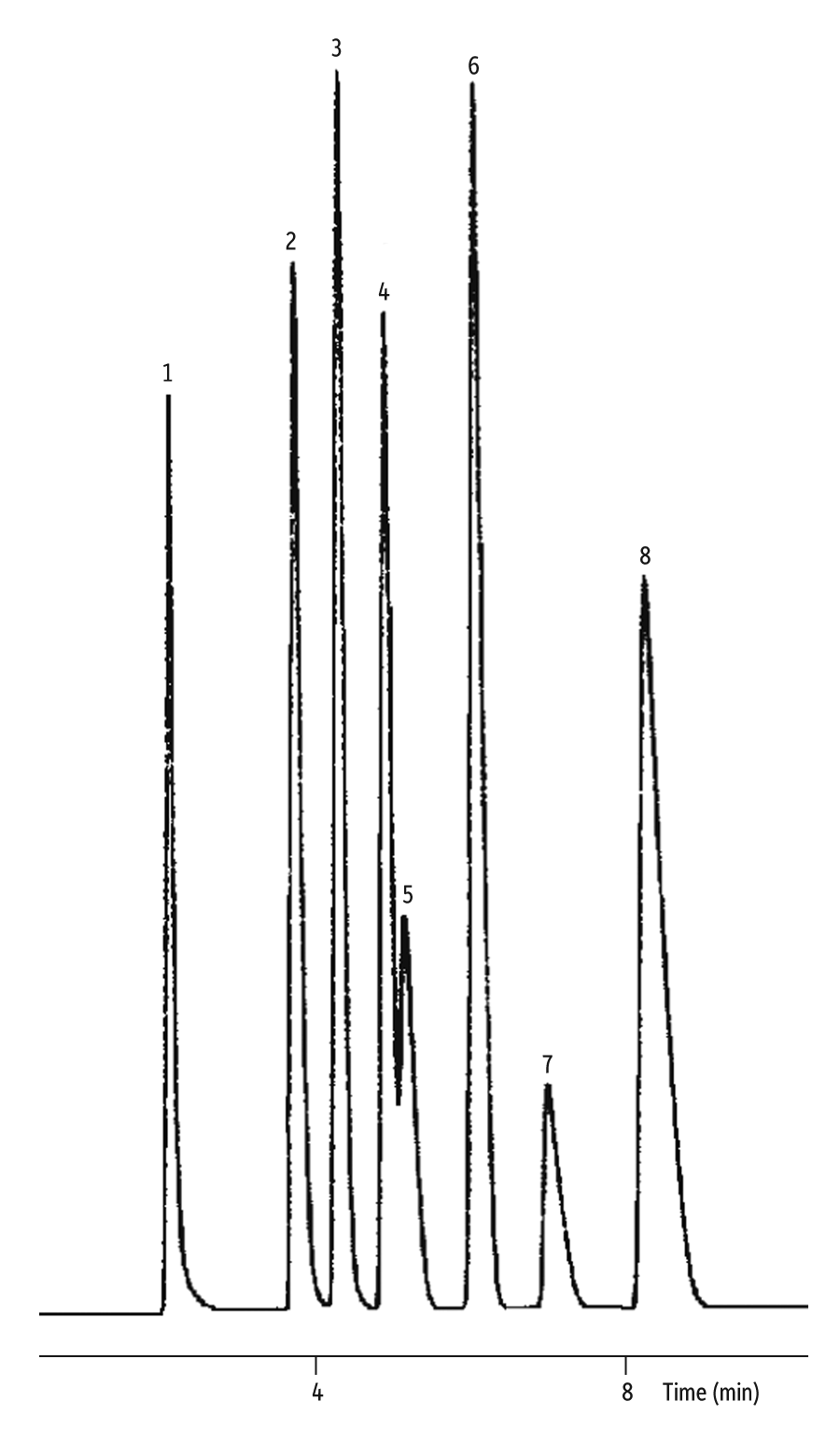
The analysis of solvents on a HayeSep Q micropacked column in Figure 4 provides another example of a successful petrochemical application. Here, a series of solvents was analyzed using GC-FID and the inertness of the Siltek-deactivated tubing allowed even highly polar components, such as alcohols, to be analyzed effectively. In addition to HayeSep Q, HayeSep R, HayeSep S, and HayeSep N packings are also available.
Summary
Micropacked GC columns can provide a valuable alternative to traditional packed columns and PLOT columns when intermediate performance is desired. Restek’s line of micropacked columns are highly inert and are available with a wide variety of adsorbents. Micropacked columns can provide a useful alternative for petrochemical applications when both high sample loadability and high efficiency are desired. Additionally, the unique 0.53 mm micropacked columns offered by Restek can be used in all standard capillary systems, without any modification of the injector or detector connections.
GC_CH00328
Peaks
| Peaks | |
|---|---|
| 1. | Methanol |
| 2. | Ethanol |
| 3. | Acetonitrile |
| 4. | Acetone |
| 5. | Methylene chloride |
| 6. | n-Pentane |
| 7. | Chloroform |
| 8. | n-Hexane |
Conditions
| Column | 100/120 mesh on HayeSep Q, Siltek-treated stainless steel tubing, 2 m, 1/16 in. OD, 1.00 mm ID (cat.# 19017) |
|---|---|
| Standard/Sample | solvent mixture |
| Conc.: | neat |
| Injection | |
| Inj. Vol.: | 1 µL Direct |
| Inj. Temp.: | 200 °C |
| Oven | |
| Oven Temp.: | 80 °C to 180 °C at 16 °C/min (hold 5 min) |
| Carrier Gas | He |
| Detector | FID @ 200 °C |
|---|---|
| Notes | Flow: 20 mL/min @ 40 °C FID sensitivity: 512 x 10-11 AFS |