



Come and meet us at the Prague Congress Center at booth 1!
Join your Restek team in Prague for the 35th edition of the International symposium on chromatography, one of the oldest conference series dedicated to separation science. Stop by booth 1 to:
- Discover the possibilities of our new RMX column and explore the future of GC.
- Play our “Guess the Length of the GC Column” game for a chance to win fantastic Restek prizes!
- Experience a demo to learn how:
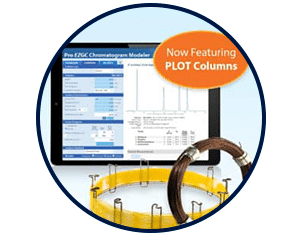
- Our EZ software suite could allow you to perform method development in minutes.
- Our new Reference Standard tool simplifies searching for the standards you need.
- Meet our knowledgeable team: they’re available to answer your questions and help you optimize your analyses with our flagship products and analytical solutions.
Technical Presentations
Seminar: Virtual Chromatographic Modelling Software For Optimising Separation Of Isobaric Compounds in GC-MS Methods
Presentation: Tuesday, September 8, 1:00 p.m.-2:00 p.m.
Presenters: Sebastian Prisacariu, Anna Pulte
There is a constant balance for high-throughput laboratories between method run times for large panel analyses and resolution of analytes across these panels to allow sufficient data quality. Developing such methods is often time consuming and expensive for laboratories, as dedicated resources are required to test methods iteratively. Chromatographic modelling tools are becoming increasingly popular for method setup and refinement in high-throughput laboratories looking to minimise instrument and analyst downtime. These tools traditionally offer column phase and method condition suggestions based on the separation of a list of analytes, which can then be modified to improve specific separations as necessary.
When developing gas chromatography (GC) methods, shortening cycle time often comes at the cost of compounds co-eluting, with the expectation that a mass selective detector, such as a mass spectrometer (MS) will allow resolution through ion-selective quantitation. An issue arises when the method attempts to analyse isobaric compounds, which cannot be distinguished by MS, and as a result labs must rely upon physical separation via column phase chemistry.
As GC-MS techniques continue to be adopted by laboratories, there is a need for more tools that consider mass data for analytes when optimising large panel separations. The virtual chromatographic modelling tool used in this study is built with mass spectrum data for compounds included in libraries. When operating in “MS mode”, the software identifies isobaric compounds and prioritises their separation when making recommendations regarding column phase and method conditions. For those using non-mass selective detection methods, the tool is easily toggled to “FID mode” for users interested in resolving all compounds, regardless of specific mass, allowing for flexibility in instrumentation. Results help labs save time and resources in method development and refinement by considering the instrumentation involved in the model.
Poster: Cutting Downtime, Not Columns: Performance of a Next-Generation Inert Capillary Column for Multiresidue GC-MSMS Analysis
Authors: Sebastian Prisacariu, Jessi Collier, Ramkumar Dhandapani, Jonathan DeCenzi, Rima Juskelis, Carlos Parra
The analysis of pesticide residues in complex botanical matrices is often complicated by high levels of co-extracted starches, oils, water, and other naturally occurring compounds that persist even after extensive sample cleanup. Achieving reliable detection and quantitation of pesticides at trace levels demands a chromatographic column with exceptional inertness, resolution, and long-term stability. We present the evaluation of a novel GC capillary column, engineered for outstanding inertness and robustness in GC-MS/MS multiresidue pesticide analysis. Compared to conventional columns, this new design delivers markedly improved peak shape, signal-to-noise, and resolution across a wide variety of challenging botanical matrices, including ashwagandha root, lavender oil, and ginseng powder. A standout feature is its integrated fused silica retention gap at the inlet and fused silica transfer line at the outlet. This innovative construction ensures that retention times remain consistent, even after trimming, allowing for fast and reliable maintenance with no impact on chromatographic performance.
Poster: Importance of GC Columns Deactivation Technology for the Analysis of Challenging Analytes
Authors: Jessi Collier, Victoria Zeger, Seb Prisacariu, Ramkumar Dhandapani, Emma Hoare
A recent advancement in gas chromatography (GC) column deactivation balances chromatographic performance of acidic, basic and neutral analytes at trace level concentrations. Deactivation is a critical step in GC column manufacturing that modifies the fused silica capillary surface activity to promote coating and adhesion. Residual surface silanols, which result from incomplete deactivation or surface contamination, adsorb acidic and basic compounds resulting in peak area loss or tailing.
Deactivation procedures vary between products and manufacturers, with individual benefits and drawbacks that become exacerbated during sensitive applications. There is increasing demand to improve identification and quantification of reactive analytes with complex or consolidated methodologies. New GC deactivation technology improves polymer adhesion and minimizes residual surface activity for a long lasting, broadly inert surface. Columns built with the new GC deactivation technology were challenged with a wide variety of applications, and against traditional 5-type columns.
Overall, the new deactivation presents an advancement over traditional GC columns, providing unparalleled inertness to a broader range of acids, bases, and neutrals. These improvements offer opportunity for method consolidation and trace level analysis that would not be successful with traditional technology.
Poster: Low-level LC-MS/MS analysis of steroid hormones in human serum and plasma
Authors: John Gallant, Haley Berkland
The analysis of steroid hormones provides clinical insight into many biological processes within the body. While LC-MS/MS is the gold-standard for this type of testing, there are several challenges laboratories face when developing a comprehensive method for steroid hormone analysis. In this work, a complete workflow was developed for the low-level analysis of 16 steroid hormones in serum and plasma by LC-MS/MS. The developed workflow avoids the use of ammonium fluoride, which can be hazardous to both laboratory personnel and HPLC columns.
A total of 16 steroid hormones were extracted from serum and plasma samples using supported liquid extraction (SLE). Following extraction, samples were dried down, derivatised using 2-fluoro-1-methylpyridinium p-toluenesulfonate (FMP-TS), and incubated for 15 minutes at 50°C. Samples were dried down under nitrogen and reconstituted in 100 µL 60:40 water:methanol, both with 0.1% formic acid (v/v). Samples were then injected on a Shimadzu LCMS-8045 system for analysis. Chromatographic separation was performed using a Force Inert C18 100 x 2.1 mm, 1.8 µm column. The mobile phases used were water and methanol, both with 0.1% formic acid and 2 mM ammonium formate. The column temperature was 60°C and the flow rate was 0.4 mL/min. Gradient elution was employed, with a total method runtime of 8 minutes.
Derivatisation with FMP-TS was found to be highly effective in improving the sensitivity of steroid hormones. The derivatisation agent reacts with primary and secondary hydroxyl groups, applying a permanent positive charge to the analytes and enhancing ionisation. When analysing the underivatised analytes by the method described, the compound estrone was nearly undetectable at a concentration of 125 ng/dL. When the FMP-TS derivative was analysed, the signal increased by more than 4000% at the same concentration. The developed method demonstrated acceptable linearity, precision, and accuracy in serum and plasma. Detection limits of ≤ 10 ng/dL were achieved for most analytes. Method performance was further verified by analysis of external quality control samples. The developed method achieves low-level detection of steroids hormones by LC-MS/MS while avoiding the use of ammonium fluoride to enhance ionisation.
Featured Products & Analytical Solutions






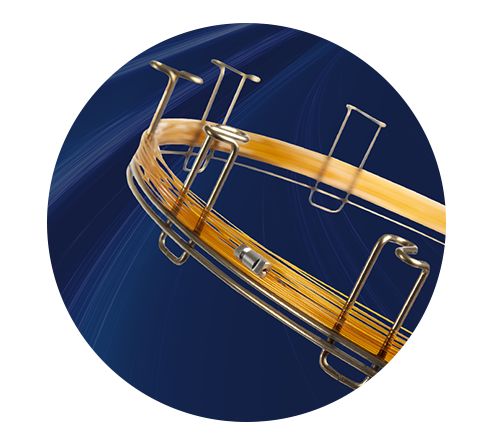

Unleash your performance with RMX GC Columns→
By maximizing data quality, RMX GC columns generate more compliant results—even for the most challenging semivolatiles—so accurate results are reported, and samples keep moving through the lab. Ask us about the future of GC!
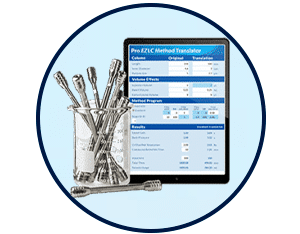
EZ suite: refine methods online for free in real time.→
Optimize or amend your GC and LC methods in minutes from your desk. Our online software and calculators are reliable, easy to use and allow you to perform method development without guesswork. Stop by for a demo!
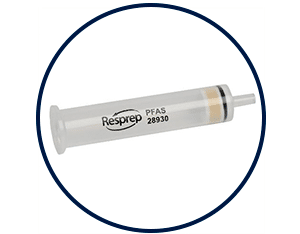
PFAS Problems? We’re Here to Help.→
The landscape of PFAS testing regulations and methods continues to evolve around the world, yet the needs of analytical labs are universal. You need fast, accurate, and dependable products supported by personalized advice and expert technical service from people who understand the challenges of these demanding analyses. That’s where Restek come in!
Perform improved analysis of metal-sensitive compounds with Inert LC columns.→
Inert LC column technology reduces nonspecific binding of chelating analytes, enabling sensitive analysis and smooth integration of peaks. Talk to our Restek team about how it could support your LC.