




- Increase laboratory efficiency and profitability by consolidating PAH and PCB GC-MS methods.
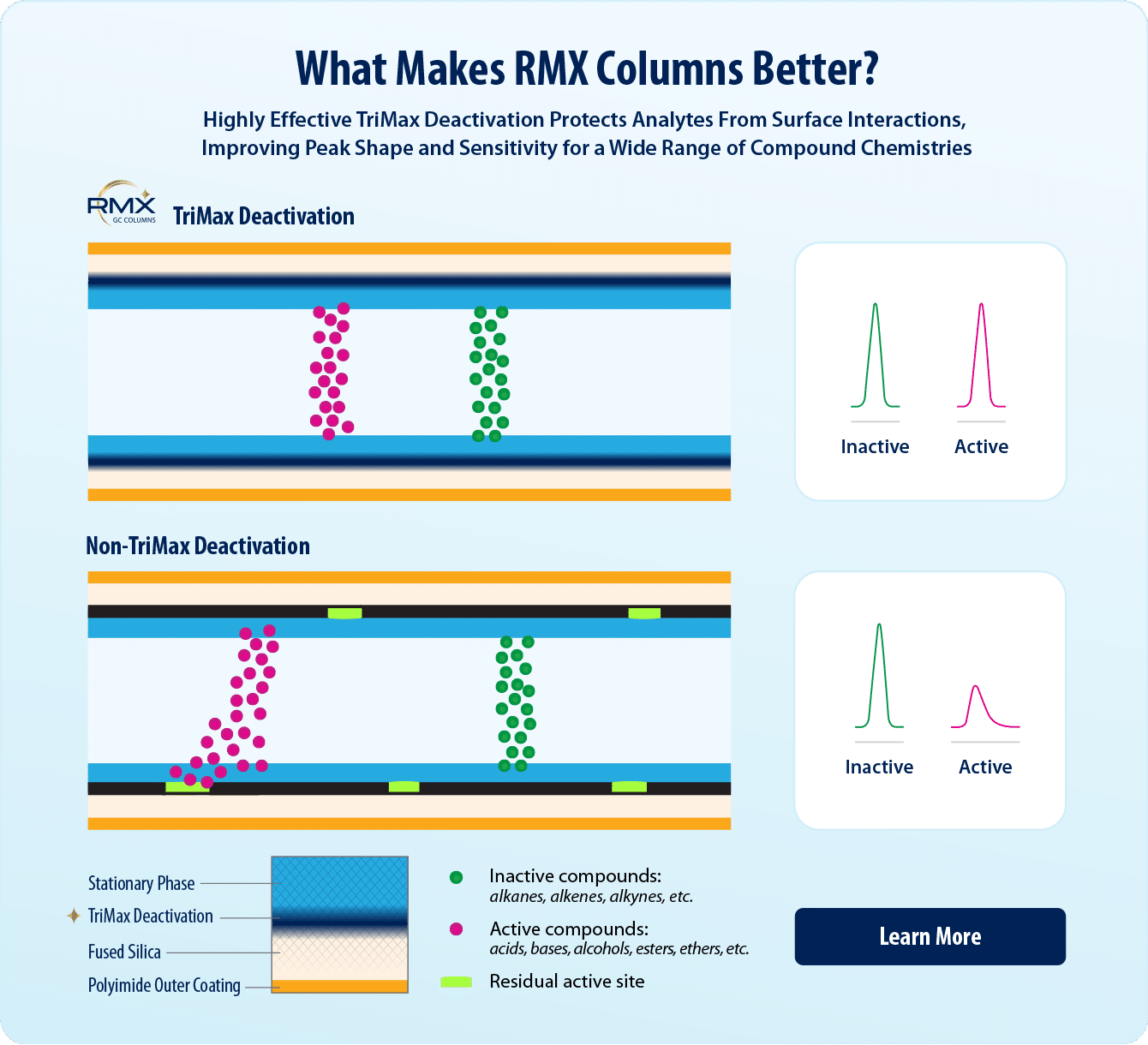
- Next-generation TriMax column deactivation provides an exceptionally inert sample flow path, ensuring sharp peaks and consistent separations.
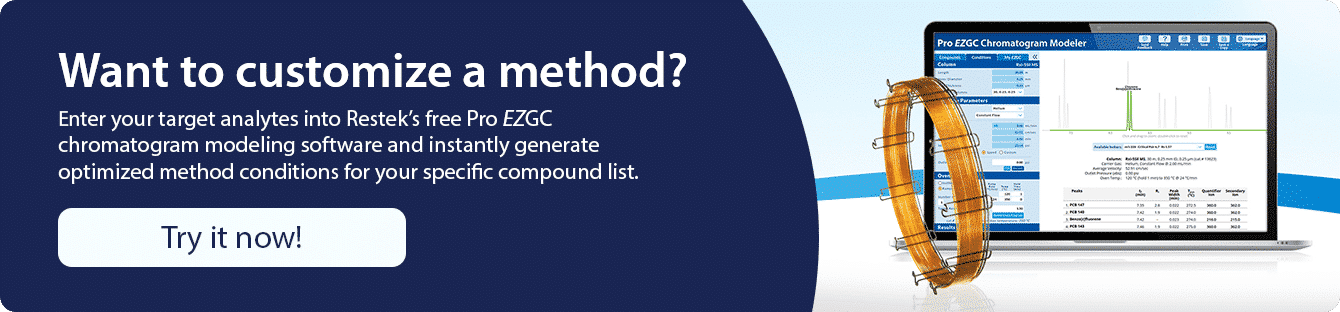
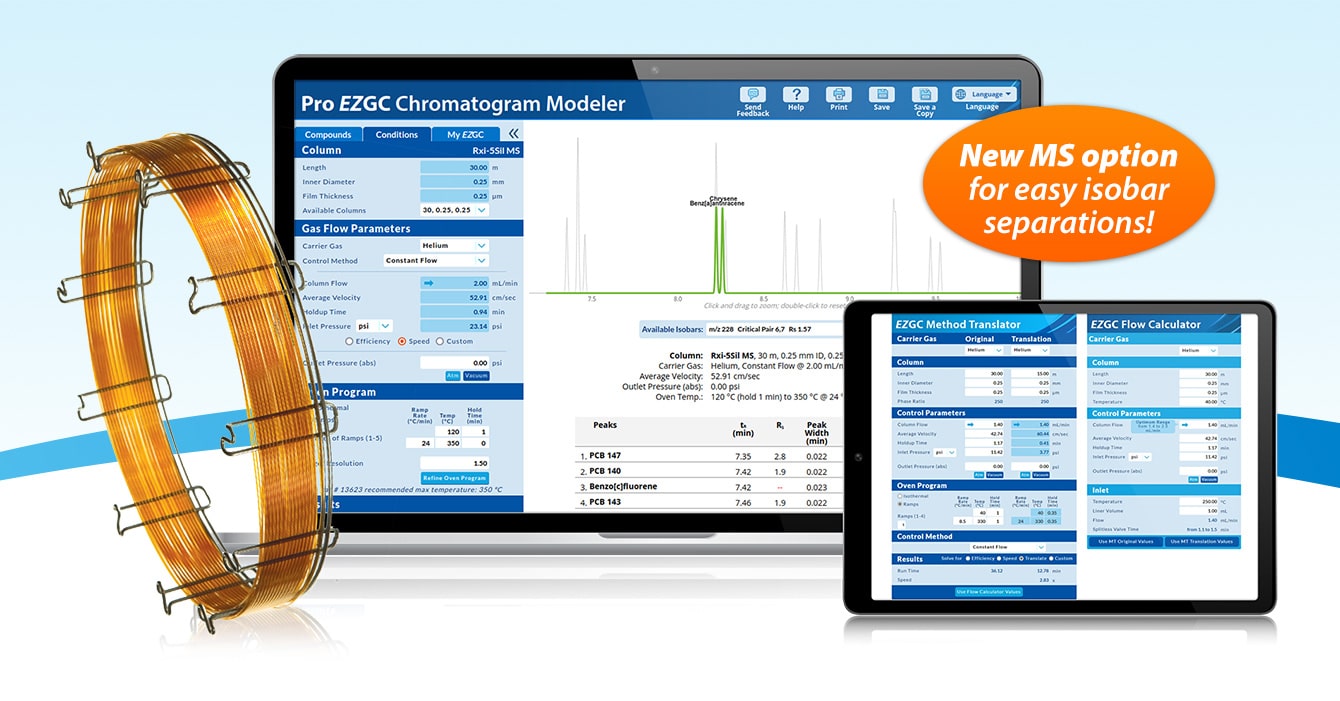
- Easily adaptable—add compounds, explore other column dimensions, and optimize in seconds with Restek’s free EZGC chromatogram modeler.

Polycyclic aromatic hydrocarbons (PAHs) and polychlorinated biphenyls (PCBs) are persistent pollutants that are closely monitored in the environment as potential ecological and human health hazards. Routine testing is often performed by GC-MS, allowing labs to improve productivity and decrease cost per sample by consolidating GC-MS screening methods for PAHs and PCBs. Simultaneous analysis of these two contaminant groups often utilizes “XLB-type” columns for separation of PCB 28/31, but this comes at a cost as some PAH separations tend to suffer. A “5-type” column provides alternate selectivity, making it a suitable phase for method consolidation. The quick GC-MS method for PAHs and PCBs presented here can help labs operate more efficiently, providing excellent chromatography for concurrent analysis of both pollutant classes.
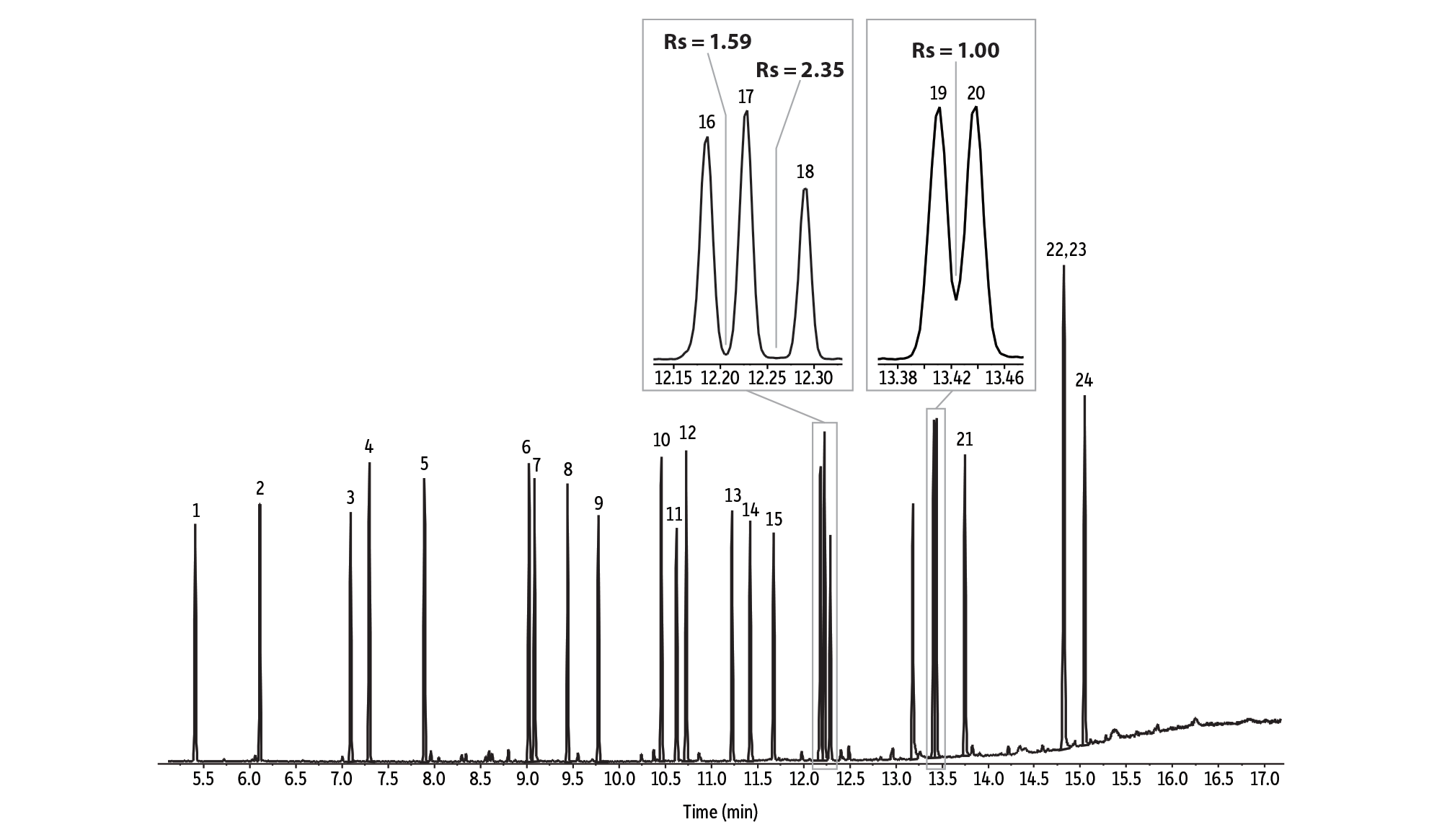
This method was developed on an RMX-5Sil MS column because it combines standard “5sil” selectivity with a next-generation TriMax deactivation, creating a highly inert sample flow path. Figure 1 demonstrates that across a fast, <20-minute run, the target PAHs and PCBs exhibited excellent peak shapes and separations. For example, while benz[a]anthracene; chrysene; and PCB 180 normally elute as a triplet, baseline USP resolution (≥1.5) was achieved on the RMX-5Sil MS column. To assess how consistent column performance was for key parameters, 100 injections at 1 ng on-column were made, and the results were extremely stable with tailing %RSD ranging 3.9-6.6% and retention time %RSD ranging 0.01-0.02%. While this analysis is not a comprehensive view of all PAHs and PCBs of interest, it can be customized for user-specific compound lists—even on different column dimensions—using Restek’s free Pro EZGC chromatogram modeling software.
Figure 1: Excellent peak shapes and separations were achieved for simultaneous PAH and PCB analysis on an RMX-5Sil MS column.
GC_GN1252
Peaks
| Peaks | tR (min) | Conc. (µg/mL) | |
|---|---|---|---|
| 1. | Naphthalene | 4.854 | 1 |
| 2. | 2-Methylnapthalene | 5.408 | 1 |
| 3. | Acenaphthylene | 6.134 | 1 |
| 4. | Acenaphthene | 6.277 | 1 |
| 5. | Fluorene | 6.700 | 1 |
| 6. | Phenanthrene | 7.481 | 1 |
| 7. | Anthracene | 7.524 | 1 |
| 8. | PCB 28 | 7.764 | 1 |
| 9. | PCB 52 | 7.993 | 1 |
| 10. | Fluoranthene | 8.461 | 1 |
| 11. | PCB 101 | 8.564 | 1 |
| 12. | Pyrene | 8.644 | 1 |
| Peaks | tR (min) | Conc. (µg/mL) | |
|---|---|---|---|
| 13. | PCB 118 | 8.976 | 1 |
| 14. | PCB 153 | 9.113 | 1 |
| 15. | PCB 138 | 9.290 | 1 |
| 16. | Benz[a]anthracene | 9.654 | 1 |
| 17. | Chrysene | 9.685 | 1 |
| 18. | PCB 180 | 9.725 | 1 |
| 19. | Benzo[b]fluoranthene | 10.548 | 1 |
| 20. | Benzo[k]fluoranthene | 10.559 | 1 |
| 21. | Benzo[a]pyrene | 10.806 | 1 |
| 22. | Dibenz[a,h]anthracene | 11.658 | 1 |
| 23. | Indeno[1,2,3-cd]pyrene | 11.658 | 1 |
| 24. | Benzo[g,h,i]perylene | 11.846 | 1 |
Conditions
| Column | RMX-5Sil MS, 30 m, 0.25 mm ID, 0.25 µm (cat.# 17323) |
|---|---|
| Standard/Sample | |
| 2-Methylnaphthalene (cat.# 31285) | |
| SV calibration mix #5 (cat.# 31011) | |
| PCB congener mix #2 (cat.# 32294) | |
| Diluent: | Methylene chloride |
| Conc.: | 1 µg/mL |
| Injection | |
| Inj. Vol.: | 1 µL splitless (hold 1.26 min) |
| Liner: | Topaz 4.0 mm ID single taper inlet liner w/wool (cat.# 23303) |
| Inj. Temp.: | 250 °C |
| Purge Flow: | 3 mL/min |
| Oven | |
| Oven Temp.: | 40 °C (hold 1 min) to 120 °C at 30 °C/min to 350 °C at 20 °C/min (hold 2 min) |
| Carrier Gas | He, constant flow |
| Flow Rate: | 1.2 mL/min |
| Linear Velocity: | 39.7 cm/sec |
| Detector | MS | ||||||||
|---|---|---|---|---|---|---|---|---|---|
| Mode: | Scan | ||||||||
| Scan Program: | |||||||||
| |||||||||
| Transfer Line Temp.: | 280 °C | ||||||||
| Analyzer Type: | Quadrupole | ||||||||
| Source Temp.: | 330 °C | ||||||||
| Quad Temp.: | 180 °C | ||||||||
| Solvent Delay Time: | 3 min | ||||||||
| Tune Type: | PFTBA | ||||||||
| Ionization Mode: | EI | ||||||||
| Instrument | Agilent 7890B GC & 5977B MSD | ||||||||