

Key Highlights
- Achieve low-level detection (≤10 ng/dL) of 16 steroid hormones across multiple classes using LC-MS/MS, including challenging estrogens.
- Eliminate hazardous mobile phase additives with a derivatization-based workflow that avoids ammonium fluoride, improving lab safety and protecting column lifetime.
- Improve sensitivity and robustness with inert column hardware and optimized sample prep, minimizing nonspecific adsorption and enabling accurate quantitation in serum and plasma.
Abstract
Analysis of steroid hormones provides clinical insight into many biological processes within the body. While LC-MS/MS is the gold standard for this type of testing, there are several challenges laboratories face when developing a comprehensive method for steroid hormone analysis. In this work, we present a complete workflow for the low-level analysis of 16 steroid hormones in serum and plasma by LC-MS/MS. The workflow described avoids the use of ammonium fluoride due to potential safety risks and decreased column lifetimes [1,2,3].
Introduction
Endogenous steroid hormones play a vast role in various physiological processes within the human body. Steroid hormones are of great clinical interest as unstable levels or dysregulation of the processes they are involved in can result in a variety of pathologies including diabetes, certain cancers, and reproductive disorders [4]. Steroid hormones may be broken into different classes based on their structure and function. These classes include estrogens, androgens, progestogens, and corticosteroids.
Table I: Steroid Hormone Class, Molecular Weight, and Chemical Structure
| Compound Name | Class | Molecular Weight (g/mol) | Structure |
| Estrone (E1) | Estrogen | 270.16 | 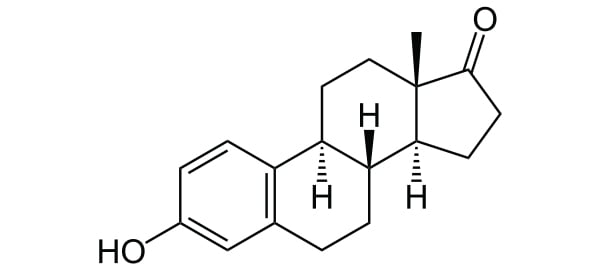 |
| Estradiol (E2) | Estrogen | 272.17 | 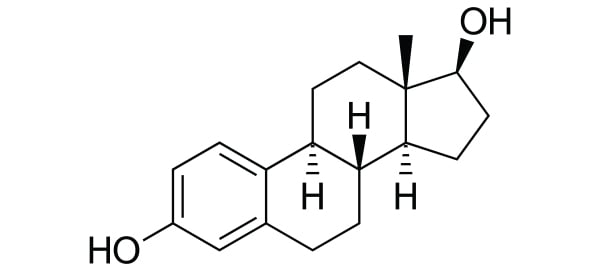 |
| Androstenedione | Androgen | 286.19 | 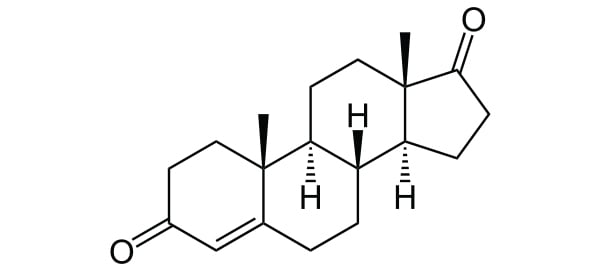 |
| Dehydroepiandrosterone (DHEA) | Androgen | 288.20 | 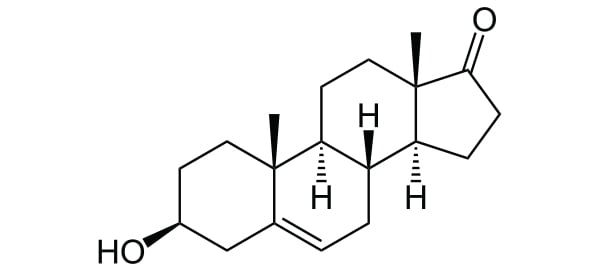 |
| Dihydrotestosterone (DHT) | Androgen | 290.22 | 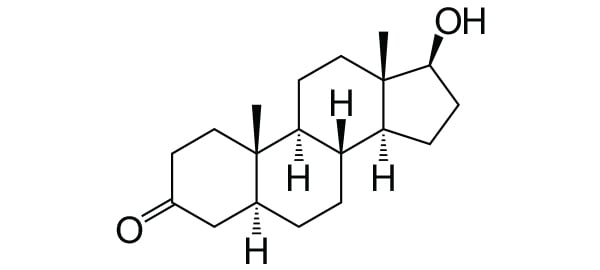 |
| Dehydroepiandrosterone sulfate (DHEAS) | Androgen | 368.16 | 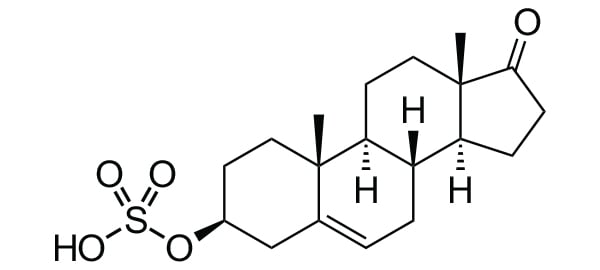 |
| Testosterone | Androgen | 288.20 | 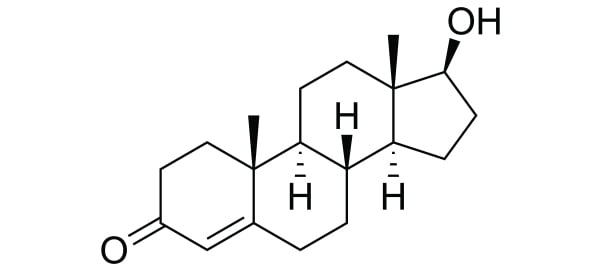 |
| Progesterone | Progestogen | 314.22 | 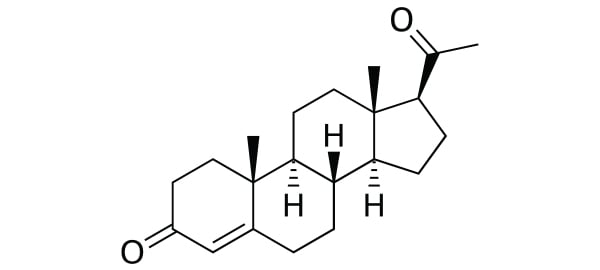 |
| 17α-Hydroxyprogesterone | Progestogen | 330.21 | 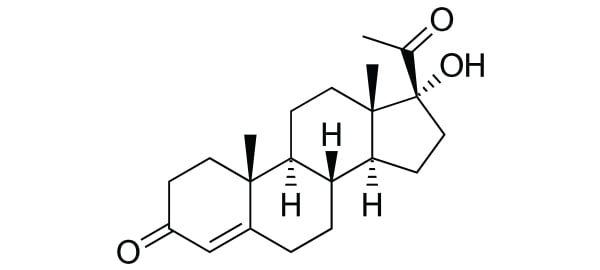 |
| Cortisol (hydrocortisone) | Corticosteroid | 362.20 | 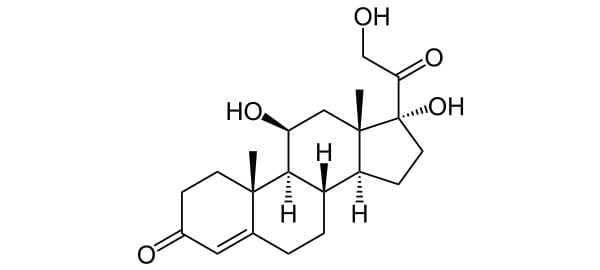 |
| Cortisone | Corticosteroid | 360.19 | 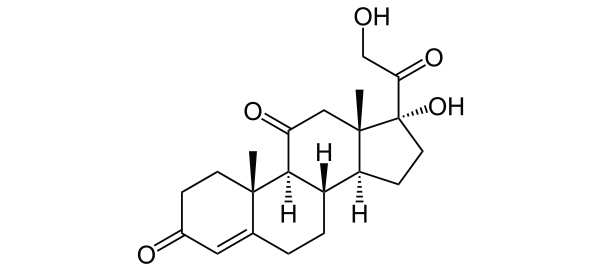 |
| Aldosterone | Corticosteroid | 360.19 | 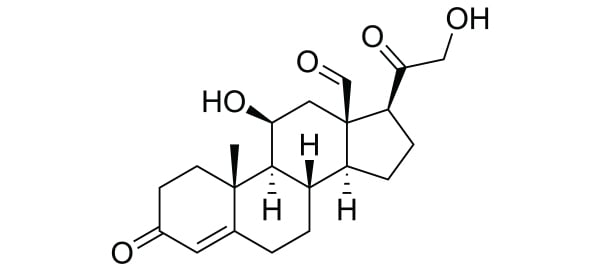 |
| Corticosterone | Corticosteroid | 346.21 | 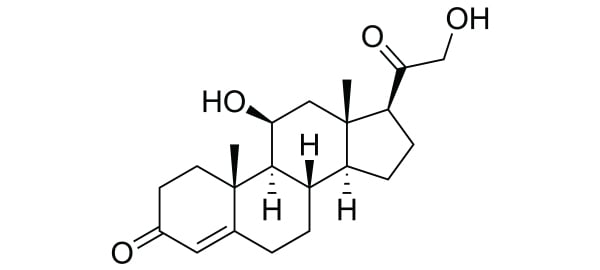 |
| 11-Deoxycorticosterone | Corticosteroid | 330.21 | 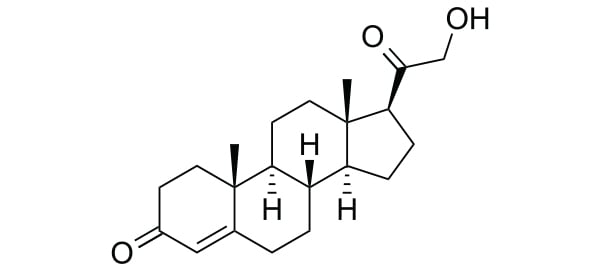 |
| 11-Deoxycortisol | Corticosteroid | 346.21 | 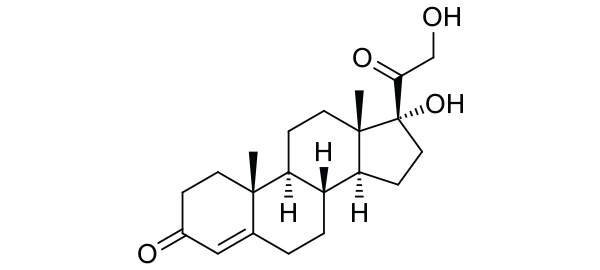 |
| 21-Deoxycortisol | Corticosteroid | 346.21 | 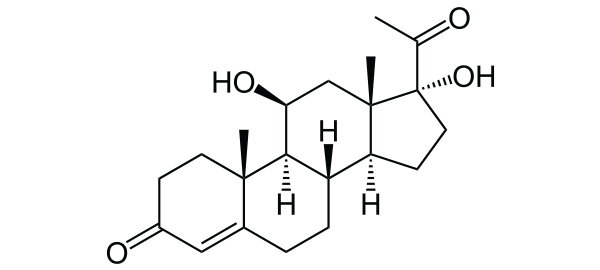 |
While immunoassay (IA) and gas chromatography-mass spectrometry (GC-MS) have both been used to measure steroid hormones in biological samples, liquid-chromatography tandem mass spectrometry (LC-MS/MS) has emerged as the gold standard for this analysis. Even though LC-MS/MS offers superior detection capabilities over other techniques, analysis of steroid hormones is complex for several reasons. These compounds must be detectable at extremely low concentrations, with some requiring detection limits of less than 1 ng/dL. This can be a challenge even for the most sensitive of mass spectrometers. Estrogen compounds can be particularly difficult to analyze as they are known to ionize poorly due to their chemical properties. The presence of isomers, matrix interferences, and ion effects can all further complicate the analysis of steroid hormones by LC-MS/MS.
There are several strategies LC-MS/MS method developers may use to improve sensitivity of these compounds. One of the most common techniques is the use of ammonium fluoride (NH4F) to promote ionization. While ammonium fluoride is highly effective at improving sensitivity, use of the chemical for this purpose also has its drawbacks. The use of ammonium fluoride can result in the formation of hydrofluoric acid (HF) both in the source of the MS and in waste containers as a result of mixing with other chemicals, which can become hazardous to laboratory personnel if not vented or handled properly. Additionally, the use of ammonium fluoride can decrease the lifetime of HPLC columns due to its corrosive nature [1,2,3].
An alternative technique for improving analyte sensitivity is derivatization. Chemical derivatization works by modifying specific functional groups in an analyte’s structure, leading to increased ionization efficiency and sensitivity. The overall result is a new molecule that is more favorable for MS detection. Over the years, a number of derivatization methods have been evaluated for analysis of steroids. Some derivatization agents that have been tested include dansyl chloride, methoxyamine, Girard’s Reagent P, hydroxylamine, and methyl piperazine [5,6,7]. Derivatization techniques come with disadvantages as well. Derivatization adds steps to sample preparation and often requires time-consuming incubation periods. Additionally, because derivatization techniques target specific functional groups, it can be difficult to find a derivatizing agent that works effectively for classes of analytes that may have considerable structural differences. For compounds that contain multiple functional groups that are targeted by the derivatization agent, the formation of stereoisomers may occur, which can complicate chromatographic separation and quantitation [6].
In this work, we present a complete workflow for the low-level analysis of 16 steroid hormones in human serum/plasma by LC-MS/MS. Samples are prepared using supported liquid extraction (SLE); derivatized through a simple procedure using 2-fluoro-1-methylpyridinium p-toluenesulfonate (FMP-TS); and then analyzed by LC-MS/MS methodology, achieving detection limits of ≤10 ng/dL.
Experimental
Calibration Standards and Control Samples
Blank fetal bovine serum was spiked across the calibration range. Two hundred microliters of sample was added to a microcentrifuge tube. Each sample was spiked with 10 µL of internal standard solution (100 µg/dL estradiol-d3, testosterone-d3, cortisol-d4, progesterone-d9, and DHEAS-d5 in methanol) and vortexed.
Patient Samples
Two hundred microliters of serum/plasma sample was added to a microcentrifuge tube. Each sample was spiked with 10 µL of internal standard solution and vortexed.
Sample Preparation
Supported Liquid Extraction (SLE)
Two hundred microliters of HPLC grade water was added to each sample. Samples were briefly vortexed and then centrifuged to mix. Using a Resprep VM-96 Vacuum Manifold (cat.# 25858), 400 µL of each sample was loaded into a 400 mg Resprep SLE 96-Well Plate (cat.# 28305) with a 2 mL collection plate underneath. Light vacuum was applied to initiate loading the sample into the sorbent bed. The sample was then allowed to absorb into the sorbent over a period of five minutes. The samples were eluted with three 700 µL aliquots of ethyl acetate. Each aliquot was allowed to flow under gravity for five minutes. After the third aliquot was added, light vacuum was applied to remove any remaining extraction solvent.
Post Elution and Derivatization
Samples were dried down under a stream of nitrogen. The derivatization solution was prepared fresh immediately prior to use by dissolving 2-fluoro-1-methylpyridinium p-toluenesulfonate (FMP-TS) to a concentration of 5 mg/mL in a solution of 1% triethylamine in acetonitrile. Once dried, 50 µL of the derivatization solution was added to each sample. The plate was covered, briefly vortexed, and then incubated at 50 °C for 15 minutes. After incubation, the reaction was quenched by adding 50 µL of methanol to each sample and vortexing.
Reconstitution
The samples were dried down under a stream of nitrogen. Samples were then reconstituted with 100 µL of 60:40 water:methanol, both with 0.1% formic acid (v/v). The plate was covered, briefly vortexed, and centrifuged. The plate was moved to the LC-MS/MS instrument and then injected for analysis.
Instrument Parameters
The conditions used for this LC-MS/MS method for steroid hormones in serum/plasma are listed in Table II. Analyte and internal standard MRMs are listed in Table III.
Table II: Instrument Conditions
| Column: | Force Inert C18, 1.8 µm, 100 x 2.1 mm (cat.# 9634212-T) | ||
| Injection Volume: | 12 µL | ||
| Column Temperature: | 60 °C | ||
| Mobile Phase A: | Water, 2 mM ammonium formate, 0.1% formic acid | ||
| Mobile Phase B: | Methanol, 2 mM ammonium formate, 0.1% formic acid | ||
| Flow Rate: | 0.4 mL/min | ||
| Gradient: | Time (min) | %A | %B |
| 0.00 | 60 | 40 | |
| 6.00 | 10 | 90 | |
| 6.01 | 0 | 100 | |
| 7.00 | 0 | 100 | |
| 7.01 | 60 | 40 | |
| 8.00 | 60 | 40 | |
Table III: Analyte and Internal Standard MRMs.
| Analyte (Abbreviation) | Precursor Ion | Product Ion 1 | Product Ion 2 |
| Androstenedione | 287.1 | 97.1 | 109.2 |
| Testosterone | 289.1 | 97.1 | 109.1 |
| Testosterone-D3 | 292.3 | 97.1 | 108.9 |
| Progesterone | 315.1 | 97.1 | 109.2 |
| Progesterone-D9 | 324.2 | 100.2 | 113.1 |
| 17α-hydroxyprogesterone | 331.1 | 97.2 | 109.2 |
| 21-Deoxycortisol | 347.1 | 311.3 | 121.1 |
| Estrone* | 362.1 | 252.2 | 238.2 |
| Estradiol* | 364.1 | 110.1 | 128.0 |
| DHEAS | 367.0 | 97.0 | 79.7 |
| Estradiol-D3* | 367.1 | 110.1 | 128.1 |
| DHEAS-D5 | 372.1 | 97.9 | – |
| DHEA* | 380.2 | 110.1 | 271.2 |
| DHT* | 382.2 | 110.1 | 255.2 |
| 11-Deoxycorticosterone* | 422.2 | 110.1 | 187.5 |
| Corticosterone* | 438.2 | 110.1 | 120.3 |
| 11-Deoxycortisol* | 438.2 | 110.1 | 311.3 |
| Cortisone* | 452.1 | 109.9 | – |
| Aldosterone* | 452.1 | 109.9 | 325.1 |
| Cortisol* | 454.1 | 110.1 | 142.9 |
| Cortisol-D4* | 458.5 | 110.1 | – |
*Analyte is analyzed as an FMP-TS derivative [M+92]+.
Results and Discussion
Chromatographic Performance
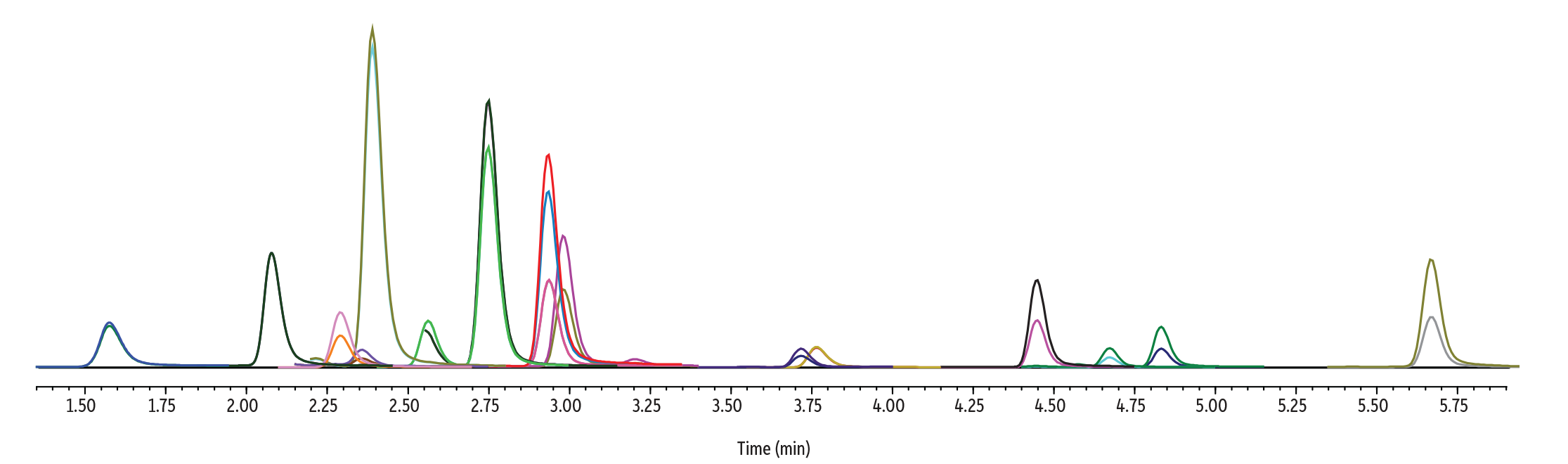
Sixteen multiclass steroid hormones were well separated in an eight-minute method on a Force Inert C18 1.8 µm, 100 x 2.1 mm column. A representative chromatogram is shown in Figure 1 below.
Figure 1: Sixteen Steroid Hormones in Serum on Force Inert C18
LC_CF0848
Peaks
| Peaks | tR (min) | Conc. (ng/dL) | Precursor | Product 1 | Product 2 | Polarity | |
|---|---|---|---|---|---|---|---|
| 1. | Aldosterone* | 1.57 | 1250 | 452.1 | 109.9 | 325.1 | + |
| 2. | Cortisone* | 2.08 | 2000 | 452.1 | 109.9 | – | + |
| 3. | Estrone (E1)* | 2.29 | 125 | 362.1 | 252.2 | 238.2 | + |
| 4. | Estradiol (E2)* | 2.36 | 125 | 364.1 | 110.1 | 128.0 | + |
| 5. | Cortisol* | 2.39 | 2000 | 454.1 | 110.1 | 142.95 | + |
| 6. | Corticosterone* | 2.56 | 1250 | 438.2 | 110.1 | 120.3 | + |
| 7. | 11-Deoxycortisol* | 2.75 | 1250 | 438.2 | 110.1 | 311.3 | + |
| 8. | DHT* | 2.92 | 1250 | 382.2 | 110.1 | 255.2 | + |
| 9. | 11-Deoxycorticosterone* | 2.94 | 250 | 422.2 | 110.1 | – | + |
| 10. | DHEA* | 2.98 | 1250 | 380.2 | 110.1 | 271.2 | + |
| 11. | 21-Deoxycortisol | 3.71 | 1250 | 347.1 | 311.3 | 121.1 | + |
| 12. | DHEAS | 3.76 | 50000 | 367.0 | 97.1 | 79.7 | – |
| 13. | Androstenedione | 4.49 | 1250 | 287.1 | 97.1 | 109.2 | + |
| 14. | Testosterone | 4.67 | 250 | 289.1 | 97.1 | 109.1 | + |
| 15. | 17-Hydroxyprogesterone | 4.83 | 1250 | 331.1 | 97.1 | 109.2 | + |
| 16. | Progesterone | 5.66 | 1250 | 315.1 | 97.1 | 109.2 | + |
Conditions
| Column | Force Inert C18 (cat.# 9634212-T) | ||||||||||||||||||||||||||||
|---|---|---|---|---|---|---|---|---|---|---|---|---|---|---|---|---|---|---|---|---|---|---|---|---|---|---|---|---|---|
| Dimensions: | 100 mm x 2.1 mm ID | ||||||||||||||||||||||||||||
| Particle Size: | 1.8 µm | ||||||||||||||||||||||||||||
| Pore Size: | 100 Å | ||||||||||||||||||||||||||||
| Temp.: | 60 °C | ||||||||||||||||||||||||||||
| Standard/Sample | |||||||||||||||||||||||||||||
| Diluent: | 60:40 Water:methanol, both acidified with 0.1% formic acid | ||||||||||||||||||||||||||||
| Inj. Vol.: | 12 µL | ||||||||||||||||||||||||||||
| Mobile Phase | |||||||||||||||||||||||||||||
| A: | Water, 2 mM ammonium formate, 0.1% formic acid | ||||||||||||||||||||||||||||
| B: | Methanol, 2 mM ammonium formate, 0.1% formic acid | ||||||||||||||||||||||||||||
| |||||||||||||||||||||||||||||
| Max Pressure: | 550 bar |
| Detector | Shimadzu 8045 MS/MS |
|---|---|
| Ion Source: | Electrospray |
| Ion Mode: | ESI+/ESI- |
| Mode: | Scheduled MRM |
| Instrument | Shimadzu Nexera X2 |
| Sample Preparation | Two hundred microliters of sample was added to a microcentrifuge tube. Each sample was spiked with 10 µL of internal standard solution and vortexed. Two hundred microliters of HPLC grade water was added to each sample. Samples were briefly vortexed and then centrifuged at 3200 RPM for one minute to mix. Using a Resprep VM-96 Vacuum Manifold (cat.# 25858), 400 µL of each sample was loaded into a 400 mg Resprep SLE 96-Well Plate (cat.# 28305) with a 2 mL collection plate underneath. Light vacuum was applied to initiate loading the sample into the sorbent bed. With the vacuum turned off, the sample was allowed to absorb into the sorbent for five minutes. The samples were eluted with three 700 µL aliquots of ethyl acetate. Each aliquot was allowed to flow under gravity for five minutes. After the third aliquot was added, light vacuum was applied to remove any remaining extraction solvent. Samples were dried down under a stream of nitrogen. The derivatization solution was prepared fresh immediately prior to use by dissolving 2-fluoro-1-methylpyridinium p-toluenesulfonate (FMP-TS) in acetonitrile containing 1% triethylamine at a concentration of approximately 5 mg/mL. Once dried, 50 µL of the derivatization solution was added to each sample. The plate was covered with a well plate sealing mat, briefly vortexed, and then incubated at 50 °C for 15 minutes. After incubation, the reaction was quenched by adding 50 µL of methanol to each sample and vortexing. The samples were dried down under a stream of nitrogen. Samples were reconstituted with 100 µL of 60:40 water:methanol, both with 0.1% formic acid (v/v). The plate was covered, briefly vortexed, and centrifuged at 3200 RPM for one minute. The plate was moved to the LC-MS/MS instrument and then injected for analysis. |
| Notes | The flow was directed to waste before one minute and after six minutes. |
A column with 1.8 µm particles was chosen for this analysis for the enhanced chromatographic efficiency offered by small particle sizes, which led to improved analyte sensitivity. The C18 phase column effectively separated all isobar pairs in both derivatized and nonderivatized forms.
Formic acid has been found to significantly improve the sensitivity of compounds derivatized by FMP-TS and was added to both mobile phases for this purpose [4]. Derivatized compounds had a permanent positive charge added to the molecule as a result of the reaction. Ammonium formate was also added to the mobile phases to reduce peak tailing, which may occur on C18 columns due to cationic analytes interacting with the negatively charged silanol groups on the stationary phase.
Given the chemical nature of these analytes, a column with inert hardware was selected for this analysis. Inert columns can be used in place of traditional stainless-steel columns to help reduce nonspecific binding/adsorption interactions of chelating analytes. Chelation can lead to poor peak shapes and reduced sensitivity for affected analytes. The inert column was especially beneficial for the analysis of DHEAS, a sulfated steroid hormone which is known to exhibit nonspecific adsorption with metal surfaces [8].
Sample Preparation and Derivatization
SLE
SLE is a sample cleanup technique that can be used to remove unwanted materials, such as salts, proteins, and phospholipids from biological samples. While multiple solvents were tested for sample pretreatment and elution, using water for pretreatment and ethyl acetate as the elution solvent was found to be most effective for this analysis. SLE can typically be performed using individual cartridges or as a 96-well plate format, depending on the laboratory’s throughput needs. It has been reported that steroids may be sensitive to glass surfaces, so glass consumables. such as vials or test tubes should be avoided when performing this analysis [9]. The 96-well plate format was found to be beneficial for this workflow over the cartridge format. Using the 96-well plate format reduced the number of times samples were transferred between vessels, limiting potential analyte loss during these steps.
Derivatization
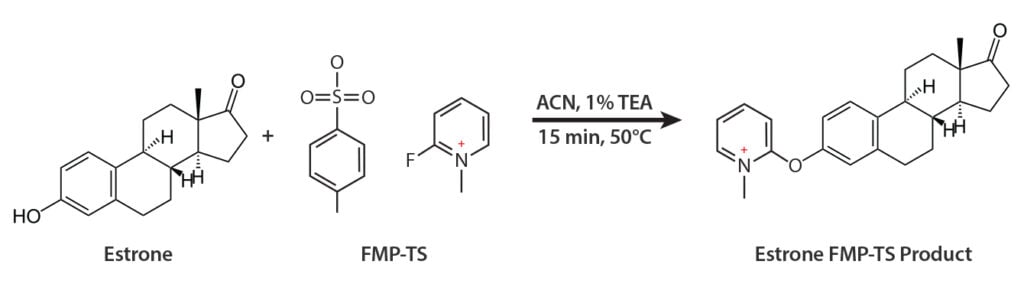
The derivatization procedure employed in this work was adapted from Šimková, Markéta et al [4]. FMP-TS, a 2-halopyridinium salt used in the synthesis of esters, amines, and thiol esters, was utilized in this workflow for derivatization of primary and secondary hydroxyl (–OH) groups [10]. An example of the derivatization reaction for the compound estrone is shown in Figure 2. Derivatization resulted in precursor ions at [M+92]+ for analytes containing hydroxyl groups.
Figure 2: Derivatization of Estrone with FMP-TS
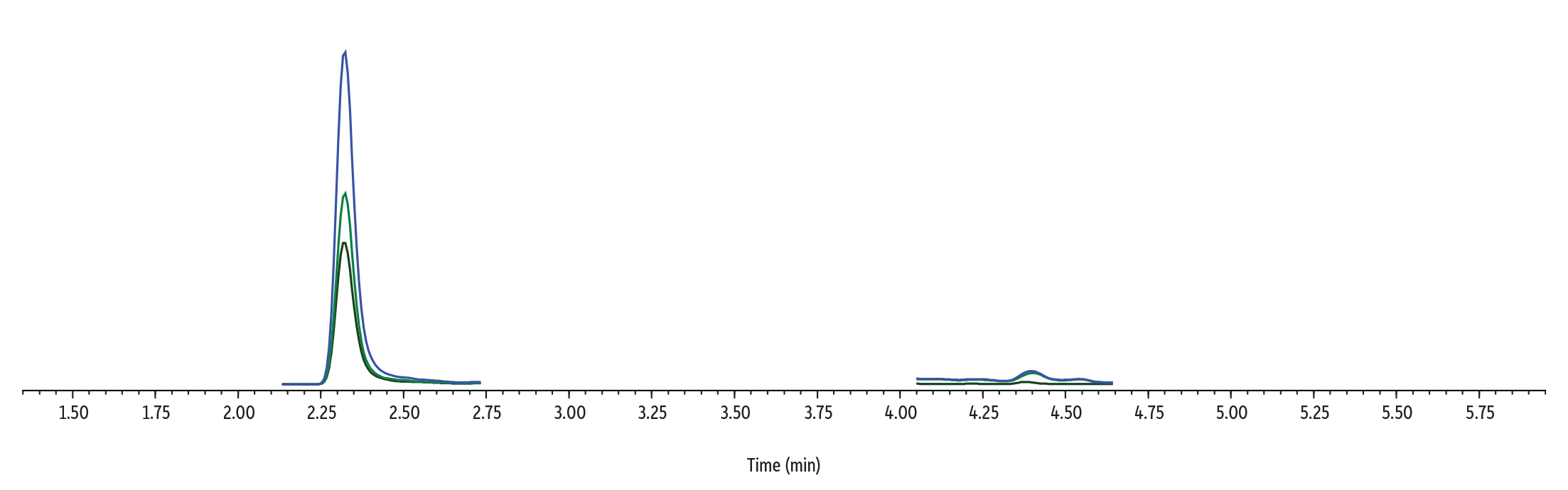
Derivatization with FMP-TS was found to be highly effective in improving the sensitivity of steroid hormones. When analyzed underivatized by the described method, estrone is nearly undetectable at a concentration of 125 ng/dL. When the FMP-TS derivative is analyzed, the signal increases by more than 4000% at the same concentration. The signal of estrone when it is analyzed derivatized vs. underivatized is depicted in Figure 3 below.
Figure 3: Estrone Derivatized vs. Underivatized on Force Inert C18
LC_CF0849
Peaks
| Peaks | tR (min) | Precursor | Product 1 | Product 2 | Polarity | |
|---|---|---|---|---|---|---|
| 1. | Estrone (derivatized) | 2.29 | 362.2 | 252.2 | 238.2 | + |
| 2. | Estrone (underivatized) | 4.40 | 271.1 | 253.1 | 157.0 | + |
Progesterone, androstenedione, and DHEAS were analyzed underivatized as they do not contain a primary or secondary hydroxyl group in their structures and, therefore, did not react with the derivatization reagent. 17α-hydroxyprogesterone and 21-deoxycortisol do contain hydroxyl groups but were found not to effectively react with the derivatization reagent. Due to their location within the chemical structure, the hydroxyl groups on these compounds are likely to be sterically hindered, preventing the reaction from occurring. For compounds with multiple hydroxyl groups, complete reaction of all hydroxyl groups would be expected to yield a precursor ion of [M+184]2+ (for compounds with 2 –OH groups) or [M+276]3+ (for compounds with 3 –OH groups). Formation of these precursor ions was not observed, which is also likely due to steric hindrance of the additional hydroxyl groups [10]. Testosterone did react with the derivatization agent but was found to exhibit better signal when analyzed underivatized.
Linearity
Linearity was demonstrated using a 1/x2 weighted linear regression, and all analytes showed acceptable r2 values of ≥0.99. Calibration ranges and the lower limit of quantitation (LLOQ) for each analyte are listed below. The calibration range encompasses expected clinical levels of each analyte in serum/plasma specimens. Control matrices were screened to ensure no signals were detected that could be attributed to the analytes of interest.
Table IV: Calibration Ranges and LLOQs in Serum/Plasma
| Analyte | LLOQ (ng/dL) | Calibration Range (ng/dL) | Internal Standard |
| Estrone | 0.5 | 0.5-500 | Estradiol-D3 |
| Estradiol | 1 | 1-500 | Estradiol-D3 |
| Testosterone | 1 | 1-1000 | Testosterone-D3 |
| 11-Deoxycorticosterone | 1 | 1-1000 | Estradiol-D3 |
| Corticosterone | 5 | 5-5000 | Cortisol-D4 |
| 11-Deoxycortisol | 5 | 5-5000 | Estradiol-D3 |
| 21-Deoxycortisol | 5 | 5-5000 | Testosterone-D3 |
| Androstenedione | 5 | 5-5000 | Testosterone-D3 |
| 17α-hydroxyprogesterone | 5 | 5-5000 | Progesterone-D9 |
| Progesterone | 5 | 5-5000 | Progesterone-D9 |
| Aldosterone | 10 | 10-5000 | Estradiol-D3 |
| DHT | 10 | 10-5000 | Estradiol-D3 |
| DHEA | 10 | 10-5000 | Cortisol-D4 |
| Cortisone | 40 | 40-40000 | Estradiol-D3 |
| Cortisol | 40 | 40-40000 | Cortisol-D4 |
| DHEAS | 1000 | 1000-1000000 | DHEAS-D5 |
Precision and Accuracy
Serum
Accuracy and precision of the method in serum were assessed at four different concentrations (LLOQ, low QC, medium QC, high QC) and evaluated both intraday and as an average of three days (n=9). Method accuracy was assessed as the percentage of the measured concentration relative to the fortified concentration. The interday precision of the method was assessed using percent relative standard deviation (%RSD). These results, shown in Table V, demonstrate that the method is accurate and precise over the range studied for the quantitative analysis of steroid hormones in human serum.
Table V: Method Accuracy and Precision Results in Serum (Interday)
| Analyte | LLOQ | Low QC | Medium QC | High QC | ||||
|---|---|---|---|---|---|---|---|---|
| %Recovery | %RSD | %Recovery | %RSD | %Recovery | %RSD | %Recovery | %RSD | |
| Estrone | 96.8 | 9.7 | 91.0 | 4.0 | 90.5 | 0.7 | 90.7 | 7.9 |
| Estradiol | 89.4 | 9.7 | 92.6 | 8.0 | 91.8 | 9.2 | 92.7 | 9.2 |
| Testosterone | 88.3 | 13.5 | 93.4 | 4.3 | 89.7 | 2.9 | 98.0 | 2.2 |
| 11-Deoxycorticosterone | 97.0 | 4.1 | 92.2 | 8.9 | 95.2 | 5.0 | 95.2 | 2.6 |
| Corticosterone | 92.9 | 8.1 | 92.4 | 6.5 | 93.3 | 7.2 | 98.0 | 2.7 |
| 11-Deoxycortisol | 91.7 | 8.6 | 93.2 | 5.4 | 97.4 | 1.9 | 97.6 | 2.0 |
| 21-Deoxycortisol | 93.8 | 7.6 | 93.5 | 2.9 | 94.0 | 5.8 | 93.7 | 7.3 |
| Androstenedione | 86.4 | 3.6 | 88.2 | 2.3 | 90.6 | 2.5 | 94.9 | 4.5 |
| 17α-hydroxyprogesterone | 91.5 | 4.7 | 92.2 | 3.4 | 93.8 | 4.3 | 96.3 | 4.0 |
| Progesterone | 96.8 | 4.0 | 88.9 | 2.7 | 89.9 | 1.4 | 97.5 | 2.5 |
| Aldosterone | 96.2 | 4.9 | 97.2 | 3.6 | 94.3 | 5.6 | 93.5 | 8.0 |
| DHT | 92.5 | 6.0 | 90.2 | 11.8 | 96.3 | 4.0 | 91.0 | 3.1 |
| DHEA | 88.4 | 8.4 | 91.5 | 7.3 | 95.0 | 3.9 | 89.1 | 3.9 |
| Cortisone | 93.5 | 7.2 | 96.4 | 3.9 | 93.6 | 3.1 | 96.8 | 3.7 |
| Cortisol | 89.4 | 9.4 | 91.3 | 4.4 | 97.4 | 2.9 | 92.7 | 2.4 |
| DHEAS | 88.0 | 7.9 | 95.7 | 5.1 | 93.8 | 3.9 | 94.2 | 4.3 |
As an additional precision and accuracy verification, MassTrak Steroid Serum QC Set 1 (Waters Corporation) was obtained and analyzed using the developed method. This set of controls contains low, medium, and high matrix-matched QC levels for 12 of the 16 analytes in this workflow. Each QC level was extracted in triplicate and analyzed using the described method (n=3). Method accuracy was assessed as the percentage of the measured concentration relative to the fortified concentration as determined by the manufacturer of the QC set. The intraday precision of the method was assessed using percent relative standard deviation (%RSD). The results of this external QC analysis are shown in Table VI below.
Table VI: Method Accuracy and Precision Evaluation with MassTrak Steroid Serum QC Set 1
| Analyte | Low QC | Medium QC | High QC | |||
|---|---|---|---|---|---|---|
| %Recovery | %RSD | %Recovery | %RSD | %Recovery | %RSD | |
| Testosterone | 94.5 | 3.5 | 86.2 | 3.6 | >ULOQ | |
| 11-Deoxycorticosterone | 90.2 | 2.2 | 99.8 | 0.2 | >ULOQ | |
| Corticosterone | 88.2 | 1.7 | 85.2 | 2.9 | 85.8 | 3.6 |
| 11-Deoxycortisol | 93.9 | 6.7 | 97.6 | 0.7 | 98.6 | 2.0 |
| 21-Deoxycortisol | 91.6 | 9.2 | 88.2 | 0.9 | 98.2 | 2.6 |
| Androstenedione | 91.2 | 8.9 | 92.5 | 2.3 | 87.4 | 0.9 |
| 17α-hydroxyprogesterone | 89.8 | 13.2 | 90.5 | 3.5 | 91.6 | 2.8 |
| Progesterone | 85.3 | 2.4 | 86.9 | 3.2 | 93.2 | 4.7 |
| DHT | 93.6 | 8.6 | 90.1 | 4.4 | 99.1 | 1.3 |
| DHEA | 89.5 | 3.6 | 94.4 | 5.0 | 96.6 | 1.2 |
| Cortisol | 87.0 | 0.9 | 86.0 | 0.6 | 97.9 | 2.3 |
| DHEAS | 99.3 | 1.0 | 95.4 | 5.6 | 91.8 | 3.1 |
Plasma
A quantitative evaluation was also performed in 2x charcoal stripped plasma to ensure that the method was adaptable to plasma matrix. Precision and accuracy of the method in plasma were assessed at four different concentrations (LLOQ, low QC, medium QC, high QC) and evaluated in triplicate within one day (n=3). Method accuracy was assessed as the percentage of the measured concentration relative to the fortified concentration. The intraday precision of the method was assessed using percent relative standard deviation (%RSD). These results, shown in Table VII, demonstrate that the method is accurate and precise over the range studied for the quantitative analysis of steroid hormones in human plasma.
Table VII: Method Accuracy and Precision Results in Plasma (Intraday)
| Analyte | LLOQ | Low QC | Medium QC | High QC | ||||
|---|---|---|---|---|---|---|---|---|
| %Recovery | %RSD | %Recovery | %RSD | %Recovery | %RSD | %Recovery | %RSD | |
| Estrone | 97.6 | 3.9 | 97.9 | 2.7 | 92.6 | 0.8 | 89.0 | 3.5 |
| Estradiol | 90.0 | 6.5 | 94.9 | 7.3 | 89.2 | 3.2 | 93.0 | 3.1 |
| Testosterone | 86.5 | 5.6 | 91.4 | 4.7 | 86.3 | 1.2 | 96.2 | 4.3 |
| 11-Deoxycorticosterone | 81.3 | 3.3 | 96.5 | 4.8 | 96.3 | 3.6 | 89.4 | 4.1 |
| Corticosterone | 86.5 | 4.4 | 97.5 | 3.0 | 98.1 | 2.5 | 87.8 | 7.5 |
| 11-Deoxycortisol | 90.4 | 11.4 | 98.7 | 1.8 | 96.1 | 4.1 | 91.6 | 3.5 |
| 21-Deoxycortisol | 94.0 | 6.4 | 92.1 | 3.5 | 94.3 | 1.0 | 95.6 | 5.3 |
| Androstenedione | 94.0 | 10.2 | 96.0 | 2.7 | 88.9 | 2.6 | 95.6 | 4.9 |
| 17α-hydroxyprogesterone | 96.8 | 4.5 | 95.8 | 6.0 | 88.8 | 4.0 | 97.1 | 4.6 |
| Progesterone | 91.8 | 8.5 | 88.3 | 2.3 | 85.7 | 1.5 | 95.4 | 4.1 |
| Aldosterone | 91.0 | 1.4 | 92.8 | 8.0 | 93.3 | 8.4 | 89.4 | 3.5 |
| DHT | 95.2 | 7.1 | 93.6 | 4.5 | 93.9 | 3.2 | 88.2 | 5.6 |
| DHEA | 94.1 | 2.1 | 93.4 | 2.3 | 91.8 | 2.9 | 87.7 | 4.5 |
| Cortisone | 96.4 | 3.6 | 97.8 | 3.2 | 97.3 | 1.8 | 94.6 | 3.9 |
| Cortisol | 88.4 | 3.7 | 94.4 | 1.5 | 95.0 | 2.8 | 91.2 | 3.8 |
| DHEAS | 93.3 | 3.7 | 94.4 | 0.4 | 94.5 | 7.4 | 96.9 | 3.4 |
Conclusion
In this work, a complete LC-MS/MS workflow was developed for the analysis of 16 steroid hormones in serum and plasma. The 16 steroid hormones, which came from several different structural classes, were well separated on a Force Inert C18 column. The use of an inert column was beneficial for chelating analytes, like DHEAS, that may typically lose sensitivity due to metal interactions. This workflow was developed without using ammonium fluoride, which has the potential to be hazardous to laboratory staff and cause early degradation of HPLC columns. Following extraction with Resprep SLE Plates, a simple derivatization procedure was employed to improve ionization of the analytes of interest. This allowed detection limits of ≤10 ng/dL to be achieved for most analytes, even estrogen compounds which are notorious for poor sensitivity.
References
- Sciex.com, Using ammonium fluoride (AMF) in an HPLC solvent, Knowledge base articles, 2026. https://sciex.com/support/knowledge-base-articles/how-much-ammonium-fluoride-in-a-hplc-solvent-can-be-used_en_us
- Waters.com, Can ammonium fluoride be used in my mobile phase?, Waters knowledge base, 2024. https://support.waters.com/KB_Chem/ASR/WKB93565_Can_ammonium_fluoride_be_used_in_my_mobile_phase
- Allanchem.com, Precision etching with ammonium fluoride: safety, specs & use, 2026. https://allanchem.com/precision-etching-with-ammonium-fluoride-safety-specs-use-cases/
- M, Šimková, L. Kolátorová, P. Drašar, J. Vítků , An LC-MS/MS method for the simultaneous quantification of 32 steroids in human plasma, J. Chromatogr. B, 1201-1202 (2022). https://doi.org/10.1016/j.jchromb.2022.123294
- Q. Qin, D. Feng, C. Hu, B. Wang, M. Chang, X. Liu, P. Yin, X. Shi, G. Xu, Parallel derivatization strategy coupled with liquid chromatography-mass spectrometry for broad coverage of steroid hormones, J. Chromatogr. A, 1614 (2020). https://doi.org/10.1016/j.chroma.2019.460709
- N. de Kock, S.R., Acharya Ubhayasekera, S.J. Kumari, A. Ubhayasekera, J. Bergquist, A novel targeted analysis of peripheral steroids by ultra-performance supercritical fluid chromatography hyphenated to tandem mass spectrometry. Sci. Rep.. 8 (2018). https://doi.org/10.1038/s41598-018-35007-0
- N . Denver, S . Khan, I . Stasinopoulos, C. Church, N.Z. Homer, M.R. MacLean, R. Andrew, Derivatization enhances analysis of estrogens and their bioactive metabolites inhuman plasma by liquid chromatography tandem mass spectrometry, Anal Chim Acta, 1054 (2019) 84-94. https://doi.org/10.1016/j.aca.2018.12.023
- M. Galmiche, M.A. Monat, D.A. Lopez, C. Lamboley, P. Connolly, S. Girel, D. Guillarme, I. Meister, S. Rudaz, Substantial benefits of an inert biphenyl column for the analysis of steroids and their phase II metabolites in biological samples, J. Sep. Sci. 47 (16) (2024. https://doi.org/10.1002/jssc.202400436
- G. Caprioli, M. Genangeli, A.M. Mustafa, R. Petrelli, M. Ricciutelli, G. Sagratini, S. Sartori, F. Laus, S. Vittori, M. Cortese, Quantification of 17 Endogenous and exogenous steroidal hormones in equine and bovine blood for doping control with UHPLC-MS/MS. Pharmaceuticals, 14, (2021) 393. https://doi.org/10.3390/ph14050393
- A. Alexandridou, D. A. Volmer, 2-fluoro-1-methylpyridinium p-toluene sulfonate: a new LC-MS/MS derivatization reagent for vitamin D metabolites, J. Lipid Res. 64 (8) (2023). https://doi.org/10.1016/j.jlr.2023.100409
This method has been developed for research use only; it is not suitable for use in diagnostic procedures without further evaluation.