


In every application and every column, the question of “how many injections can this column handle” comes up. This is especially true for columns that aren’t cross-bonded, since they are more likely to lose the phase with repeated use. Chiral columns are a good example, with the added problem of doped cyclodextrins, which can degrade impacting the chiral separation efficiency. With that in mind, we tested two of our columns with 300-500 injections (Table 1).
Table 1: Description of experiments.
| Column | Analyzed Sample | Separations | Number of Injections | Frequency of Analyzed Samples | In-Between Samples | Keeper Temp Program | In-Between Temp Program |
| Rt-βDEXsm | Rosemary oil | α-pinene camphene β-pinene camphor | 325 | Every 25-50 samples | Rosemary oil | 40°C to 200°C at 2°C/min | 40°C to 200°C at 2°C/min |
| Rt-βDEXsm | Chiral test mix | α-pinene 2,3-butanediol phenylethanol | 500 | Every 25 samples | Lavender oil | 60°C to 200°C at 4°C/min | 60°C to 200°C at 30°C/min |
| Rt-βDEXse | Lavender oil | Linalool linalyl acetate | 500 | Every 25 samples | Lavender oil | 40°C to 200°C at 2°C/min | 40°C to 200°C at 30°C/min |
The first and second experiment was utilizing the Rt-βDEXsm with rosemary oil and chiral test mix, respectively. In the third experiment, the column used was Rt-βDEXse with lavender oil. In all the experiments, a few common chiral separations were checked in the analyzed samples over the duration of the experiment. The analyzed samples were collected for every 25-50 GC cycles. In the first experiment, all the runs performed using the same temperature program, while in the next ones, the in-between runs were done with a much faster heating rate (increased to 30°C/min from 2 or 4°C/min, Table 1).
Figure 1 shows a comparison of the 25th and 500th injection from the second experiment (Chiral test mix on Rt-βDEXsm). There is a small shift in retention times; however, the resolution doesn’t seem to be affected. Nevertheless, the change in resolution was analyzed over the extent of the experiments. To better understand the resolution data, retention times and peak width at 50% height were also analyzed.

Figure 1: Comparison of Chiral test mix on Rt-βDEXsm at 25 and 500 injections
Resolution
For this experiment, the resolution was calculated using the retention times (tR) the width of the peaks at 50% of their height (W0.5h) using following equation:

Figure 1 shows the chiral resolution of the targeted analytes throughout the experiments. From the graph, we can clearly see that the resolution doesn’t change significantly, with the average relative standard deviation (RSD%) less than 2%.
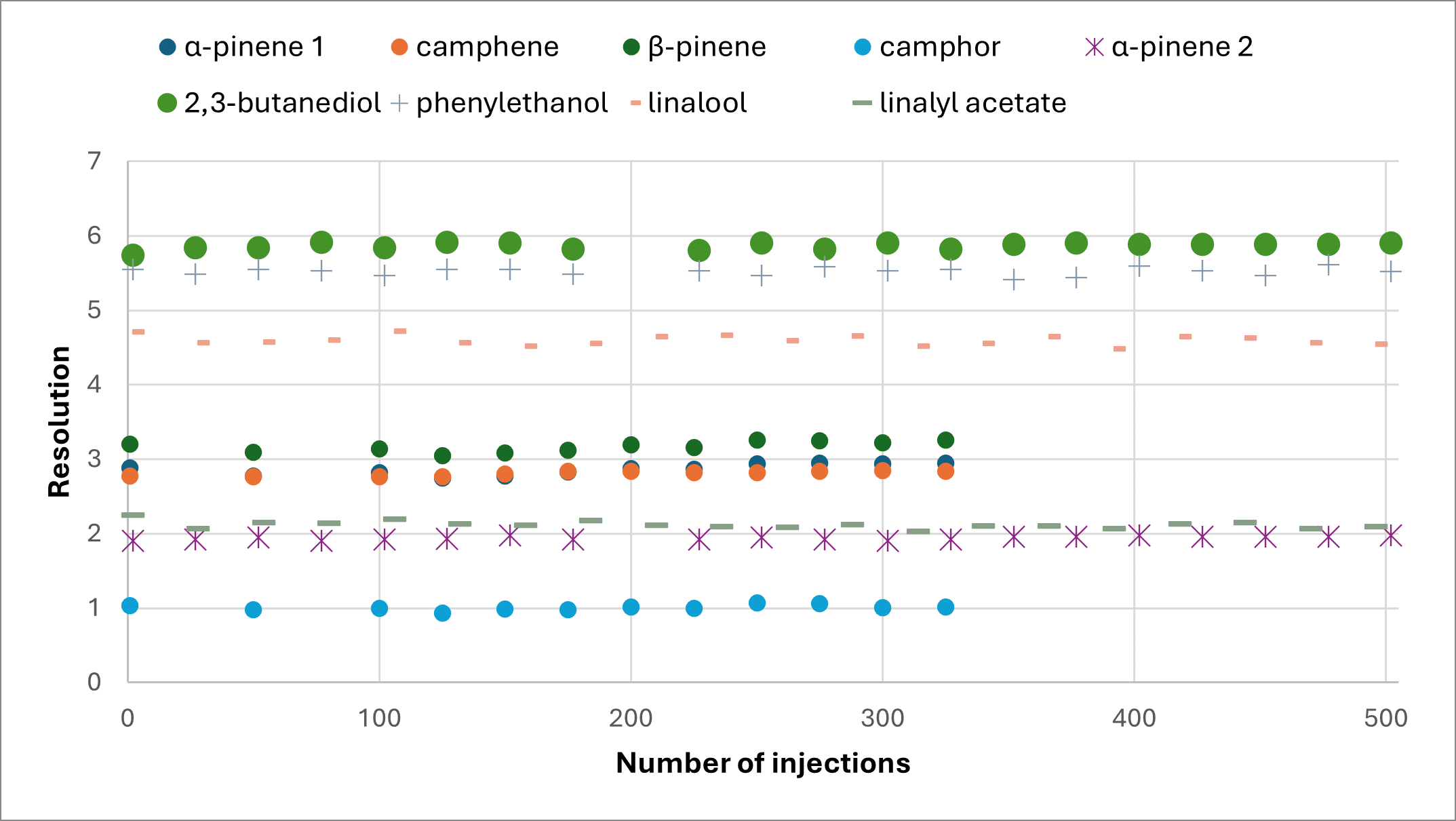
Figure 2: Resolution during all three experiments. The α-pinene 1 and 2 refer to experiment 1 and 2, respectively, which had a different temperature program, resulting in different resolution
Retention times
In all three experiments, there was a clear trend in retention times’ shift. All retention times were shorter at the end of the experiment (example in Figure 2), however, the change is within the margin of error. Despite this shift, resolution is not affected.
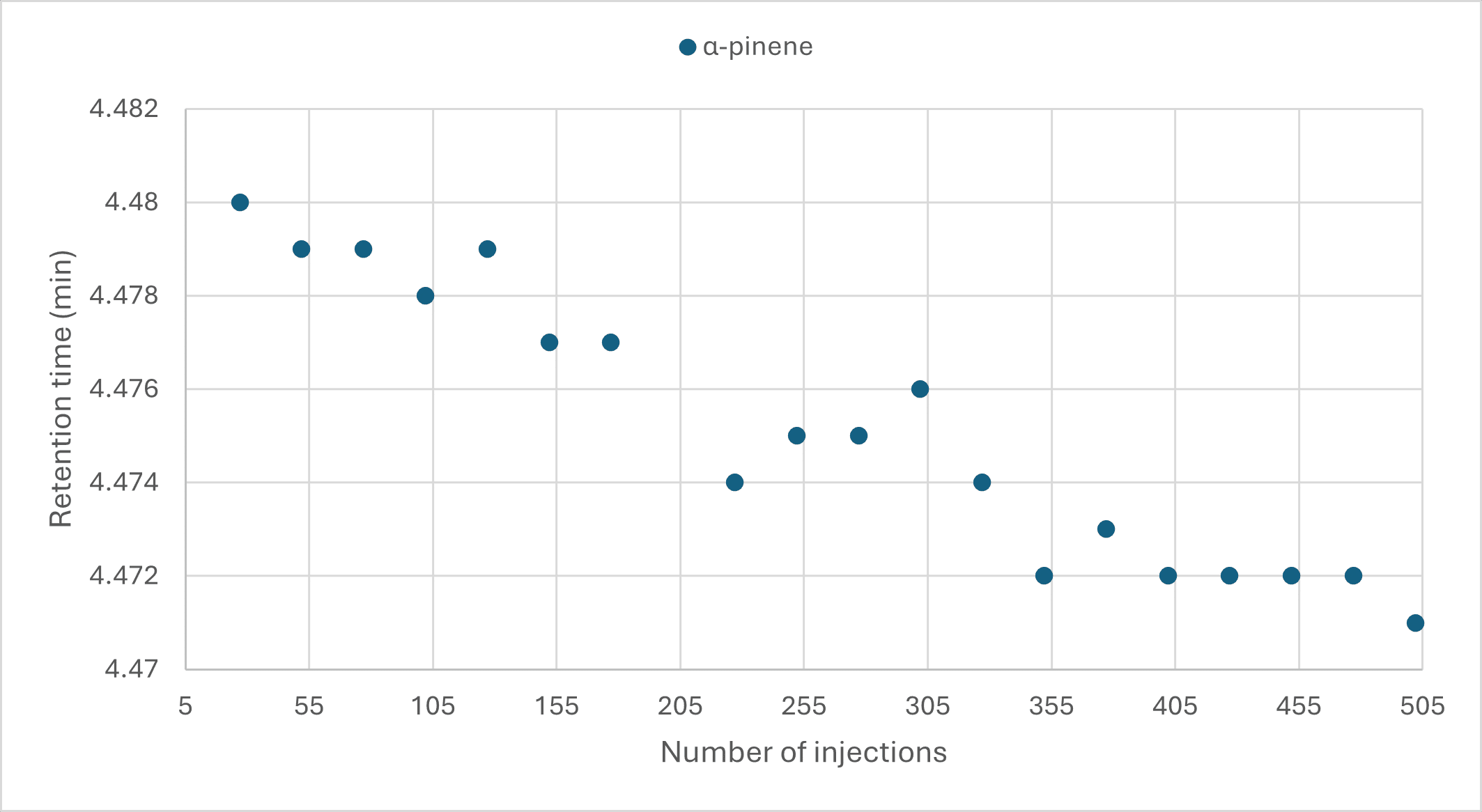
Figure 3: Retention times of α-pinene during the experiment 2
Figure 3 shows the same retention times’ shift for all selected chiral compounds in experiment 2. This graph shows that the change in retention times is minimal.
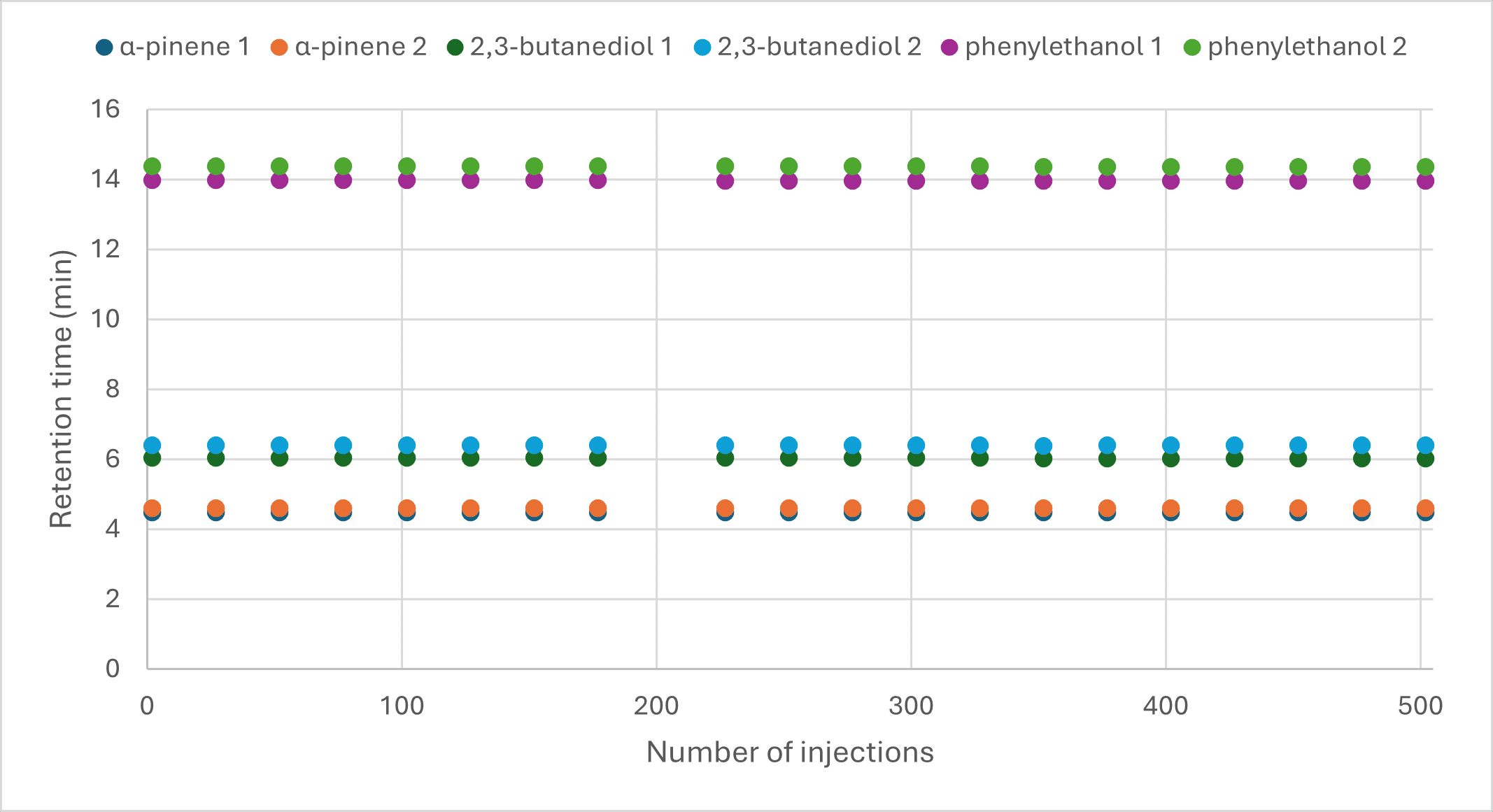
Figure 4: Retention times of selected chiral compounds during the experiment 2. Individual enantiomers are denoted as 1 and 2.
Peak width at 50% of its height
Throughout the experiments, the peak width at 50% of its height showed some variation (Figure 4); however, the differences were small (standard deviation was below 0.003 min). This is likely the reason why the resolution stayed stable throughout the experiments.

Figure 5: Retention times of selected chiral compounds during the experiment 1. Individual enantiomers are denoted as 1 and 2
To summarize, the chiral columns showed a good lifetime stability, with up to 500 injections without the loss of performance.