


I am happy to answer “yes” to this question. Those of you who have been doing this analysis might have been using our Ultra Quat column that I talked about in an earlier blog post.
This updated method uses the Raptor HILIC-Si, which is a newer product we are excited to have.
Paraquat and Diquat on Raptor HILIC-Si
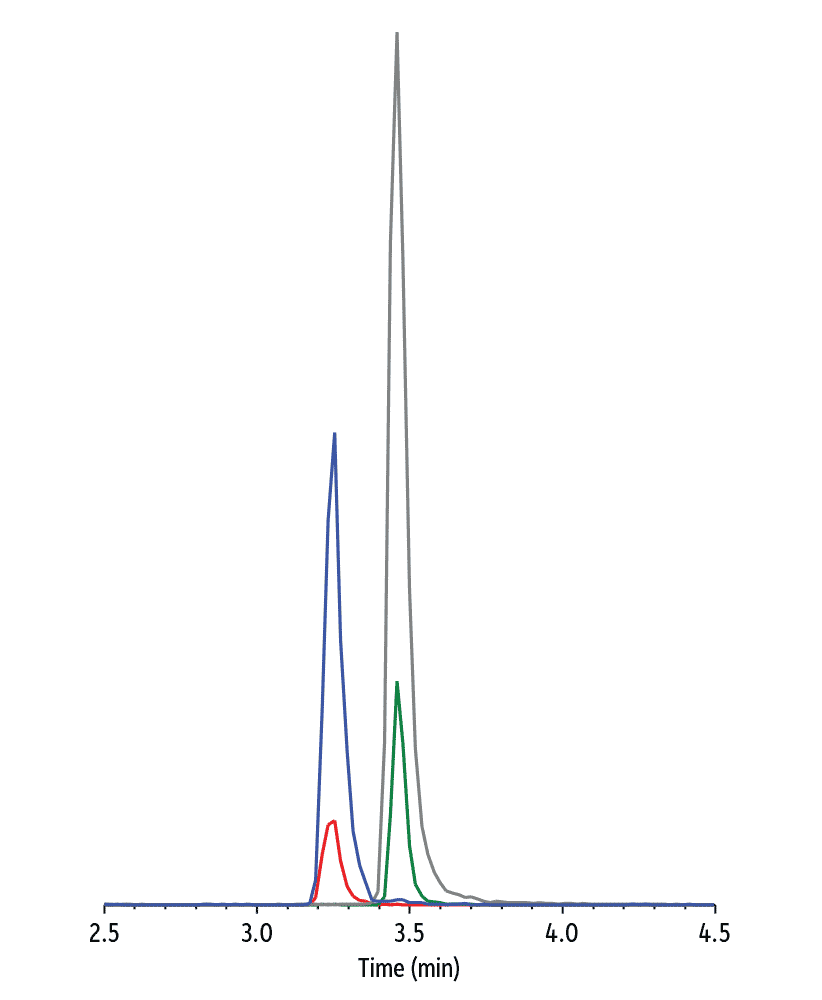
LC_FS0512
Peaks
| Peaks | tR (min) | Precursor Ion 1 | Product Ion 1 | Precursor Ion 2 | Product Ion 2 | |
|---|---|---|---|---|---|---|
| 1. | Diquat | 3.25 | 183.3 | 157.2 | 183.3 | 130.1 |
| 2. | Paraquat | 3.46 | 185.3 | 170.3 | 171.3 | 77.2 |
Conditions
| Column | Raptor HILIC-Si (cat.# 9310A52) | ||||||||||||||||||||
|---|---|---|---|---|---|---|---|---|---|---|---|---|---|---|---|---|---|---|---|---|---|
| Dimensions: | 50 mm x 2.1 mm ID | ||||||||||||||||||||
| Particle Size: | 2.7 µm | ||||||||||||||||||||
| Pore Size: | 90 Å | ||||||||||||||||||||
| Temp.: | 45 °C | ||||||||||||||||||||
| Standard/Sample | Paraquat & diquat calibration mix (cat.# 32437) | ||||||||||||||||||||
| Diluent: | Mobile phase B | ||||||||||||||||||||
| Conc.: | 50 ng/mL (cat.# 32437 diluted to 50 ng/mL in mobile phase B) | ||||||||||||||||||||
| Inj. Vol.: | 5 µL | ||||||||||||||||||||
| Mobile Phase | |||||||||||||||||||||
| A: | Water, 50 mM ammonium formate, 0.5% formic acid | ||||||||||||||||||||
| B: | 25:75 Water:acetonitrile, 50 mM ammonium formate, 0.5% formic acid | ||||||||||||||||||||
|
| Detector | MS/MS |
|---|---|
| Ion Mode: | ESI+ |
| Mode: | MRM |
| Instrument | HPLC |
We are pleased with this application, particularly since it does not require any ion pairing agents or chaotropic salts. The mobile phase modifiers are very common ones that most labs will have on hand and extended equilibration times are not needed (as compared to NaPF6 or Heptafluorobutyric acid). The run time is short and sweet. 🙂
I hope you find this post helpful and thanks for reading.
Products Mentioned
Miscela di calibrazione di parquat e diquat, 1000 µg/mL, acqua, 1 mL/ampolla