

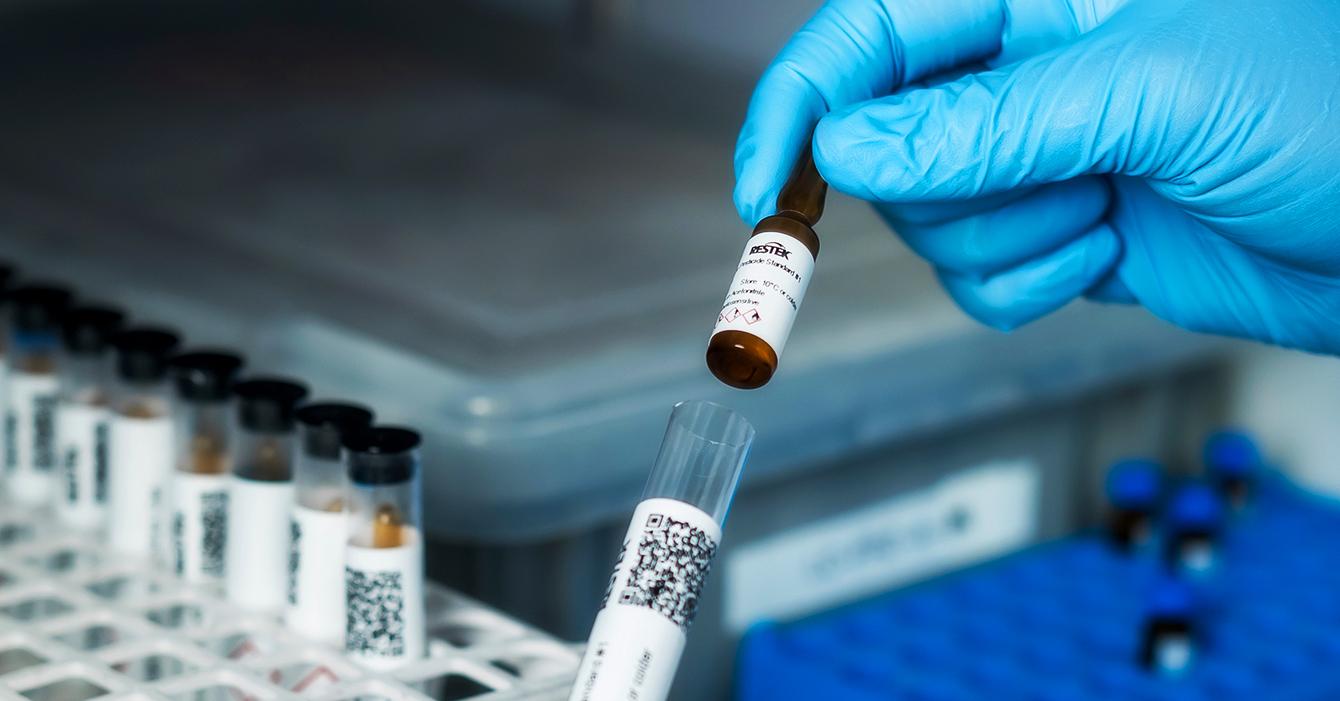
Accurate PFAS quantification requires high-purity, well-formulated, and precise reference materials. It’s equally important that these reference materials are correctly handled to ensure accurate results.
In this article, we’ll explain the physical properties of PFAS that require specific storage recommendations. We’ll then detail the key parameters that can improve stability of these standards: solvent polarity, concentration, addition of a stabilizer, and container material.
The Physical Properties of PFAS
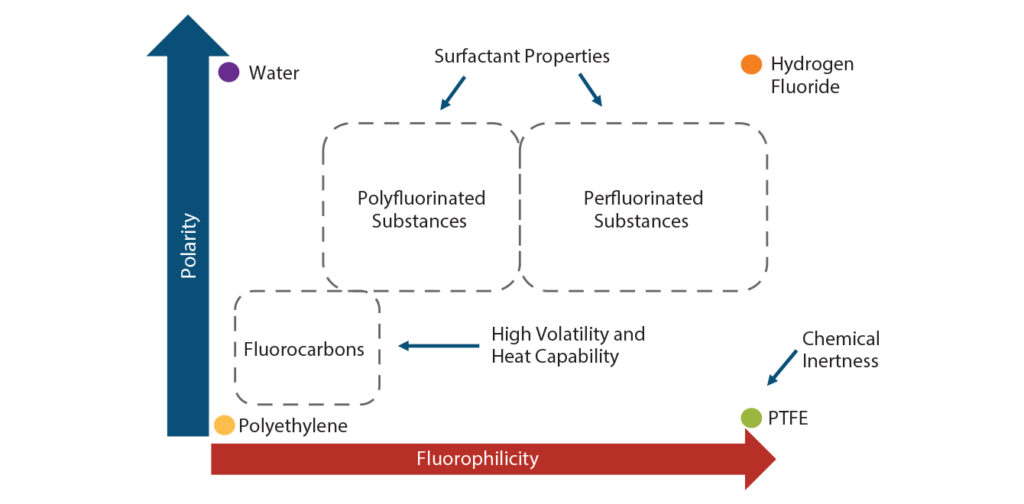
Fluorination of organic compounds imparts unique properties to molecules relative to their hydrocarbon analogues. Fully or partially fluorinated compounds have a wide range of applications, from chemical-resistant coatings to surfactants and pharmaceuticals. To conceptualize the effects of fluorination, it might be useful to envision fluorophilicity (the amount of fluorines that have been introduced to a molecule) as an orthogonal axis to polarity.
Compounds resting at the extreme high end of fluorophilicity and low end of polarity, such as Teflon, are noted for their chemical inertness. Small molecules with low polarity and low fluorophilicity, such as freons, are noted for their high volatility relative to their molecular weights, resulting in highly efficient thermal transfer materials. More relevant to most commercial PFAS analysis are poly- and perfluorinated ambiphilic compounds that rest somewhere within the middle of this theorized map (Figure 2).
The key properties of these perfluorinated compounds are their surfactant properties. Due to the highly fluorophilic backbone enhancing solute-solute interaction, many perfluorinated surfactants show increased surfactant properties compared to their hydrocarbon analogues. Perfluorooctane sulfonate (PFOS), for example, is approximately 20 times more efficient of a surfactant than octyl sulfate [1] (Figure 3).
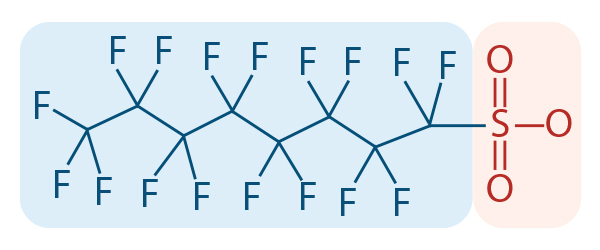
Highly fluorophilic tails interact strongly with other molecules of fluorinated surfactant.
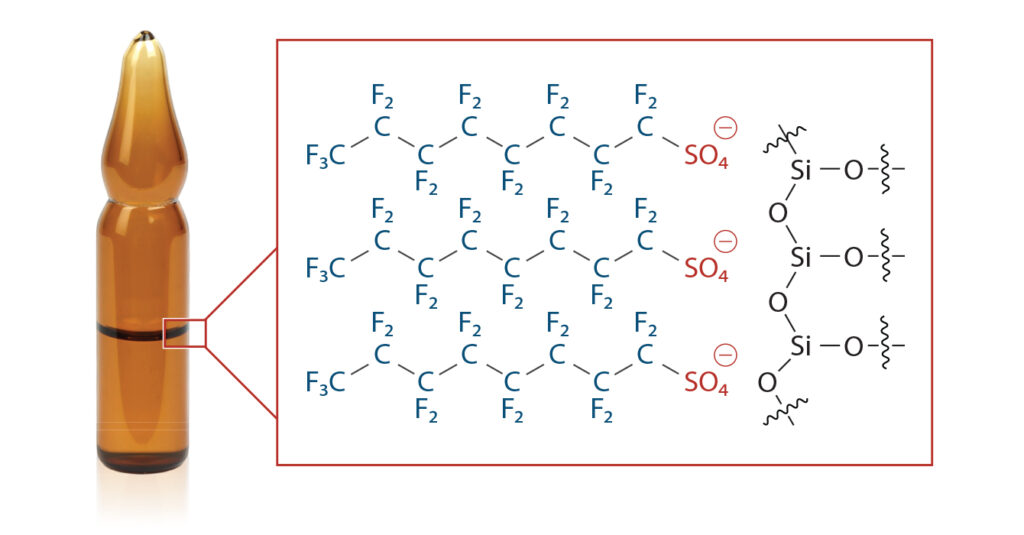
Highly polar end group interacts strongly with polar solvents or substrates, such as water, alcohols, or silanols (untreated glass).
To quantify the ability of these compounds to act as surfactants, we can determine their critical micelle concentration (CMC). CMC is a concentration at which there is an observable formation of micelles in solution. It does not measure the onset of micelle formation, but it can be looked at as the point when micelle concentration is observerable. CMC is impacted by many factors, including solvent polarity, identity of the end group, identity of the counter ion, and chain length. Chain length in particular has an exponential effect on the observed CMC within a given subgroup of surfactants [2] (Figure 4).
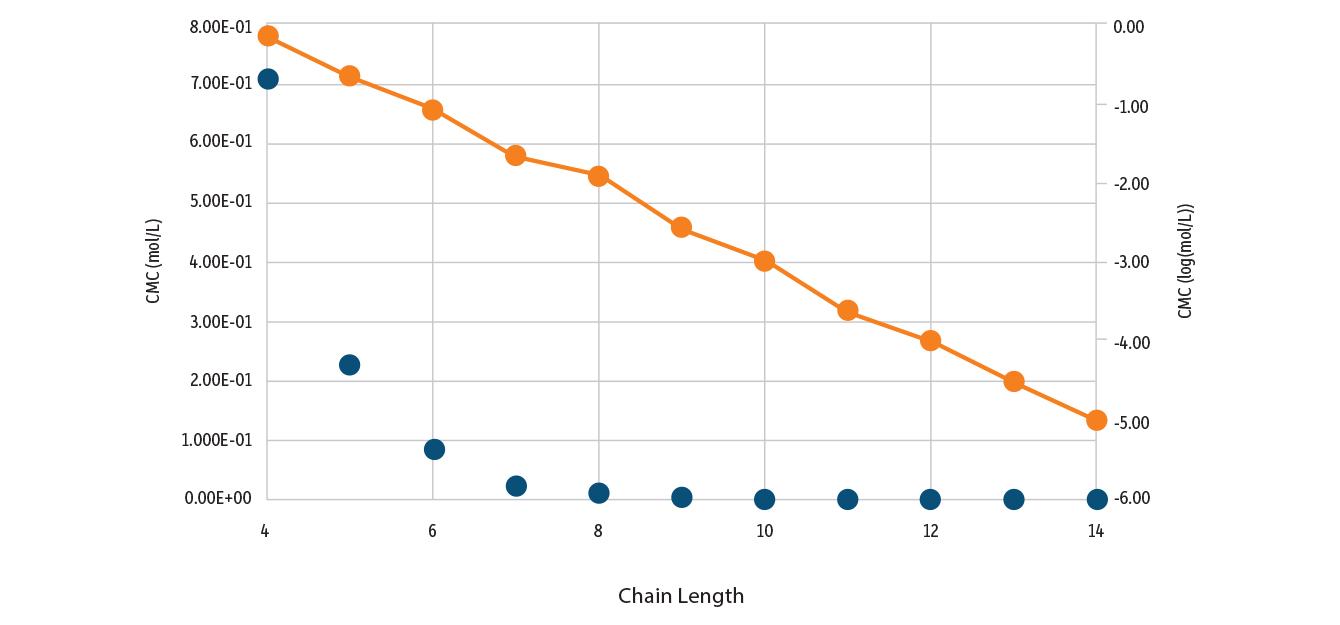
While micelle formation might not be directly responsible for absorption of PFAS onto containers, it seems likely that the same factors that result in a lower CMC correlate with factors that could cause PFAS to absorb strongly to a surface. Empirically, the observed stability of PFAS CRMs tracks well with each analytes’ CMC, so we’ll discuss each factor that impacts stability of these analytes’ stability as they relate to their CMC.
Solvent Polarity
All data was acquired seven days after initial mixing unless otherwise noted.
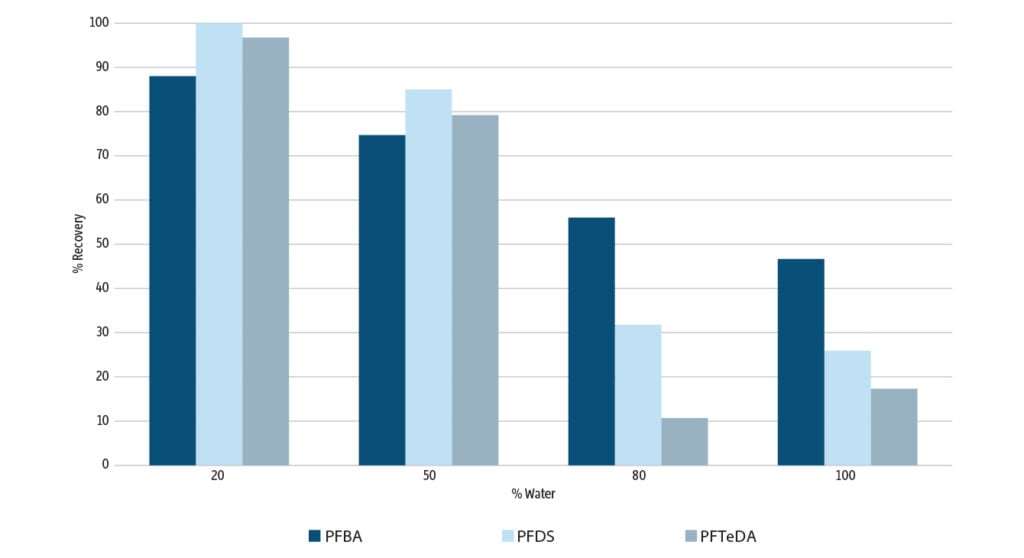
The polarity of the solvent used for storage greatly impacts the extent of adsorption observed. As the percentage of water in a mixture of methanol and water increases, there is a notable decrease in recovery across all analytes tested (Figure 5). This effect is particularly significant for longer-chain PFAS. Due to their generally lower CMC, long-chain PFAS are prone to pronounced adsorption in high polarity solvents.
In general, it’s recommended to avoid storing PFAS CRMs in aqueous solutions. PFAS CRMs should be combined with water, as necessary, just prior to analysis.
Concentration
All data was acquired seven days after initial mixing unless otherwise noted.
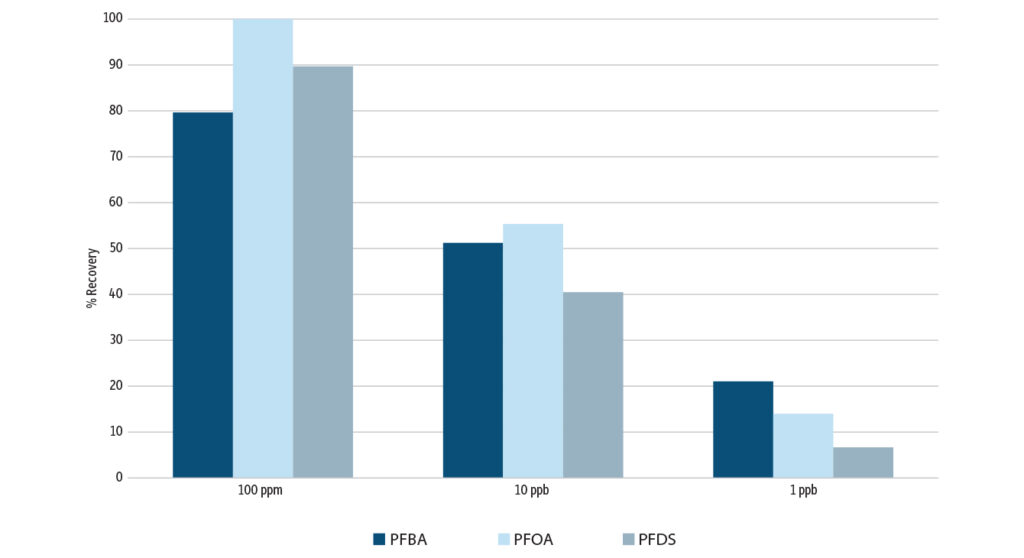
Concentration also had a pronounced effect on recoveries. There was a significant decrease in recoveries (relative to 100% methanol) of a 1:1 methanol:water mixture based on concentration. At 100 ppm, adsorption is relatively modest, but this effect increases significantly as the concentration is decreased. Adsorption is likely limited by the surface area of the container. At 100 ppm, saturation of PFAS onto the surface of the container has very little impact on the concentration of the solution (Figure 6). As the concentration decreases, the portion of PFAS adsorbed onto the container relative to the amount in solution increases.
This effect is likely impacted by the total PFAS concentration rather than being based on each component’s individual concentration. For a multicomponent mix, each component adorbs to the surface competitively, minimizing the impact of each individual component.
For this reason, Restek’s PFAS CRM singles have been formulated at a much higher concentration than multicomponent mixes. To minimize adsorption, it’s recommended to store PFAS CRMs as concentrated as possible and minimize the number of times the solution is transferred to new containers. Both will minimize these adsorption effects.
Addition of a Stabilizer
Top chart: 20 °C, bottom chart: 40 °C.
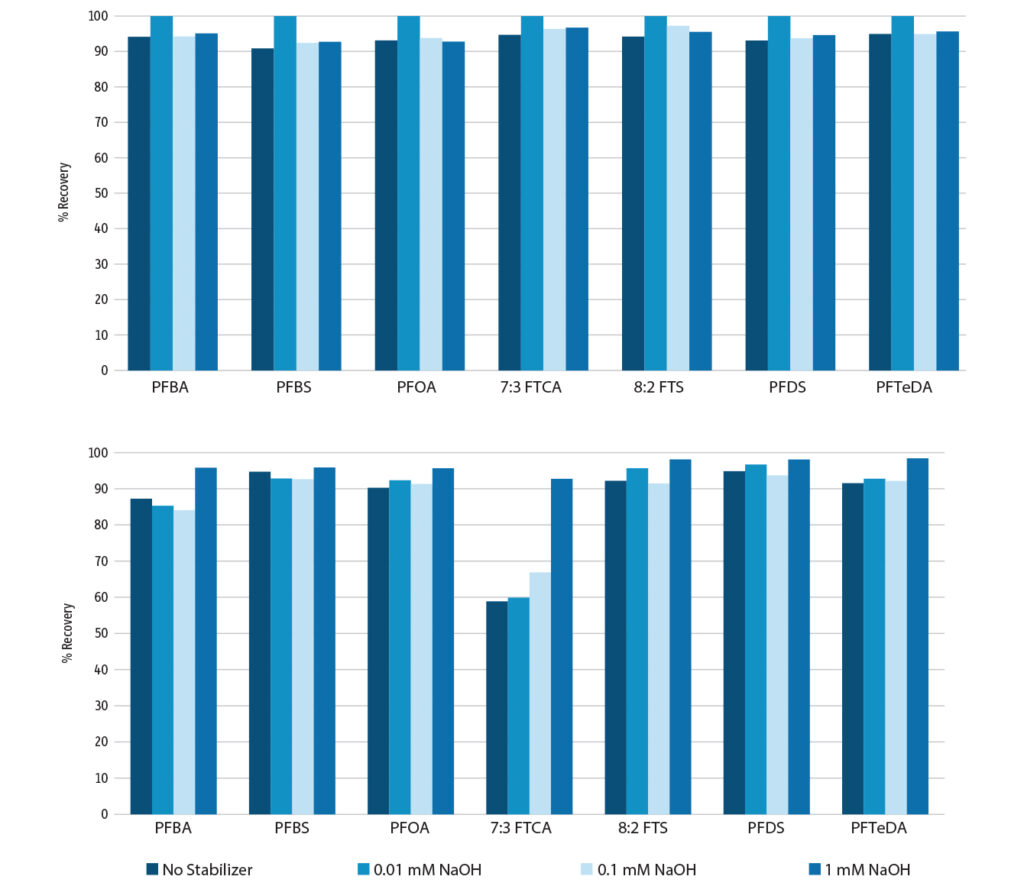
The addition of a stabilizer was found necessary for long-term stability of a few compounds (Figure 7). Esterification of the carboxylic acids in alcoholic solvents can be autocatalyzed by free acids. Esterification of polyfluorinated carboxylic acids is more rapid than their perfluorinated analogues, but both can undergo an amount of esterification over time. One millimolar of NaOH was found effective to inhibit esterification of 7:3 FTCA in a stressed stability test.
It’s not advised to store PFAS CRMs with additional base as the original amount present in the CRM is sufficient to prevent esterification even when diluted. Avoid storage in acidic alcoholic solvents.
Container Material
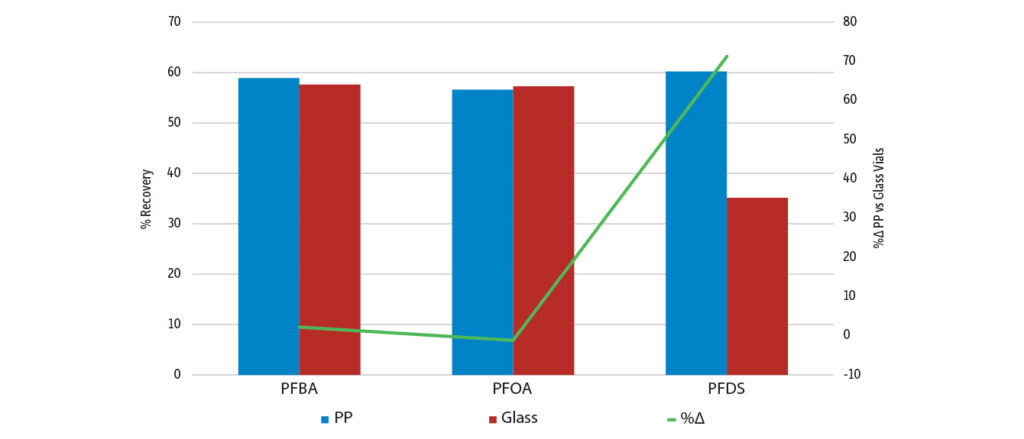
Lastly, the nature of the container material can impact recoveries of analytes. At low concentrations with highly polar diluent, there’s a notable increase in recoveries in polypropylene versus glass vials (Figure 8). These effects are, again, much more pronounced for longer-chain PFAS and are relatively minor compared to the other factors. For a far more in-depth analysis, see the following paper: https://doi.org/10.1021/acsmeasuresciau.3c00027
At low concentrations, such as during final analysis, polypropylene vials are recommended. High concentrated solutions should be largely unaffected by the storage container’s material.
References
- ITRC (Interstate Technology & Regulatory Council), PFAS — Per- and Polyfluoroalkyl Substances: Data Tables, PFAS Technical and Regulatory Guidance Document and Fact Sheets, 2026. https://pfas-1.itrcweb.org/external-data-tables/
- E. Kissa, Fluorinated surfactants: Synthesis, properties, applications, Marcel Dekker Inc., New York City, New York, 1994.

Need Help with Your PFAS Analysis?
From method selection to product recommendations, our PFAS experts are here to help you navigate complex workflows and achieve accurate, reliable results.