

When selecting RAVEqc quick-connect air valves, first consider where you will be installing the valves. There are too many possible configurations to list individually, but you can identify the parts you need for your specific setup using these general considerations.
- Every RAVEqc quick-connect air valve has two halves (a valve side and a fitting side). Each side needs to be matched to the opposite gender valve or fitting (male to female and vice versa). On the fitting side, also be sure to match the dimension you are connecting to.
- Examples:
- To connect directly to an air canister with a tube port ¼” female compression fitting, you can use any RAVEqc quick-connect air valve with a ¼” male compression fitting. You must also use a RAVEqc valve bracket if using a 1, 3, 6, or 15 L Restek air canister.
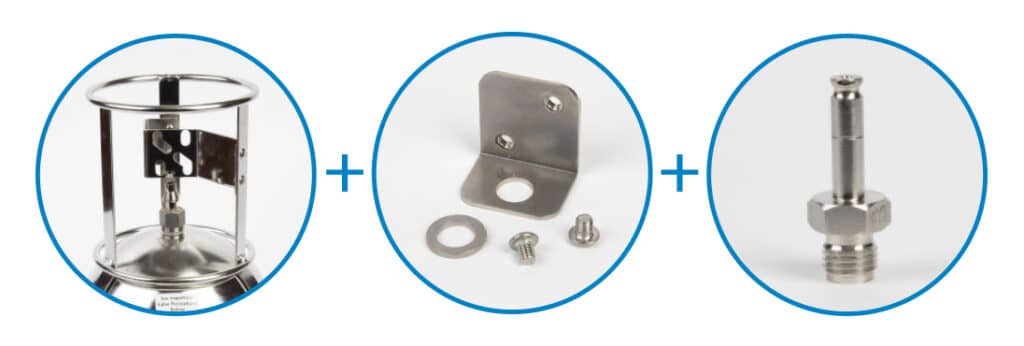
- To connect to the ¼” male compression fitting on a diaphragm valve that is installed on an air canister, use a RAVEqc quick-connect air valve with a tube end fitting.
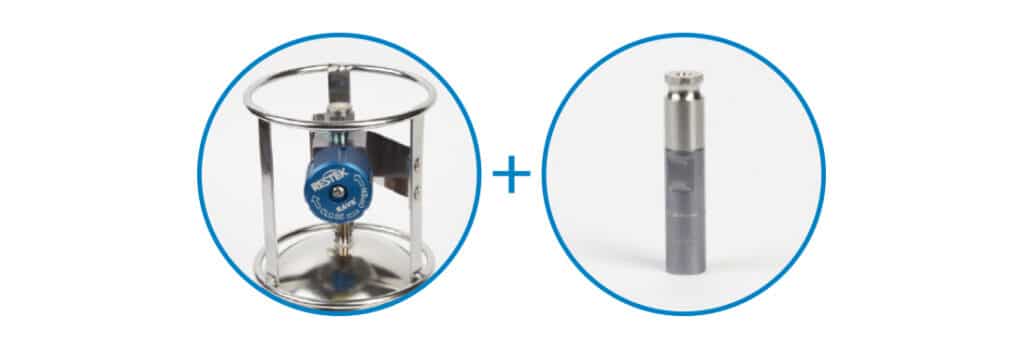
- To connect directly to an air canister with a tube port ¼” female compression fitting, you can use any RAVEqc quick-connect air valve with a ¼” male compression fitting. You must also use a RAVEqc valve bracket if using a 1, 3, 6, or 15 L Restek air canister.
- If you are using a RAVEqc quick-connect air valve with a tube end fitting, consider the dimensions/clearances you need for installation when selecting the valve length.
- If you are analyzing reactive compounds, we recommend using Siltek-treated RAVEqc quick-connect air valves for a highly inert sample path.
- Male valves are generally less expensive than female valves, so we recommend male valves for the devices you have the most of (probably air canisters, rather than cleaning ovens, etc.).