

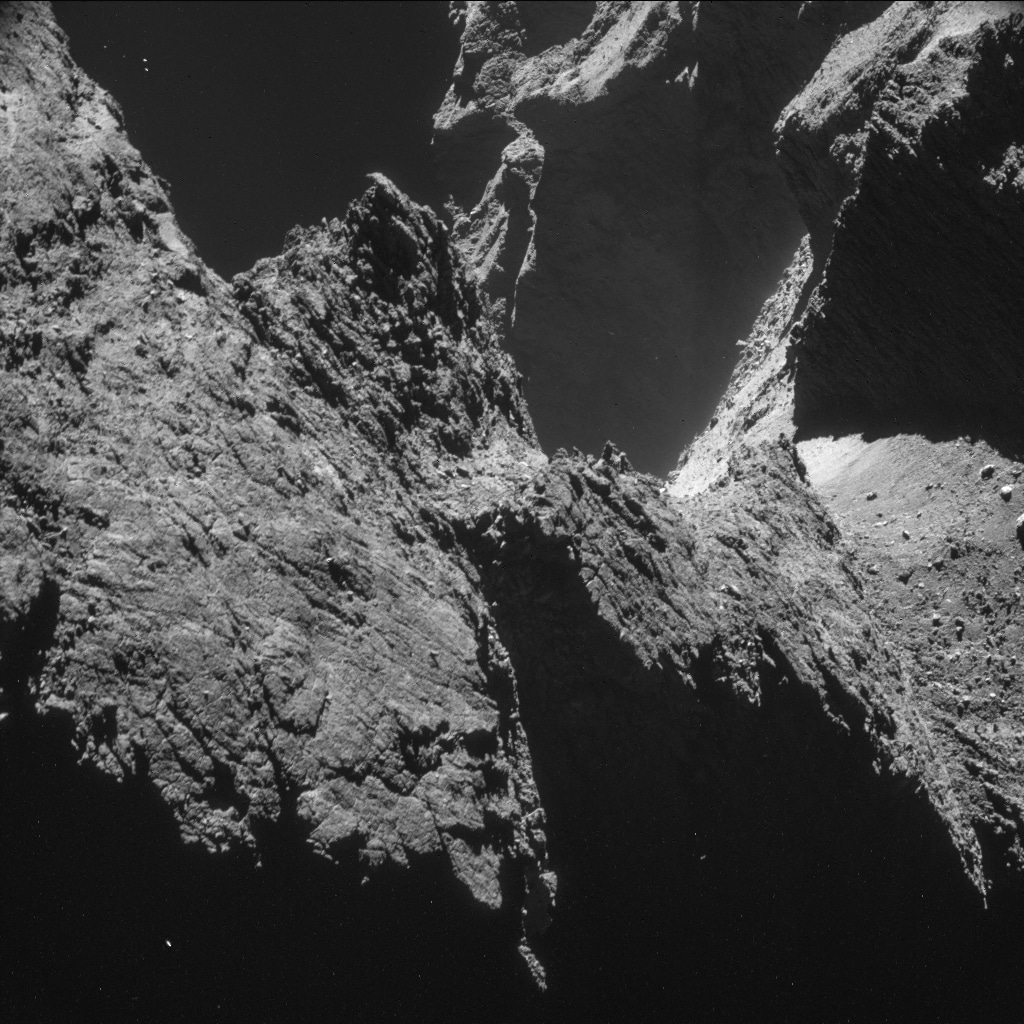
Comet 67P/Churyumov–Gerasimenko at less than 10 km from its surface. Photo Courtesy of ESA
In 1993 the International Rosetta Mission was approved and over the next 21 years an estimated 1 billion Euros was invested in an audacious plan to catch a comet. On March 3rd, 2004 a European Ariane 5 rocket propelled the Rosetta on a ten year mission to orbit a comet. While there have been 6 brief intercepts with comets in the past this will be the first time a spacecraft will fly alongside and land on a comet as it heads back into our solar system. The craft has 21 instruments to include 8 parallel gas chromatographic columns on board, each equipped with a thermal conductivity detector (TCD). Using thermally activated switches effluent from these TCDs can be directed to a single Time-of-Flight Mass Spectrometer. Restek provides four of the columns to include the MXT-UPLOT, MXT-1701, MXT-20 and MXT-1.
Previous encounters with comets and ground-based observations indicate that comets contain complex organic molecules containing carbon, hydrogen, oxygen, nitrogen and sulfur and may hold the key to understanding the origins of life on our planet. Today at 11:00 AM EST the Philae lander will touch down on the comet and the European Space Agency (ESA) will webcast live coverage from mission control in Darmstadt, Germany.
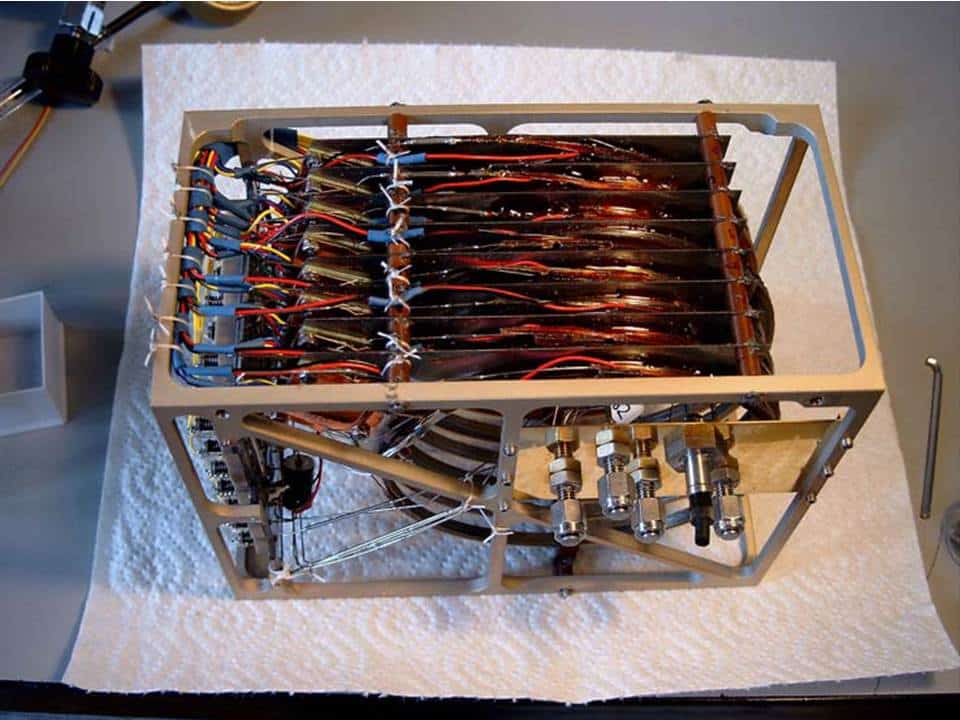
The pneumatic hardware for the 8 capillary columns on board the Philae lander. Photo Max Plank Institute for Solar Resarch, Katlenburg-Lindau, Germany.
Live Webcast of from Mission Control: http://new.livestream.com/esa/cometlanding
Track Rosetta’s Location: http://sci.esa.int/where_is_rosetta/
COSAC – Cometary Sampling and Composition Experiment: http://www.mps.mpg.de/1979406/COSAC