

Vitamins are essential for normal bodily functions. A vitamin deficiency can result in adverse side-effects, depending on the function of the vitamin. Fat- and water-soluble are the two main groups of vitamins. The solubility of the vitamin determines how it is absorbed and transported throughout the body. Water-soluble vitamins include B vitamins (thiamine B1, pyridoxine B6, niacin B3, pantothenic acid B5, folic acid B9, cyanocobalamin B12, biotin B7, riboflavin B2) and fat-soluble include A, D, E, and K vitamins. It’s important to have accurate quantitation for vitamin content in food, nutraceuticals, and consumer goods to ensure proper labeling and nutrition. Some vitamins have toxic effects at high-levels, and thus it is important that they be monitored and controlled.
HPLC methods are often used to analyze vitamins in food products and nutraceuticals to ensure appropriate labeling. Due to the diverse nature of fat- and water-soluble vitamins, several different LC columns are often utilized and can include C8, C18, C30, HILIC, and normal phase stationary phases. Due to the diversity in structure and polarity of vitamins, it can be common for vitamin testing to be spread over multiple instruments using methods that only monitor a few at a time.
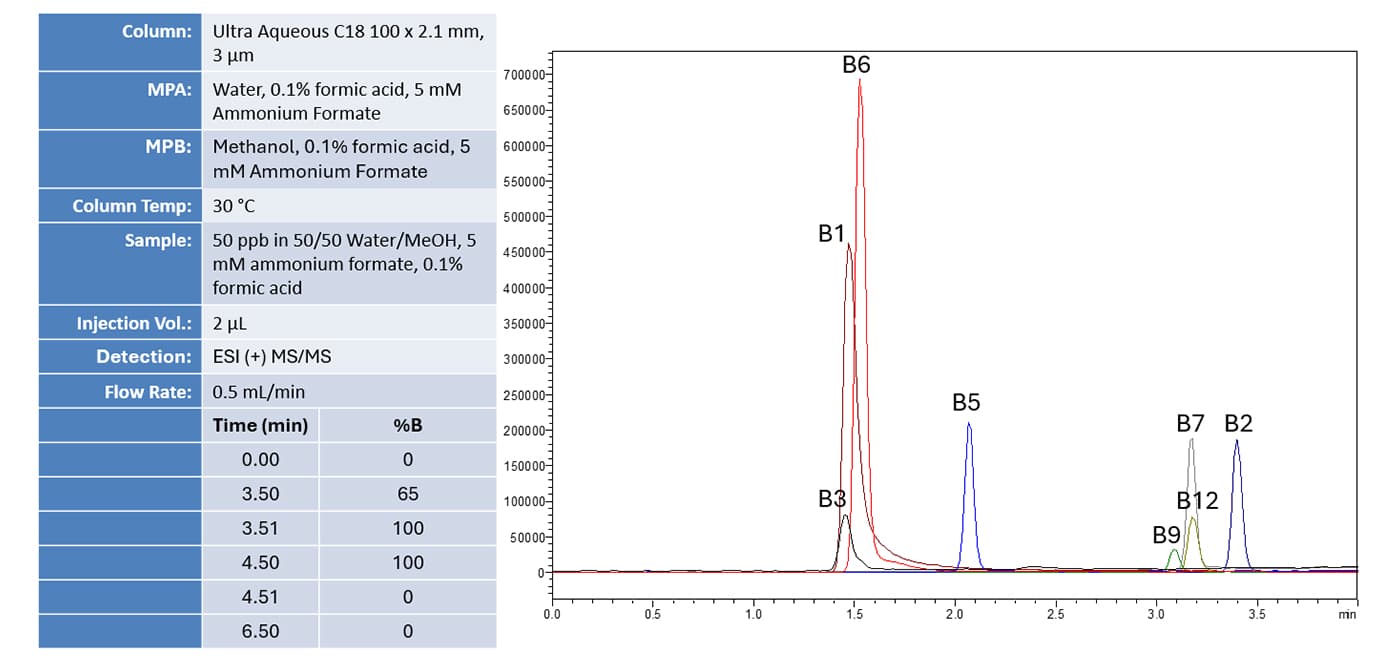
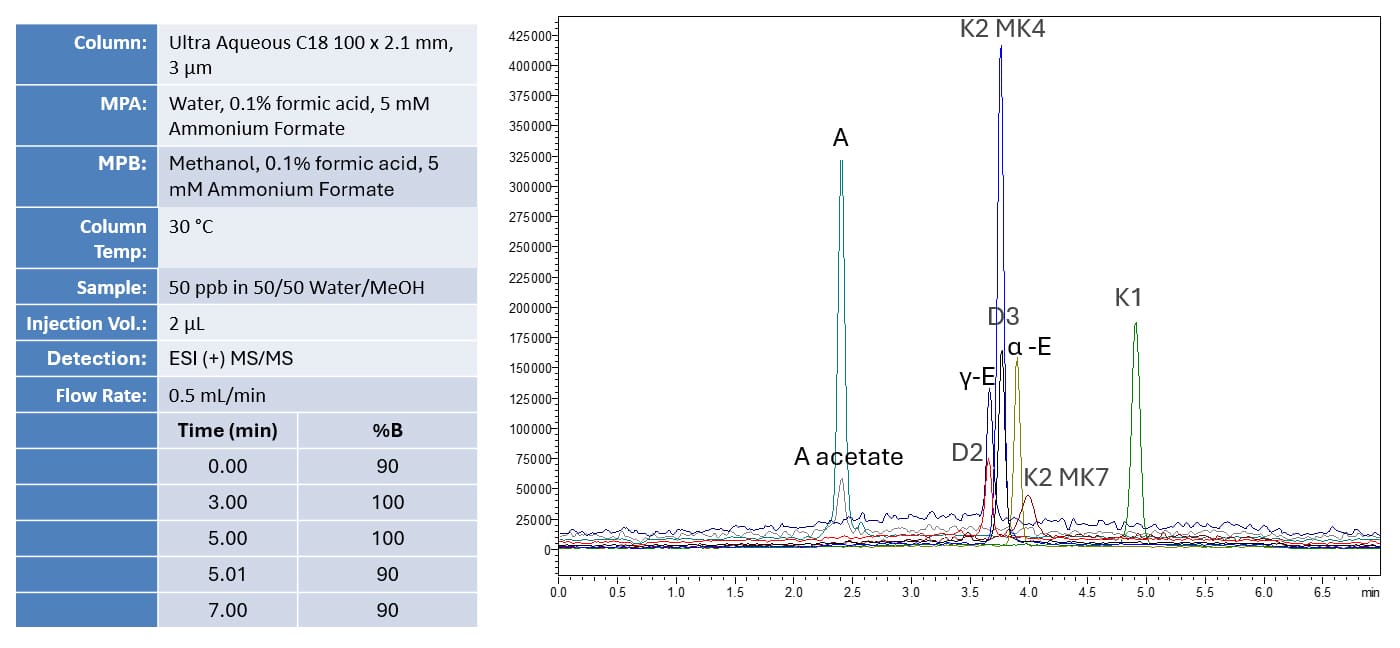
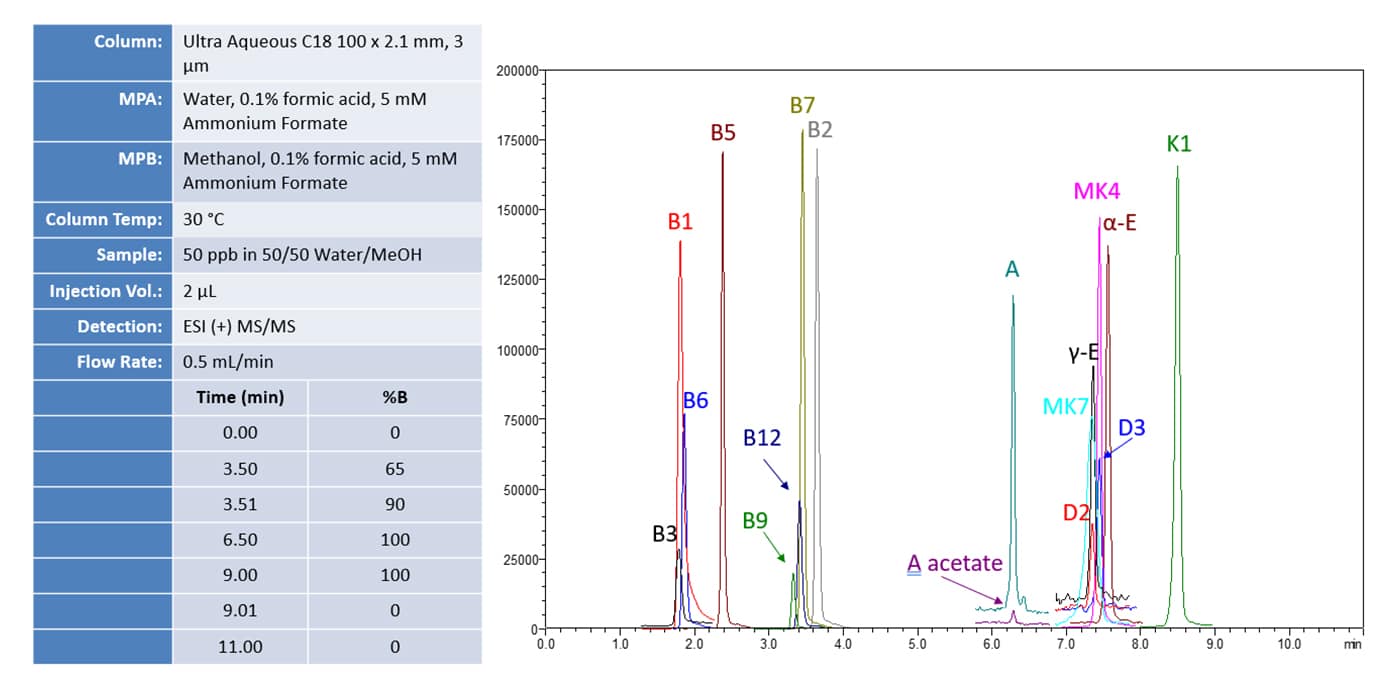
In this work, an Ultra Aqueous C18 column (cat.# 9178312) was used to analyze both fat- and water-soluble vitamins using water and methanol, both modified with 0.1% formic acid (v/v) and 5 mM ammonium formate. Rapid methods were developed for the individual classes of vitamins with a 6.5-minute method for water-soluble vitamins (Figure 1); a 7-minute method for fat-soluble vitamins (Figure 2); and an 11-minute method for the combined analysis (Figure 3). A combined analysis for both classes of vitamins will not be applicable to all types of samples but can be advantageous for samples that do not require specific extraction procedures such as nutraceuticals. Since all three developed methods use the same analytical columns and mobile phases, all analyses can be performed on the same instrument setup eliminating the need for designated instruments for different vitamin analyses.
LC-MS/MS can offer better sensitivity, selectivity, and time savings compared to traditional analysis methods. Is your lab interested in moving their vitamin analysis to LC-MS/MS and combining panels? Reach out to your local sales representative to learn more about an Ultra Aqueous C18 column today and simplify your vitamin analyses! Restek – Find Your Sales Rep