


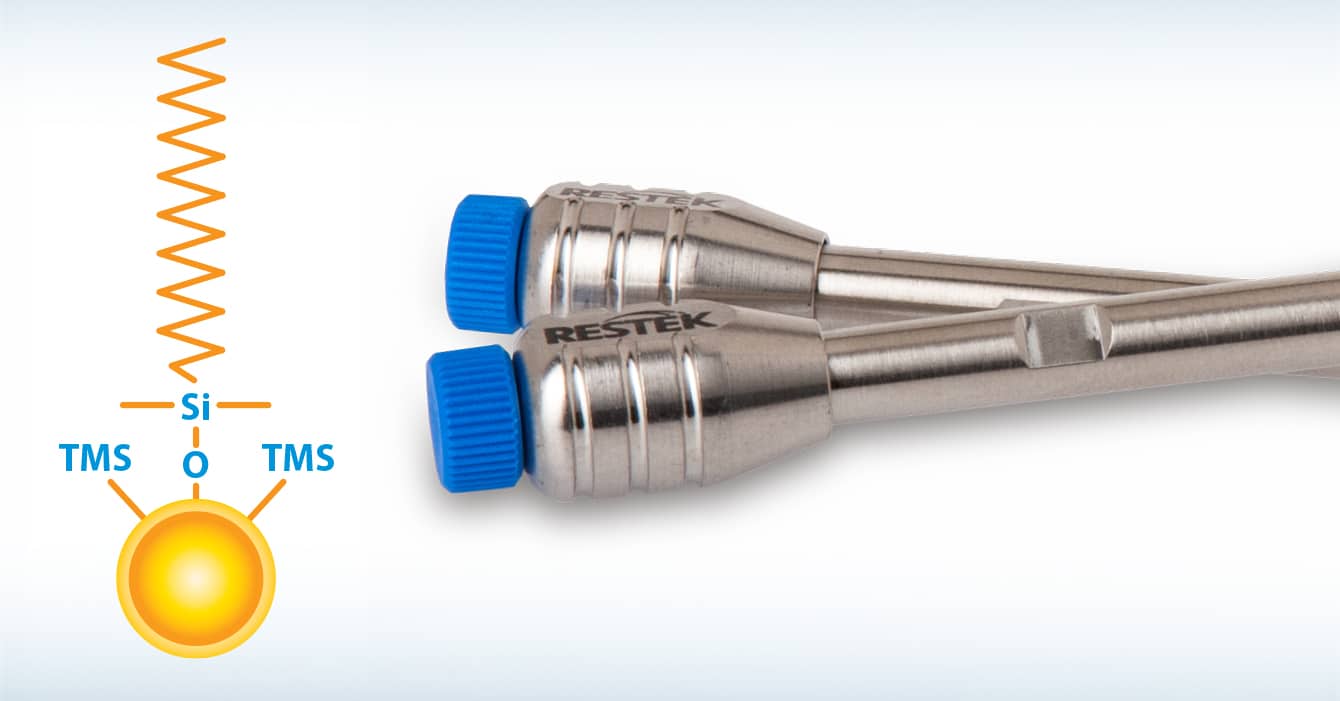
With Raptor LC columns, Restek chemists became the first to combine the speed of 2.7 and 5 μm superficially porous particles (also known as SPP or “core-shell” particles) with the resolution of highly selective USLC technology, improving separations and speeding up analysis times with standard HPLC instruments. Raptor then evolved to bring that same improved speed, efficiency, and selectivity to UHPLC analyses by offering 1.8 μm particle columns. Learn more about Raptor LC columns at www.restek.com/raptor
Even though every LC lab has a cache of C18s, not all C18s are created equal. Because the chemistry tends to be similar, the silica support that carries this ubiquitous octadecylsilane phase becomes vitally important. When you need a general-purpose LC column, don’t just grab any C18. Choose the speed, efficiency, and long-lasting ruggedness of the Raptor C18 SPP LC column.
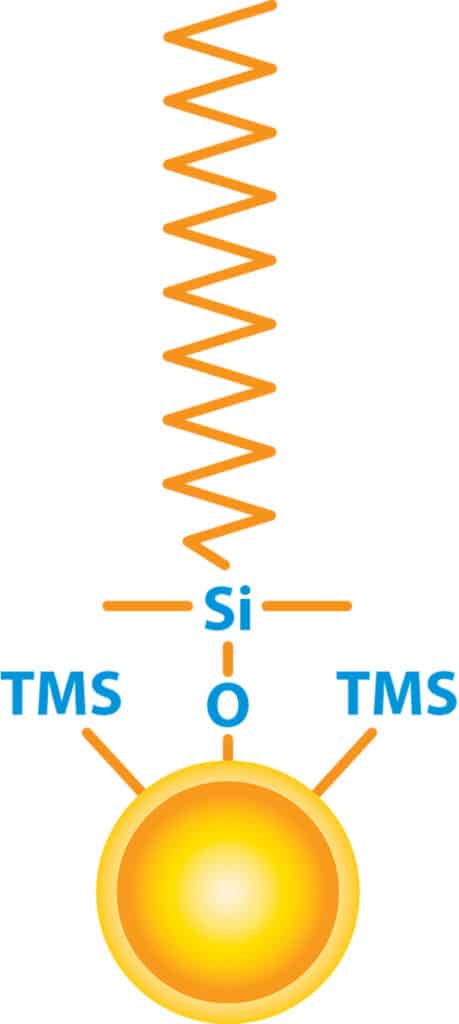
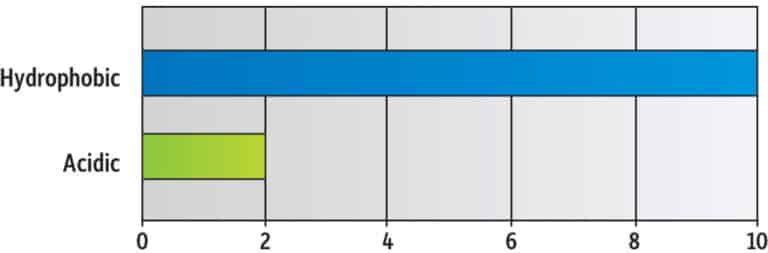
The traditional end-capped Raptor C18 offers the highest hydrophobic retention of any Raptor phase, and it is compatible with a wide range of mobile phases from moderately acidic to neutral (pH 2–8). Whether for food safety, environmental, or bioanalytical analyses, this phase offers consistently excellent data quality in less time across myriad reversed-phase applications, matrices, and compound classes.
Column Description:
Stationary Phase Category:
C18, octadecylsilane (L1)
Ligand Type:
End-capped C18
Particle:
1.8 μm, 2.7 μm, or 5 μm superficially porous particle (SPP or “core-shell” particle) silica
Pore Size:
90 Å
Surface Area:
125 m2/g (1.8 μm),
130 m2/g (2.7 μm),
or 100 m2/g (5 μm)
Recommended Usage:
pH Range: 2.0–8.0
Maximum Temperature: 80 °C
Maximum Pressure: 1034 bar/15,000 psi* (1.8 μm),
600 bar/8700 psi (2.7 μm); 400 bar/5800 psi (5 μm)
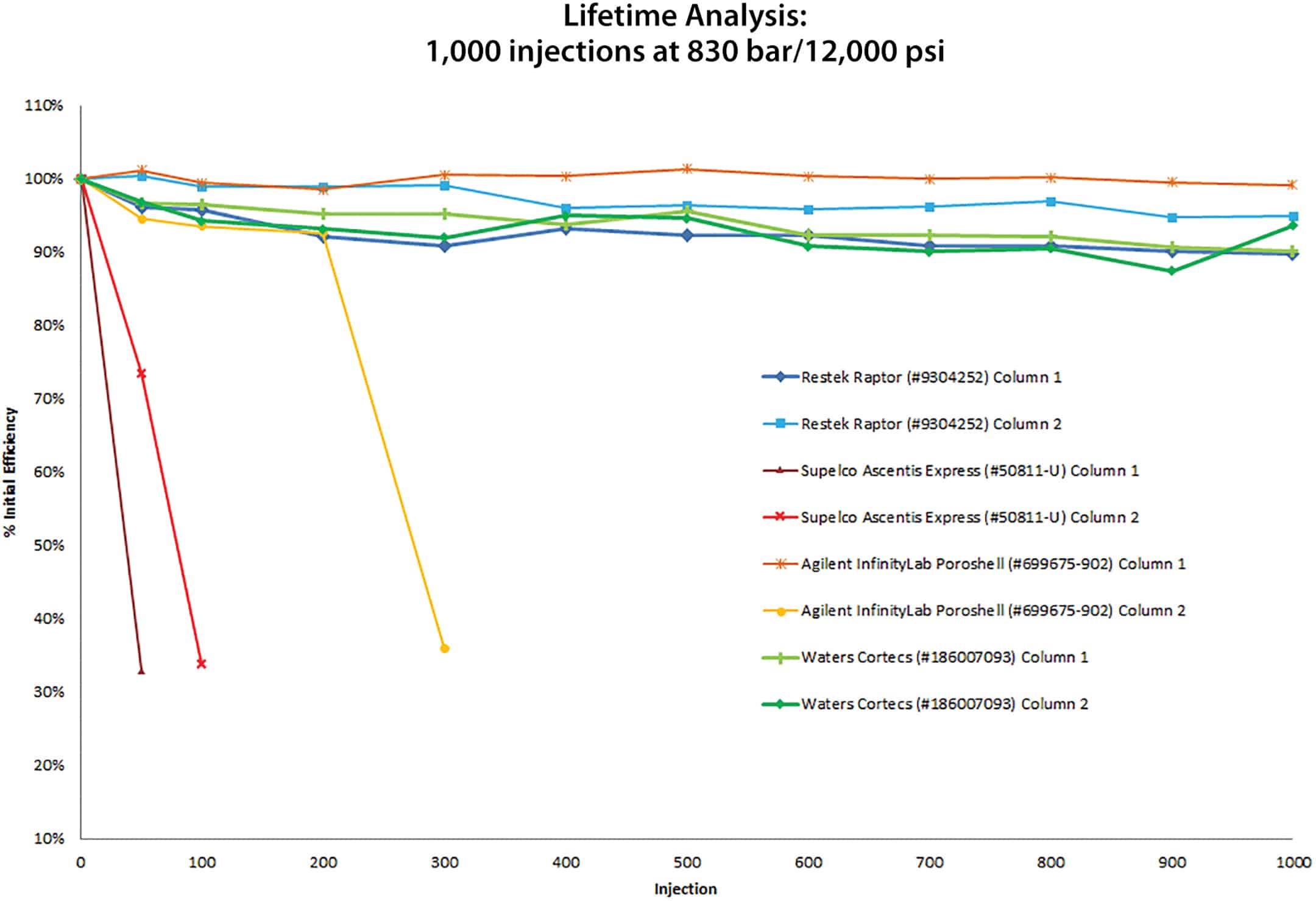
* For maximum lifetime, recommended maximum pressure for 1.8 μm particles is 830 bar/12,000 psi.
Properties:
- Compatible with moderately acidic to neutral mobile phases (pH 2–8).
- Excellent data quality in food, environmental, bioanalytical, and other applications.
Switch to a C18 when:
- You need a general-purpose column for reversed-phase chromatography.
- You need to increase retention of hydrophobic compounds.
Column Interaction Profile:
Defining Solute Interactions:
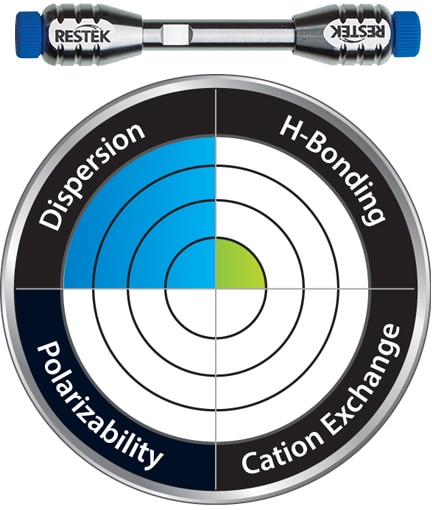
- Dispersion
Solute Retention Profile:
Target Analyte Structures:
- Hydrocarbons
Target Analyte Functionalities:
- Hydrophobic compounds
Raptor C18 Performance: Speed, Efficiency, and Ruggedness in Action
Raptor C18 columns provide outstanding dependability and data quality with high efficiency and peak symmetry, and they are built to exacting specifications that make your columns exceptionally consistent and improve their lifetime. To lower costs and improve profitability, you need columns to last longer, data to be reproducible, and existing HPLC instrumentation to run faster. Get there with the only general-purpose C18 that gives you Selectivity Accelerated.
Expect consistently high performance over 1000 injections
Outstanding peak shapes for top-notch data
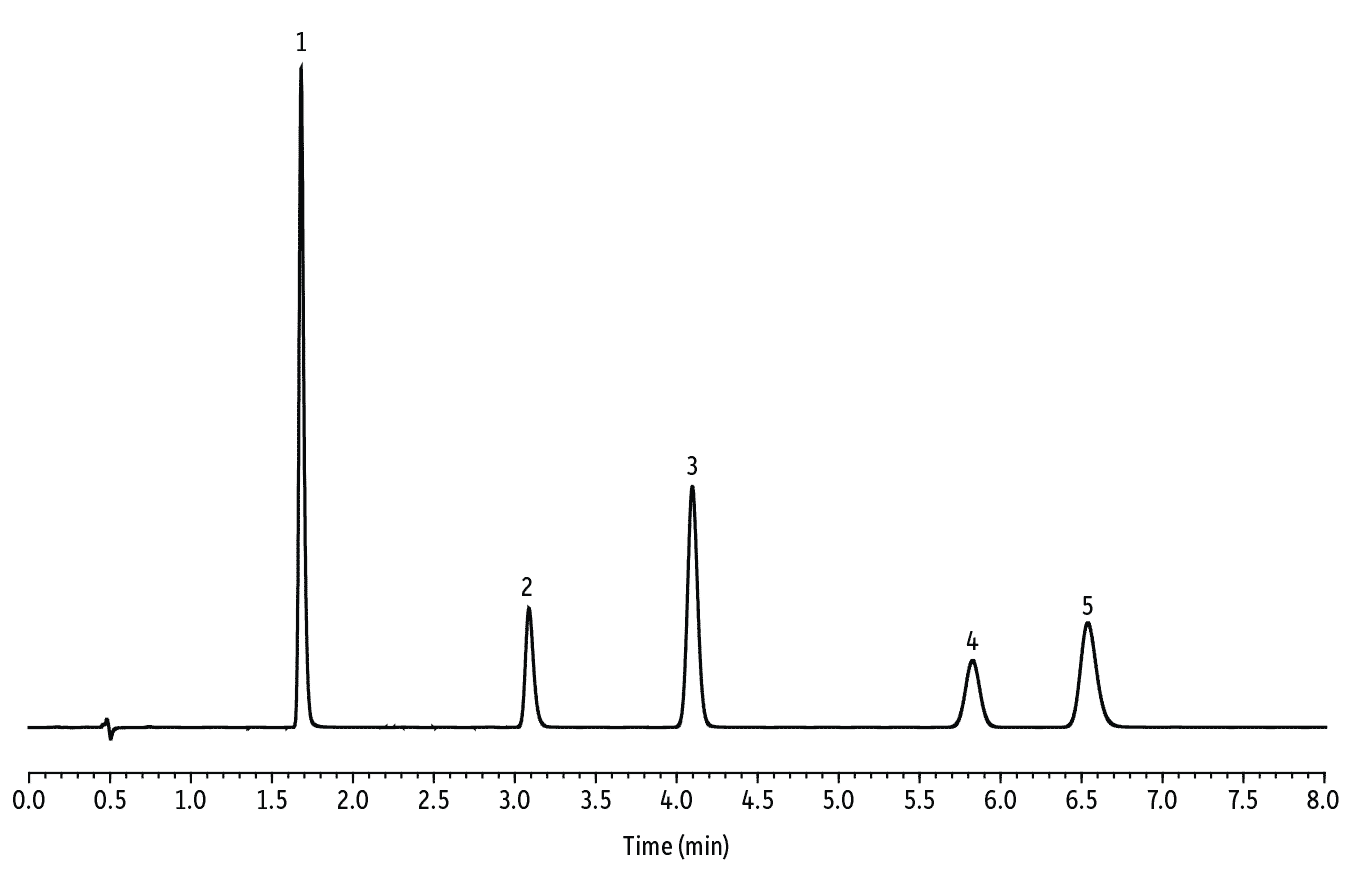
LC_GN0557
Peaks
| Peaks | tR (min) | Conc. (mg/mL) | |
|---|---|---|---|
| 1. | p-Tolunitrile | 1.681 | 0.6 |
| 2. | 4-Butylbenzoic acid | 3.088 | 0.8 |
| 3. | 3,4-Dimethylanisole | 4.096 | 1.0 |
| 4. | p-Xylene | 5.827 | 0.4 |
| 5. | Mefenamic acid | 6.539 | 0.6 |
Conditions
| Column | Raptor™ C18 (cat.# 9304A1E) | ||||||||||||
|---|---|---|---|---|---|---|---|---|---|---|---|---|---|
| Dimensions: | 100 mm x 3 mm ID | ||||||||||||
| Particle Size: | 2.7 µm | ||||||||||||
| Pore Size: | 90 Å | ||||||||||||
| Temp.: | 30 °C | ||||||||||||
| Standard/Sample | |||||||||||||
| Diluent: | Acetonitrile:water:phosphoric acid (65:34:1) | ||||||||||||
| Inj. Vol.: | 1 µL | ||||||||||||
| Mobile Phase | |||||||||||||
| A: | 0.05% Formic acid in water | ||||||||||||
| B: | 0.05% Formic acid in acetonitrile | ||||||||||||
|
| Detector | HPLC @ 220 nm |
|---|---|
| Cell Temp: | 40 °C |
Lot-to-lot reproducibility for fast, reliable results every time
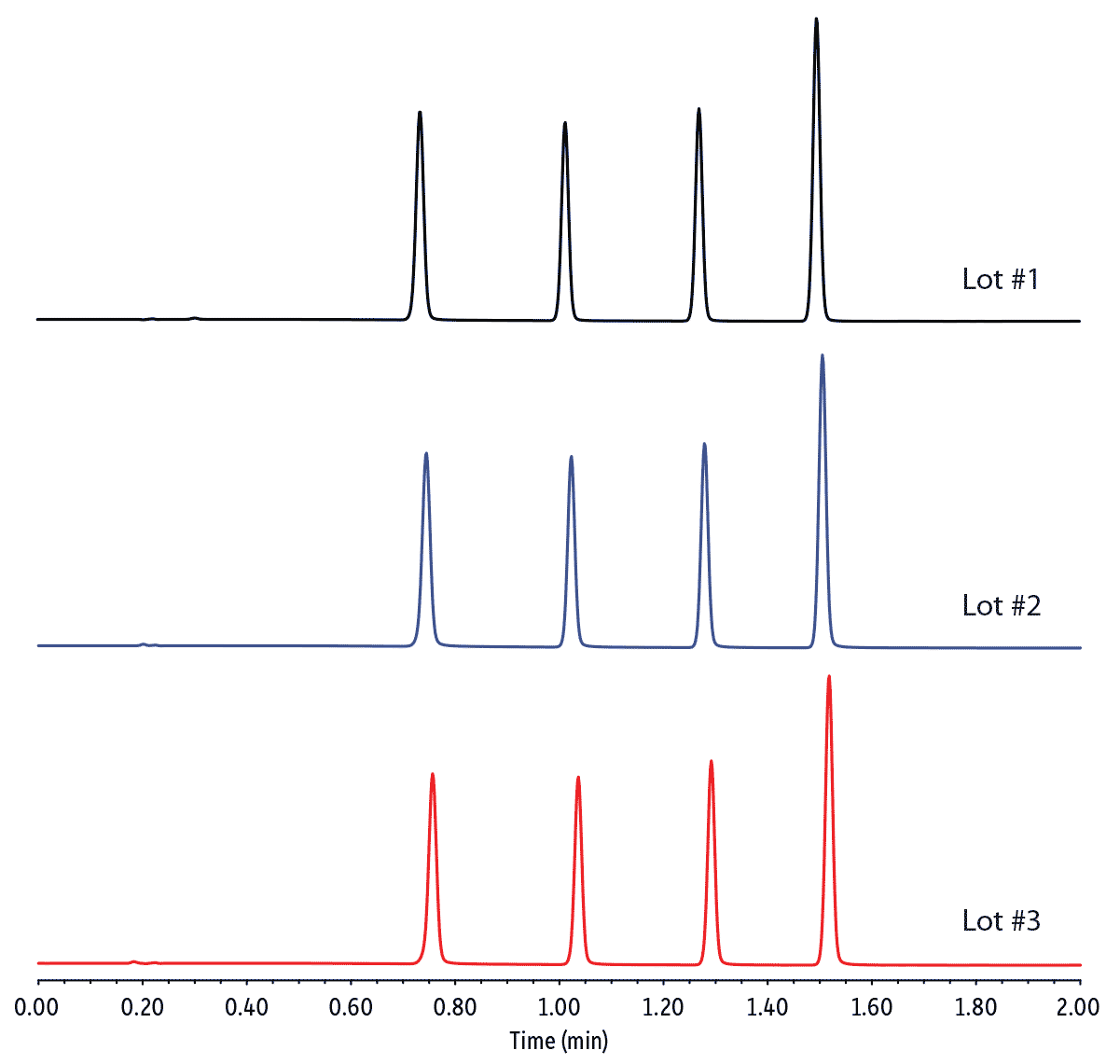
LC_PH0532
Peaks
| Peaks | |
|---|---|
| 1. | Methylparaben |
| 2. | Ethylparaben |
| 3. | Propylparaben |
| 4. | Butylparaben |
Conditions
| Column | Raptor™ C18 (cat.# 9304512) | ||||||||||||||||||||
|---|---|---|---|---|---|---|---|---|---|---|---|---|---|---|---|---|---|---|---|---|---|
| Dimensions: | 100 mm x 2.1 mm ID | ||||||||||||||||||||
| Particle Size: | 5 µm | ||||||||||||||||||||
| Temp.: | 40 °C | ||||||||||||||||||||
| Standard/Sample | |||||||||||||||||||||
| Conc.: | 100 µg/mL in water | ||||||||||||||||||||
| Inj. Vol.: | 1 µL | ||||||||||||||||||||
| Mobile Phase | |||||||||||||||||||||
| A: | Water | ||||||||||||||||||||
| B: | Acetonitrile | ||||||||||||||||||||
|
| Detector | PDA @ 254 nm |
|---|---|
| Instrument | UHPLC |
Boost Your Productivity with Raptor C18 LC Columns
When developing an assay, it is important to consider how productive your method will be. Because superficially porous, or “core-shell,” particles are well known for very high efficiency with minimal backpressure, they are ideal for decreasing analysis time (Figure 4). With its general-purpose applicability and SPP core-shell particles, the Raptor C18 column lets you quickly develop faster methods, thereby boosting your productivity.
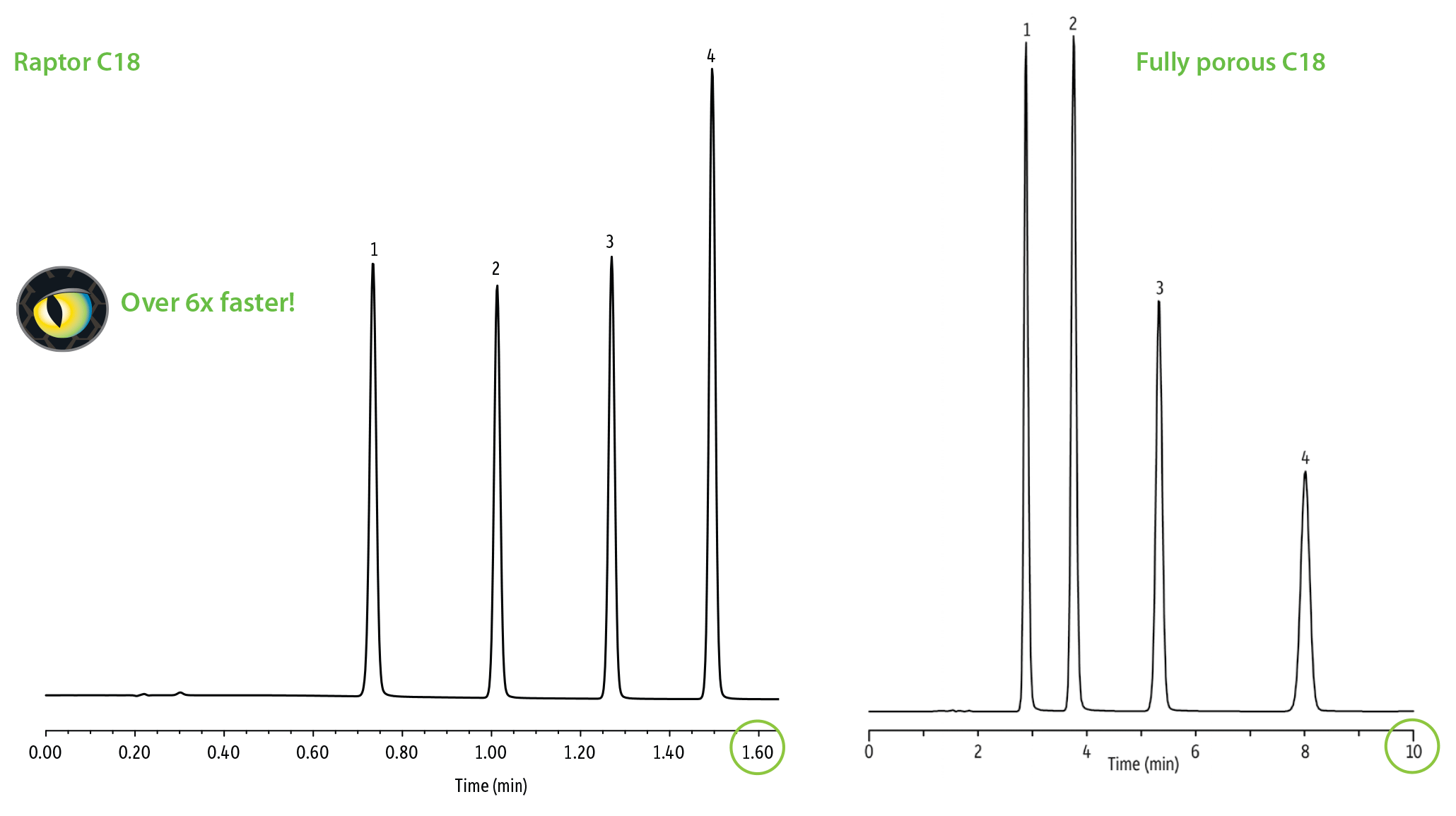
LC_PH0543
Peaks
| Peaks | Raptor C18 tR (min) | Fully Porous C18 tR (min) | |
|---|---|---|---|
| 1. | Methylparaben | 0.73 | 2.90 |
| 2. | Ethylparaben | 1.01 | 3.77 |
| 3. | Propylparaben | 1.27 | 5.34 |
| 4. | Butylparaben | 1.50 | 8.03 |
Conditions
| Column | See notes |
|---|---|
| Standard/Sample | Parabens |
| Conc.: | 100 µg/mL |
| Mobile Phase | |
| Flow: | 1.0 mL/min |
| Detector | Raptor C18: PDA @ 254 nm; FPP C18: UV/Vis @ 254 nm |
|---|---|
| Notes | Raptor C18 Column: Raptor C18 (cat.# 9304512); 100 mm x 2.1 mm ID, 5 µm Temp.: 40 °C Sample diluent: water Inj. vol.: 1 µL Mobile phase: A: water, B: acetonitrile Gradient (%B): 0.00 min (20% B); 2.00 min (80% B); 2.01 min (20% B); 3.50 min (20% B) Fully Porous Particle (FPP) C18 Column: traditional fully porous C18; 150 mm x 4.6 mm ID, 5 µm Temp.: ambient Sample diluent: methanol Inj. vol.: 5 µL Mobile phase: 0.1% acetic acid in water:acetonitrile (50:50) |
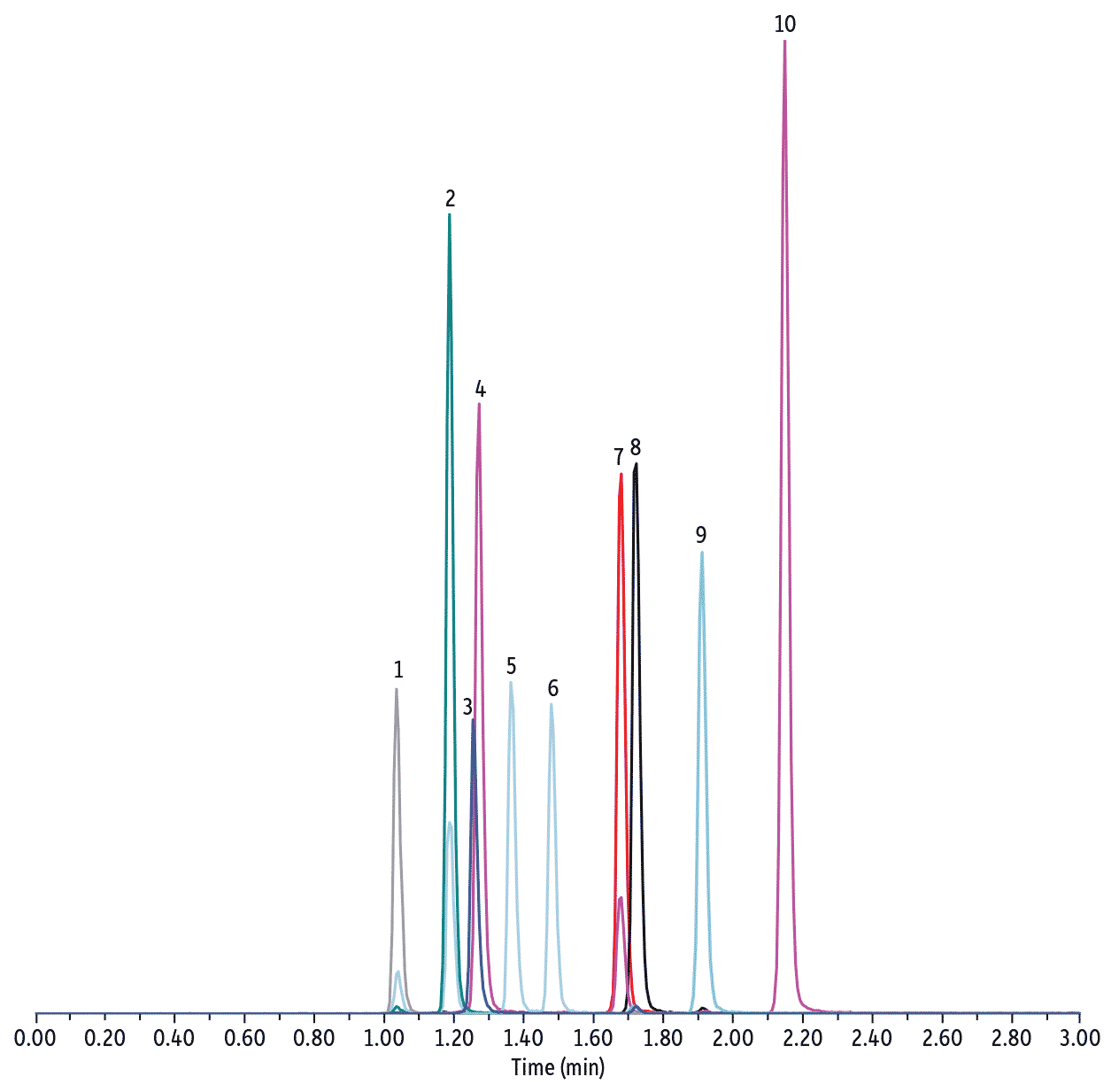
LC_FF0557
Peaks
| Peaks | tR (min) | Precursor Ion | Product Ion | |
|---|---|---|---|---|
| 1. | Rutin | 1.04 | 611.5 | 303.3 |
| 2. | Quercitrin | 1.19 | 449.4 | 303.3 |
| 3. | Myricetin | 1.26 | 319.3 | 153.2 |
| 4. | Fisetin | 1.27 | 287.3 | 137.3 |
| 5. | Morin | 1.36 | 303.3 | 153.2 |
| 6. | Quercetin | 1.48 | 303.3 | 153.2 |
| 7. | Kaempferol | 1.68 | 287.3 | 153.2 |
| 8. | Isorhamnetin | 1.72 | 317.3 | 153.2 |
| 9. | Rhamnetin | 1.91 | 317.3 | 123.3 |
| 10. | Galangin | 2.15 | 271.3 | 153.2 |
Conditions
| Column | Raptor C18 (cat.# 9304552) | ||||||||||||||||||||
|---|---|---|---|---|---|---|---|---|---|---|---|---|---|---|---|---|---|---|---|---|---|
| Dimensions: | 50 mm x 2.1 mm ID | ||||||||||||||||||||
| Particle Size: | 5 µm | ||||||||||||||||||||
| Pore Size: | 90 Å | ||||||||||||||||||||
| Temp.: | 40 °C | ||||||||||||||||||||
| Standard/Sample | |||||||||||||||||||||
| Diluent: | 90:10 (water:acetonitrile) | ||||||||||||||||||||
| Conc.: | 500 ng/mL | ||||||||||||||||||||
| Inj. Vol.: | 5 µL | ||||||||||||||||||||
| Mobile Phase | |||||||||||||||||||||
| A: | 0.1% Formic acid in water | ||||||||||||||||||||
| B: | 0.1% Formic acid in acetonitrile | ||||||||||||||||||||
|
| Detector | MS/MS |
|---|---|
| Ion Mode: | ESI+ |
| Instrument | HPLC |
Your Go-To LC Column for Fast and Dependable Analyses on Any Instrument
C18 columns are often a method developer’s first choice, not only for their trusted performance but also for their effectiveness with many types of compound and instrument. The Raptor C18 was designed to build on that foundation, offering usability, peak symmetry, efficiency, and dependability—with the unmatched reproducibility, speed, and reliability of a Raptor SPP LC column. Whether you are doing environmental, food safety, or bioanalytical work (Figures 5 and 6), you will finish your work faster if you choose the right column the first time. For general-purpose applications, the Raptor C18 is your best first choice.
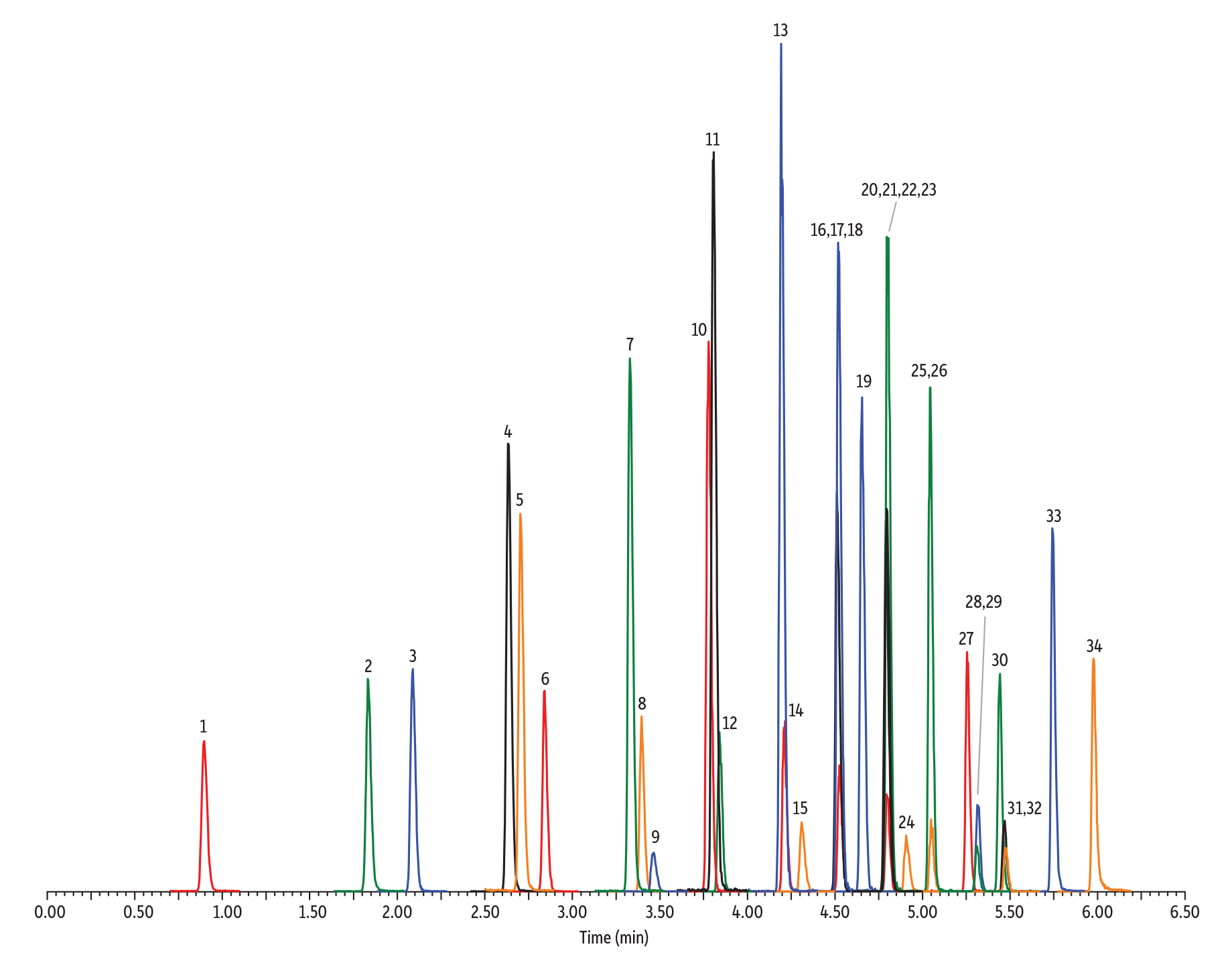
LC_EV0540
Peaks
| Peaks | tR (min) | Conc. (ng/mL) | Precursor Ion | Product Ion | |
|---|---|---|---|---|---|
| 18. | Perfluorononane sulfonic acid (PFNS) | 4.53 | 5 | 549.17 | 79.98 |
| 19. | N-methyl perfluorooctane sulfonamidoacetic acid (N-MeFOSAA) | 4.66 | 5 | 570.20 | 419.17 |
| 20. | Perfluorodecane sulfonic acid (PFDS) | 4.79 | 5 | 599.17 | 79.98 |
| 21. | N-ethyl perfluorooctane sulfonamidoacetic acid (N-EtFOSAA) | 4.79 | 5 | 584.20 | 419.18 |
| 22. | Perfluorooctane sulfonamide (FOSA) | 4.79 | 5 | 498.17 | 77.97 |
| 23. | Perfluoroundecanoic acid (PFUnA) | 4.80 | 5 | 563.23 | 519.24 |
| 24. | 2-Perfluorodecyl ethanoic acid (FDEA) | 4.91 | 250 | 577.23 | 493.18 |
| 25. | Perfluorododecanoic acid (PFDoA) | 5.04 | 5 | 613.23 | 569.19 |
| 26. | 1H, 1H, 2H, 2H-perfluorododecane sulfonic acid (10:2 FTS) | 5.05 | 5 | 627.23 | 607.20 |
| 27. | Perfluorotridecanoic acid (PFTrDA) | 5.25 | 5 | 663.23 | 619.21 |
| 28. | N-methyl perfluorooctane sulfonamide (N-MeFOSA) | 5.31 | 5 | 512.17 | 169.07 |
| 29. | N-methyl perfluorooctane sulfonamidoethanol (N-MeFOSE) | 5.31 | 50 | 616.27 | 59.11 |
| 30. | Perfluorotetradecanoic acid (PFTeDA) | 5.44 | 5 | 713.23 | 669.23 |
| 31. | N-ethyl perfluorooctane sulfonamide (N-EtFOSA) | 5.47 | 5 | 526.23 | 169.06 |
| 32. | N-ethyl perfluorooctane sulfonamidoethanol (N-EtFOSE) | 5.47 | 50 | 630.33 | 59.11 |
| 33. | Perfluorohexadecanoic acid (PFHxDA) | 5.74 | 5 | 813.30 | 769.28 |
| 34. | Perfluorooctadecanoic acid (PFODA) | 5.98 | 5 | 913.30 | 869.32 |
Conditions
| Column | Raptor C18 (cat.# 9304252) | ||||||||||||||||||||||||
|---|---|---|---|---|---|---|---|---|---|---|---|---|---|---|---|---|---|---|---|---|---|---|---|---|---|
| Dimensions: | 50 mm x 2.1 mm ID | ||||||||||||||||||||||||
| Particle Size: | 1.8 µm | ||||||||||||||||||||||||
| Pore Size: | 90 Å | ||||||||||||||||||||||||
| Temp.: | 40 °C | ||||||||||||||||||||||||
| Standard/Sample | |||||||||||||||||||||||||
| Diluent: | 80:20 Water:methanol | ||||||||||||||||||||||||
| Conc.: | 5-250 ng/mL | ||||||||||||||||||||||||
| Inj. Vol.: | 5 µL | ||||||||||||||||||||||||
| Mobile Phase | |||||||||||||||||||||||||
| A: | 5 mM Ammonium acetate in water | ||||||||||||||||||||||||
| B: | Methanol | ||||||||||||||||||||||||
|
| Detector | MS/MS |
|---|---|
| Ion Mode: | ESI- |
| Mode: | MRM |
| Instrument | UHPLC |
| Notes | Want even better performance when analyzing metal-sensitive compounds? Check out Inert LC columns at www.restek.com/inert. |
The Perfect Complement to High-Throughput Mass Spec
Fast LC-MS/MS screens with their exacting retention time windows place severe demands on your LC column. The Raptor C18 can easily and dependably handle mass spec analysis of closely related compounds like macrolide antibiotics, which are widely used in human and veterinary medicine (Figure 7). Because it’s a Raptor LC column, this C18 provides the reproducibility and consistent retention required for precise MRM analyses.
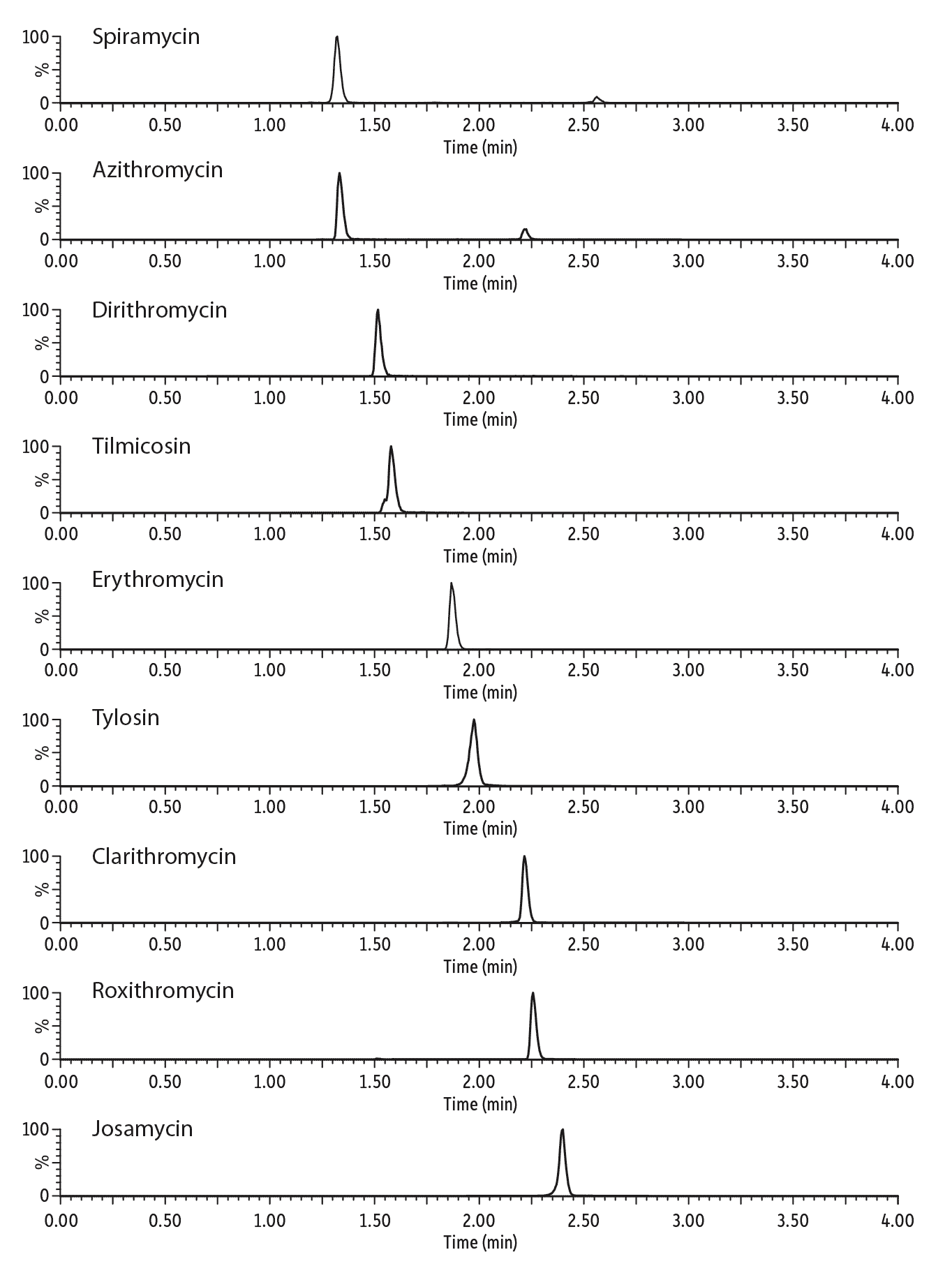
LC_CF0600
Peaks
| Peaks | tR (min) | Precursor Ion | Product Ion | |
|---|---|---|---|---|
| 1. | Spiramycin | 1.32 | 844.21 | 174.28 |
| 2. | Azithromycin | 1.33 | 750.14 | 591.83 |
| 3. | Dirithromycin | 1.52 | 836.26 | 158.23 |
| 4. | Tilmicosin | 1.58 | 870.23 | 174.29 |
| 5. | Erythromycin | 1.87 | 735.09 | 158.23 |
| 6. | Tylosin | 1.98 | 917.26 | 174.28 |
| 7. | Clarithromycin | 2.22 | 749.11 | 158.22 |
| 8. | Roxithromycin | 2.26 | 838.21 | 158.23 |
| 9. | Josamycin | 2.40 | 829.15 | 109.18 |
Conditions
| Column | Raptor C18 (cat.# 9304512) | ||||||||||||||||||||
|---|---|---|---|---|---|---|---|---|---|---|---|---|---|---|---|---|---|---|---|---|---|
| Dimensions: | 100 mm x 2.1 mm ID | ||||||||||||||||||||
| Particle Size: | 5 µm | ||||||||||||||||||||
| Pore Size: | 90 Å | ||||||||||||||||||||
| Temp.: | 40 °C | ||||||||||||||||||||
| Standard/Sample | |||||||||||||||||||||
| Diluent: | Water:acetonitrile (50:50) | ||||||||||||||||||||
| Conc.: | 100 ng/mL | ||||||||||||||||||||
| Inj. Vol.: | 5 µL | ||||||||||||||||||||
| Mobile Phase | |||||||||||||||||||||
| A: | 0.1% Formic acid in water | ||||||||||||||||||||
| B: | 0.1% Formic acid in acetonitrile | ||||||||||||||||||||
|
| Detector | MS/MS |
|---|---|
| Ion Mode: | ESI+ |
| Instrument | UHPLC |
| Notes | Want even better performance when analyzing metal-sensitive compounds? Check out Inert LC columns at www.restek.com/inert. |
Improve Resolution on Your Current Methods
To quickly improve your data quality, add a Raptor C18 SPP column to your existing C18 methods. As exemplified in Figure 8 with EPA method TO-11A, which determines toxic compounds in ambient air, the Raptor C18 offers better peak separation than a traditional fully porous C18.
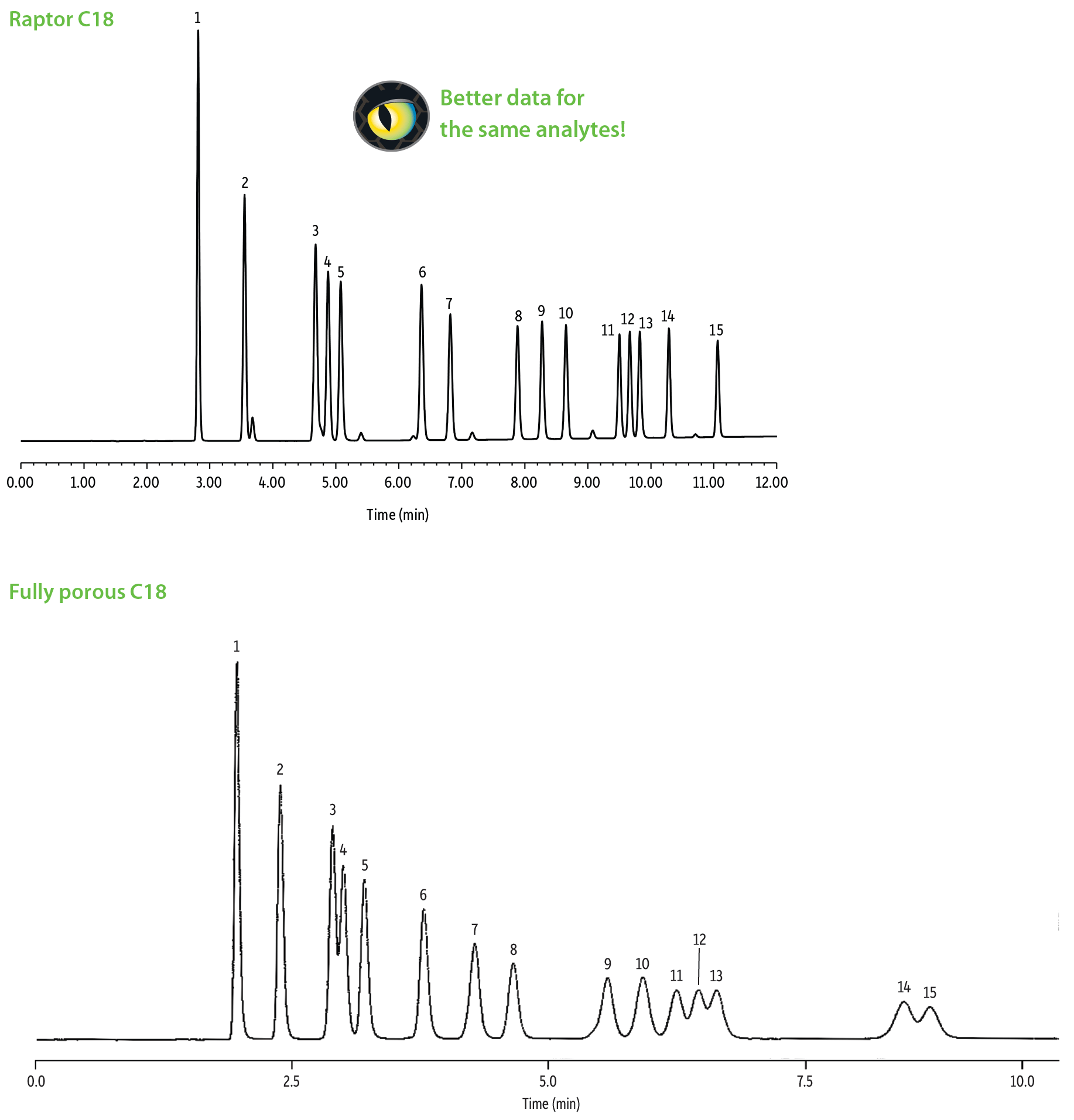
LC_EV0587
Peaks
| Peaks | Raptor C18 tR (min) | Fully Porous C18 tR (min) | |
|---|---|---|---|
| 1. | Formaldehyde | 2.814 | 1.954 |
| 2. | Acetaldehyde | 3.551 | 2.376 |
| 3. | Acrolein | 4.678 | 2.884 |
| 4. | Acetone | 4.877 | 2.987 |
| 5. | Propionaldehyde | 5.078 | 3.190 |
| 6. | Crotonaldehyde | 6.361 | 3.777 |
| 7. | Butyraldehyde | 6.818 | 4.273 |
| Peaks | Raptor C18 tR (min) | Fully Porous C18 tR (min) | |
|---|---|---|---|
| 8. | Benzaldehyde | 7.884 | 4.653 |
| 9. | Isovaleraldehyde | 8.276 | 5.572 |
| 10. | Valeraldehyde | 8.653 | 5.919 |
| 11. | o-Tolualdehyde | 9.502 | 6.242 |
| 12. | m-Tolualdehyde | 9.667 | 6.454 |
| 13. | p-Tolualdehyde | 9.825 | 6.634 |
| 14. | Hexanal | 10.287 | 8.450 |
| 15. | 2,5-Dimethylbenzaldehyde | 11.064 | 8.715 |
Conditions
| Column | See notes |
|---|---|
| Standard/Sample | Aldehyde-ketone-DNPH TO-11A calibration mix (cat.# 31808) |
| Diluent: | Acetonitrile |
| Conc.: | 15 µg/mL |
| Mobile Phase | |
| Flow: | 0.8-1.5 mL/min |
| Detector | Raptor C18: UV/Vis @ 365, 4.8 nm; FPP C18: UV/Vis @ 365, 1 nm |
|---|---|
| Notes | Raptor C18 Column: Raptor C18 (cat.# 9304A65); 150 mm x 4.6 mm ID, 2.7 µm Temp.: 30 °C Inj. vol.: 2 µL Mobile phase: A: water, B: methanol:acetonitrile (650:50)* Gradient (%B): 0.00 min (70% B); 5.00 min (75% B); 11.00 min (90% B); 11.01 min (100% B); 12.00 min (100% B); 12.01 min (70% B); 14.00 min (70% B) Flow: 0.8 mL/min Notes: *Mobile phase B was prepared by combining 650 mL methanol and 50 mL acetonitrile. Fully Porous Particle (FPP) C18 Column: Fully porous C18; 150 mm x 4.6 mm ID, 5 µm Temp.: 25 °C Inj. vol.: 10 µL Mobile phase: water:acetonitrile (30:70) Flow: 1.5 mL/min |
Want even better performance when analyzing mycotoxins and other metal-sensitive compounds?
Learn more at www.restek.com/inert

Author