




モノメチルアミン、ジエチルアミン、トリエチルアミンなどの短鎖の揮発性アミンは、石油化学産業において非常に重要であり、腐食抑制に重要な役割を果たしています。揮発性アミンは、製油所や天然ガス流から硫化水素を除去するガス洗浄剤として使用されているほか、アンモニア製造時の二酸化炭素除去にも使用されています。揮発性アミン含有量の正確なデータは、さまざまなクラスの化合物の製造を最適化するために不可欠ですが、その塩基性と高い極性により、ガスクロマトグラフィー分析は非常に困難です。このような特性により、アミンは分析カラムやサンプル経路の活性部位と相互作用し、解析が難しい、ブロードでテーリングのあるピークを生じさせます。
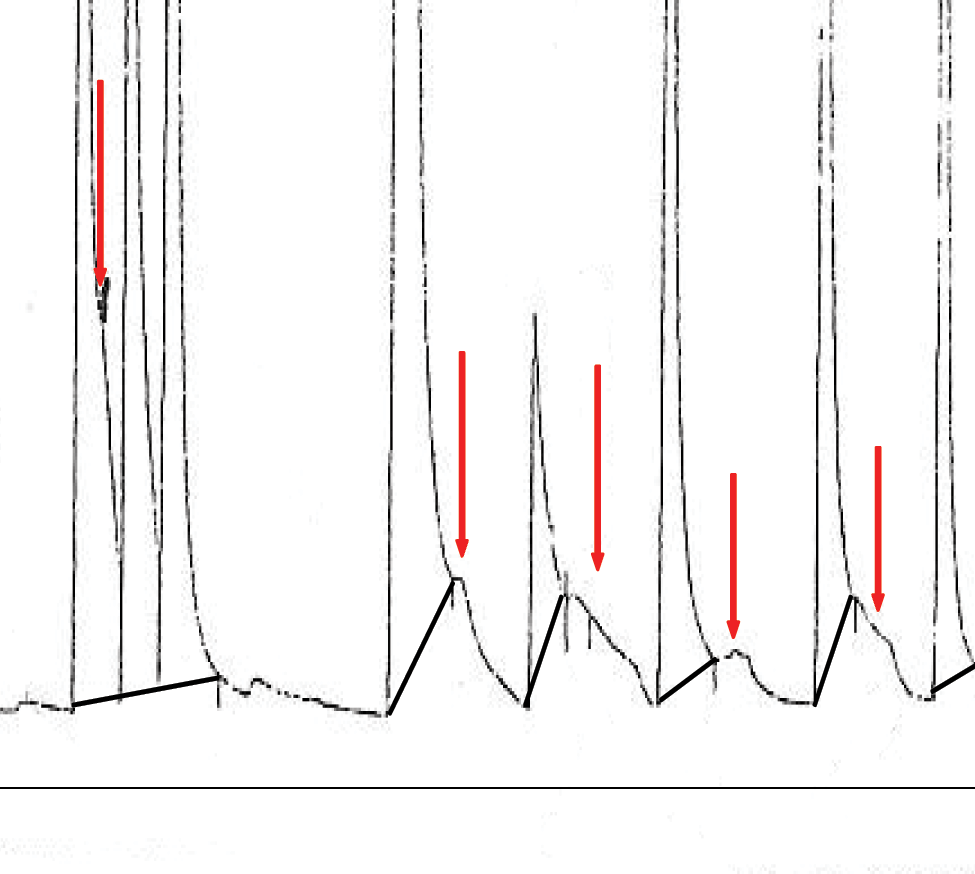
揮発性アミンに対するクロマトグラフィーを改善するためには、キャピラリーカラムは不活性度が高く、低温でも良好な保持と効率性を発揮できなければなりません。さらに、アミンは水、アルコール、アンモニアの存在下で分析されることが多いため、マトリクスの強い影響にも耐えられるものでなければなりません。塩基修飾ポリエチレングリコールカラムは一つの選択肢ですが、安定性が比較的低く、60℃以下では効率が低下するという問題があります。シロキサンカラムも選択肢の一つですが、アミン分析用である、最も入手しやすい市販のシロキサン系カラムは、純粋なサンプルには効果的ですが、水などの強い影響を与えるマトリクスが存在すると、性能が低下します(図 1)。 最近まで、揮発性アミンの分析用として市販されていたカラムは寿命が短く、アミンのレスポンスの再現性が低いという問題がありました。Restekが開発した新しいカラム、Rtx-Volatile Amineカラムは、クロマトグラフィーの性能と安定性を向上させています。
GC_PC1242
Conditions
| Column | Conventional volatile amine column, 60 m, 32 mm ID |
|---|---|
| Standard/Sample | Short-chain amines |
| Diluent: | Water |
| Injection | |
| Inj. Vol.: | 1 µL split (split ratio 15:1) |
| Inj. Temp.: | 220 °C |
| Split Vent Flow Rate: | 30 mL/min |
| Oven | |
| Oven Temp.: | 40 °C (hold 10 min) to 250 °C at 20 °C/min (hold 10 min) |
| Carrier Gas | H2, constant flow |
| Flow Rate: | 2 mL/min |
| Linear Velocity: | 35 cm/sec |
| Detector | FID @ 250 °C |
|---|---|
| Instrument | Agilent/HP6890 GC |
| Acknowledgement | Courtesy of Gilbert Baele, Taminco (Antwerp, Belgium) |
新しい Rtx-Volatile Amine カラムは、安定した対称的なピークを実現します
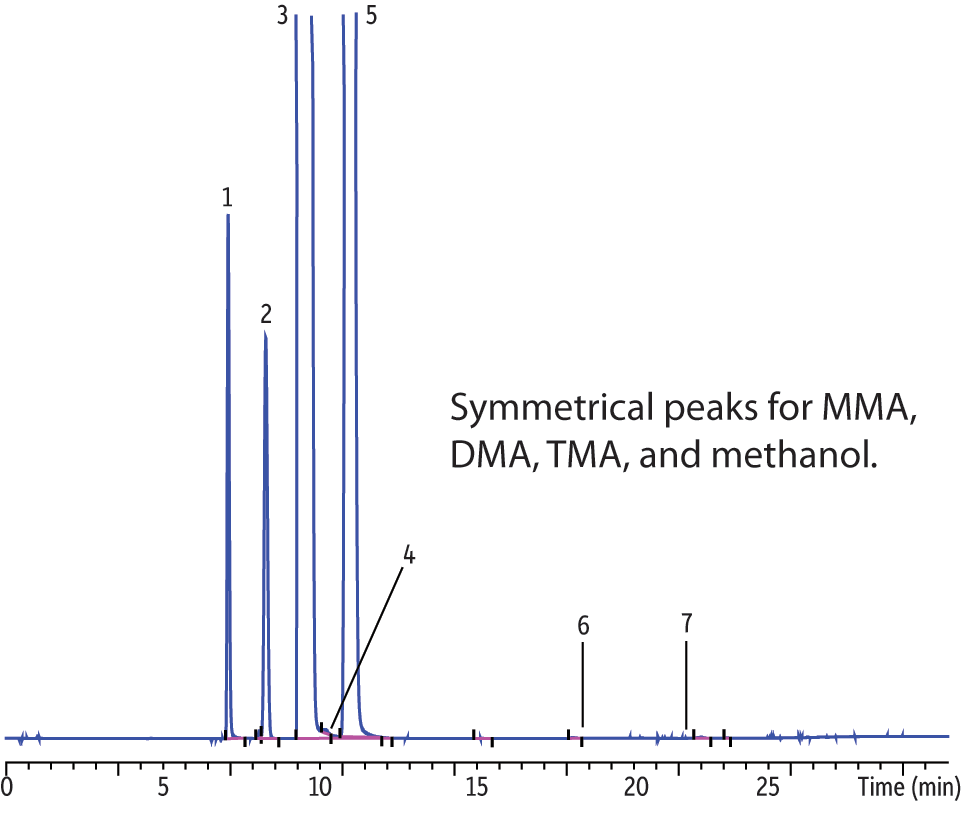
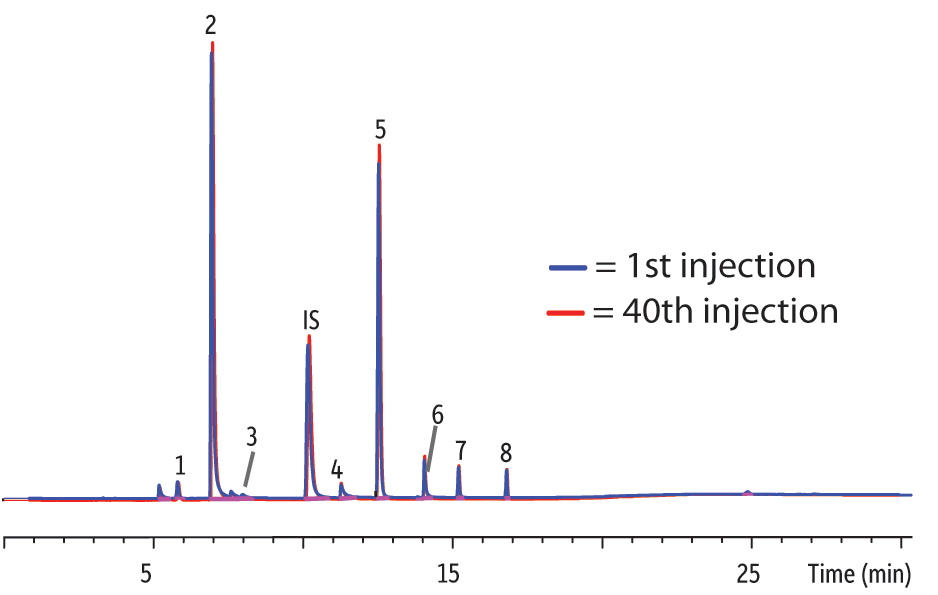
対称的なピークと優れた再現性を実現するため、Rtx-Volatile Amine キャピラリーGCカラムの開発では、表面の不活性化とポリマーの安定性の両方が考慮されました。適切な不活性化により、短鎖アミンの表面吸着が低減され、ピーク形状が大幅に改善されます。図 2に示すように、モノメチルアミン、ジエチルアミン、トリエチルアミン、メタノールについて、高い対称性のあるピークが得られます。さらに、40℃という低温でも効率を維持するために膜厚を増やし、水存在下での機械的安定性を向上させるために固定相を集中的に架橋しました。その結果、揮発性アミンに対して良好なピーク形状とレスポンスを確実に生み出す新しいカラムケミストリーが誕生しました。図 3に示すように、水中のアミンを40回注入した後でも、ピーク形状はほぼ同じです。
GC_PC1243
Peaks
| Peaks | |
|---|---|
| 1. | Monomethylamine (MMA) |
| 2. | Methanol |
| 3. | Dimethylamine (DMA) |
| 4. | Ethylamine |
| 5. | Trimethylamine (TMA) |
| 6. | Dimethylethylamine |
| 7. | Methyldiethylamine |
Conditions
| Column | Rtx-Volatile Amine, 60 m, 0.32 mm ID (cat.# 18078) |
|---|---|
| Standard/Sample | Short-chain amines |
| Diluent: | Water |
| Injection | |
| Inj. Vol.: | 1 µL split (split ratio 15:1) |
| Inj. Temp.: | 220 °C |
| Split Vent Flow Rate: | 30 mL/min |
| Oven | |
| Oven Temp.: | 40 °C (hold 10 min) to 250 °C at 20 °C/min (hold 10 min) |
| Carrier Gas | H2, constant flow |
| Flow Rate: | 2 mL/min |
| Linear Velocity: | 35 cm/sec |
| Detector | FID @ 250 °C |
|---|---|
| Instrument | Agilent/HP6890 GC |
| Acknowledgement | Courtesy of Gilbert Baele, Taminco (Antwerp, Belgium) |
GC_PC1244
Peaks
| Peaks | |
|---|---|
| 1. | Methanol |
| 2. | Dimethylamine |
| 3. | Trimethylamine |
| 4. | Methylethylamine |
| 5. | Dimethylethylamine |
| 6. | Diethylamine |
| 7. | Methyldiethylamine |
| 8. | Triethylamine |
Conditions
| Column | Rtx-Volatile Amine, 60 m, 0.32 mm ID (cat.# 18078) |
|---|---|
| Standard/Sample | Short-chain amines |
| Diluent: | Water |
| Injection | |
| Inj. Vol.: | 1 µL split (split ratio 15:1) |
| Inj. Temp.: | 220 °C |
| Split Vent Flow Rate: | 30 mL/min |
| Oven | |
| Oven Temp.: | 40 °C (hold 10 min) to 250 °C at 20 °C/min (hold 10 min) |
| Carrier Gas | H2, constant flow |
| Flow Rate: | 2 mL/min |
| Linear Velocity: | 35 cm/sec |
| Detector | FID @ 250 °C |
|---|---|
| Instrument | Agilent/HP6890 GC |
| Acknowledgement | Courtesy of Gilbert Baele, Taminco (Antwerp, Belgium) |
揮発性アミンの分析に役立つ実用的なソリューション
塩基性アミノ基の強い双極子が、表面シラノールとの相互作用を引き起こし、非線形吸着効果をもたらします。実際には、これらの相互作用を低減するために誘導体化を使用できますが、時間がかかり、回収率に影響を与える二次マトリクス効果を引き起こす可能性があります。Rtx-Volatile Amine GCカラムを使用すれば、誘導体化を行う必要はありません。このカラムは化学的に頑丈なため反応性が最小限に抑えられ、水分が存在してもアミン化合物をシャープなピークで溶出することができます。アミン分析では、プライミングという手法もよく使用されます。この方法では、高沸点アミンの初期注入を数回行い、プライミングアミン化合物が活性部位と反応し、全体的ではあるが短時間の不活性化を行います。適切に不活性化された分析カラムを使用することで、より良い長期的な解決策が得られますが、プライミングは、注入ポートや検出ポートのライナーなど、サンプル経路のカラム以外の部分を、少なくとも一時的に不活性化できる点で有用です。
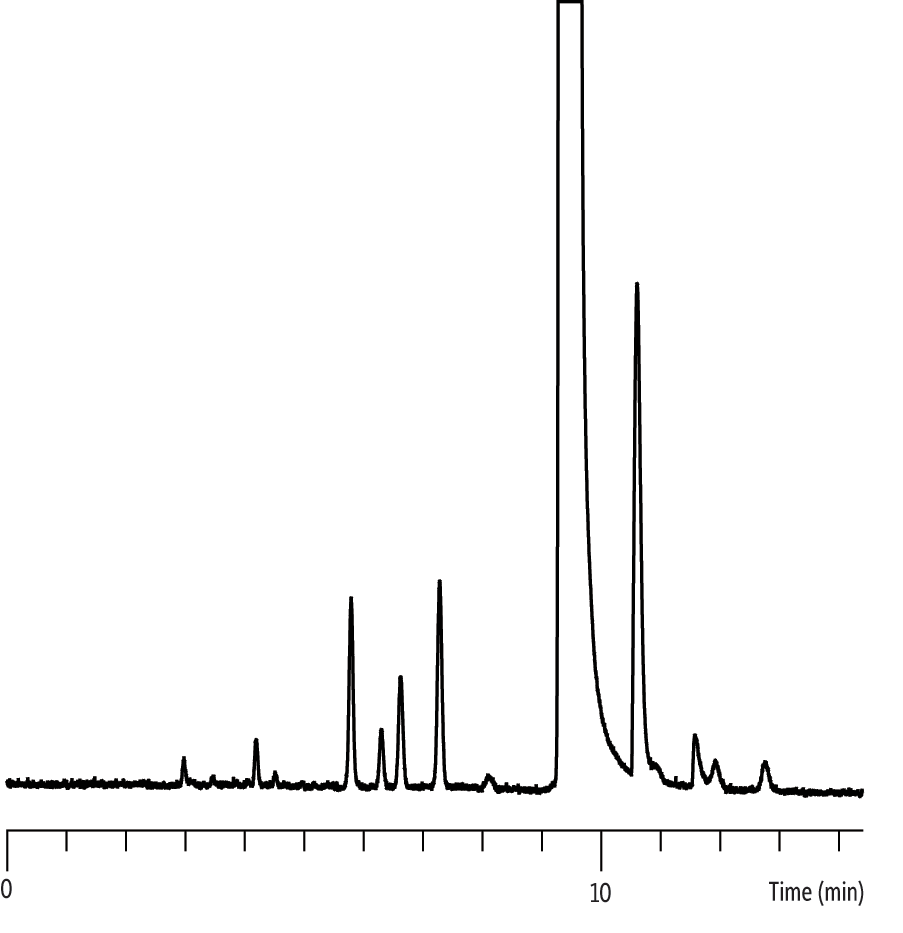
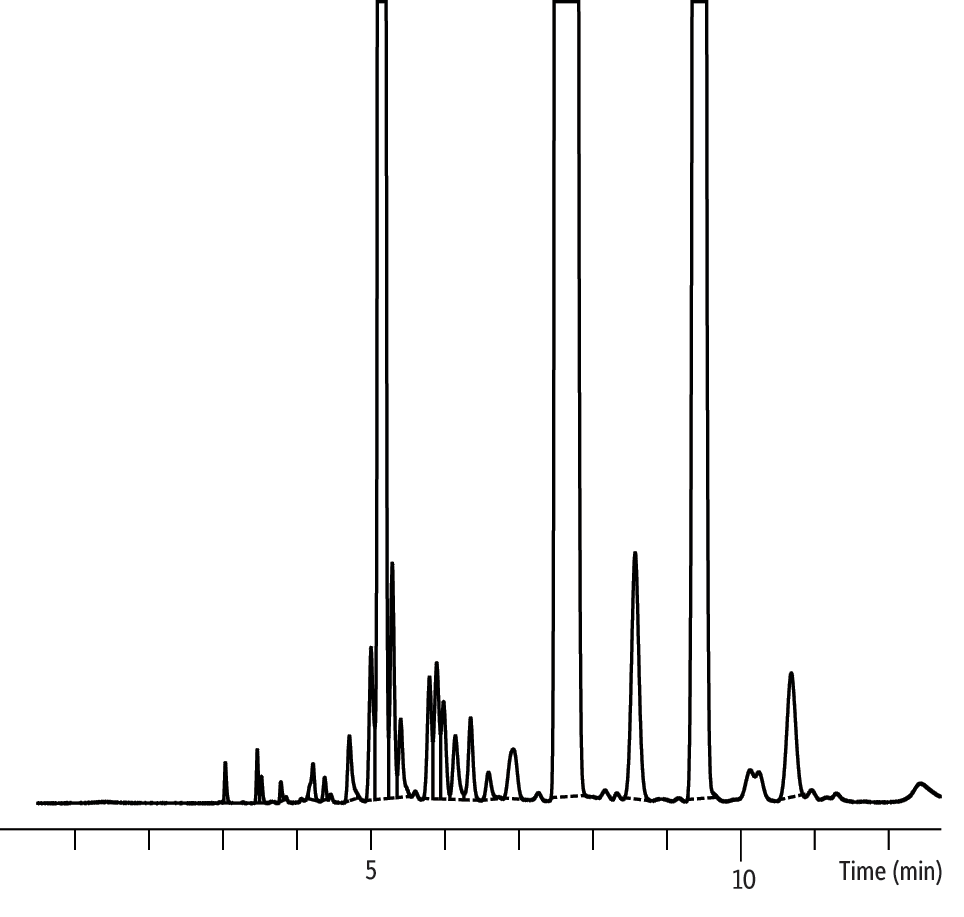
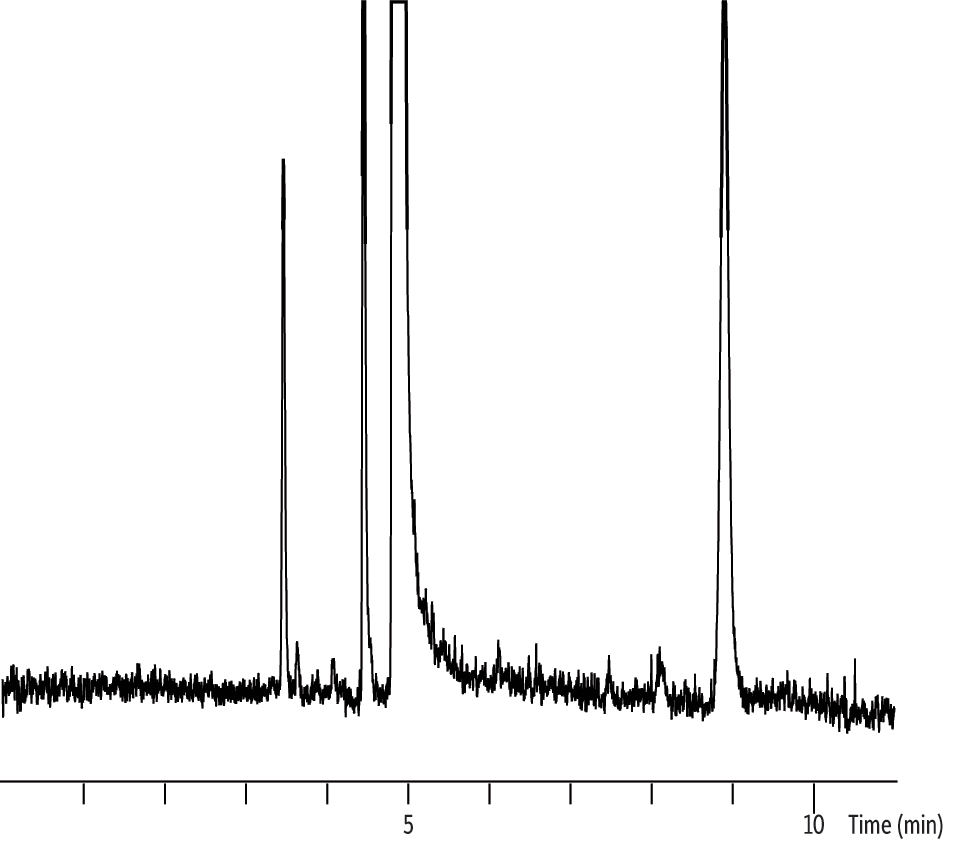
不活性度と水性マトリクスへの耐性に加え、Rtx-Volatile Amineカラムは、高い負荷量も実現します。図4-7に示すように、このカラムはピリジン、ジエチルアミン、トリエチルアミン、イソプロピルアミンの不純物を優れたクロマトグラフィー分離で検出します。さらに、アンモニアと水を分析すると、両化合物はほぼ対称的なピークとして溶出されます(図8)。
要約
非極性安定化ポリシロキサンを使用した、短鎖のアミン分析用の新しい固定相が開発されました。Rtx-Volatile Amineカラムは極めて不活性度が高いため、遊離アンモニアを含む揮発性アミンを分析する際に、高い精度と感度が保証されます。さらに、この非常に頑丈な固定相は、繰り返し水注入に耐えることができ、カラム寿命が向上します。
GC_PC1246
Conditions
| Column | Rtx-Volatile Amine, 60 m, 0.32 mm ID (cat.# 18078) |
|---|---|
| Standard/Sample | Pyridine |
| Injection | |
| Inj. Vol.: | 1 µL split (split ratio 15:1) |
| Inj. Temp.: | 250 °C |
| Oven | |
| Oven Temp.: | 120 °C |
| Carrier Gas | H2, constant flow |
| Flow Rate: | 2 mL/min |
| Detector | FID @ 250 °C |
|---|---|
| Instrument | Agilent/HP6890 GC |
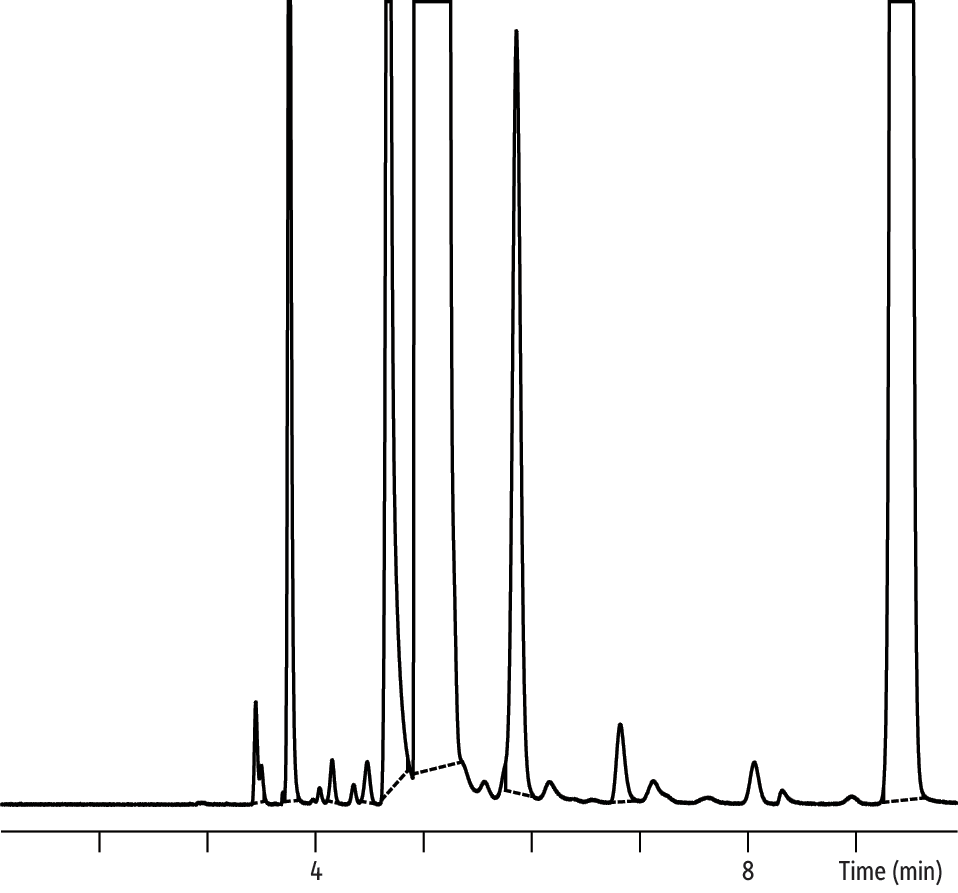
条件は図4を参照ください。
条件は図4を参照ください。
条件は図4を参照ください。
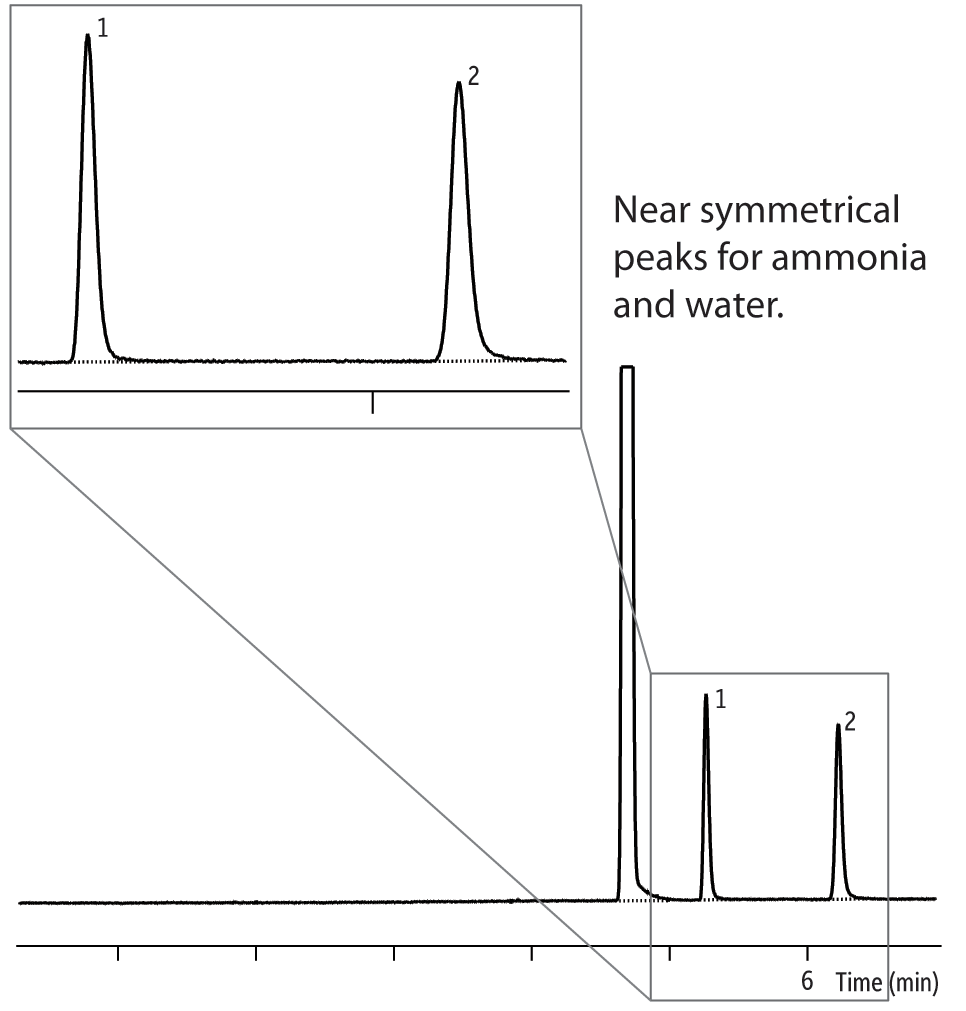
GC_PC1250
Conditions
| Column | Rtx-Volatile Amine, 60 m, 0.32 mm ID (cat.# 18078) |
|---|---|
| Injection | split (split ratio 10:1) |
| Oven | |
| Oven Temp.: | 45 °C |
| Carrier Gas | He, constant pressure (22 psi, 151.7 kPa) |
| Detector | μ-TCD |
|---|---|
| Instrument | HP5890 GC |
Products Mentioned
Authors