


Compound optimization, also referred to as tuning, is the process in which mass spectrometry parameters such as the precursor/product ions, collision energies, and other voltages are optimized for each analyte. Compound optimization can often be overlooked. It might seem easier to find an article or application note and just use the compound settings for a specific analyte, but this shortcut might have consequences for the analyte performance. All mass spectrometers differ from one another; even ones of the same make and model. Because of this variability, transition parameters that work for one instrument may not be optimal for another instrument. This can result in a loss of sensitivity and may impact the detection limits for a particular compound.
In the example below, three compounds were assessed to see how using optimized compound settings impacted analyte response. Settings for cocaine, morphine, and Δ9-THC were optimized on a Shimadzu LCMS-8045. Another set of settings for these analytes were obtained from an LC-MS/MS method featured in a journal article1. The optimized and literature settings are listed below.
Table 1. Analyte settings optimized in-lab on Shimadzu LCMS-8045.
| Analyte | Ion Mode | Parent | Product | Q1 Pre Bias (V) | CE | Q3 Pre Bias (V) |
| Cocaine | ESI+ | 303.90 | 182.10 | -16 | -20 | -19 |
| 82.15 | -16 | -30 | -16 | |||
| Morphine | ESI+ | 285.90 | 201.05 | -15 | -27 | -21 |
| 152.15 | -11 | -55 | -28 | |||
| Δ9-THC | ESI+ | 315.10 | 193.05 | -23 | -24 | -20 |
| 123.25 | -16 | -35 | -23 |
Table 2. Analyte settings obtained from journal article (not optimized in-lab)1.
| Analyte | Ion Mode | Parent | Product | Q1 Pre Bias (V) | CE | Q3 Pre Bias (V) |
| Cocaine | ESI+ | 304.00 | 182.00 | -20 | -18 | -18 |
| 82.00 | -20 | -31 | -14 | |||
| Morphine | ESI+ | 286.20 | 152.20 | -20 | -55 | -30 |
| 201.20 | -20 | -25 | -12 | |||
| Δ9-THC | ESI+ | 315.00 | 193.30 | -16 | -23 | -19 |
| 123.10 | -16 | -34 | -12 |
A sample containing the analytes at a concentration of 100 ng/mL was run on two methods, one using the optimized and one using the literature settings. All other method parameters were the same for both methods. The peak heights and areas were compared for each analyte using the optimized versus literature settings.
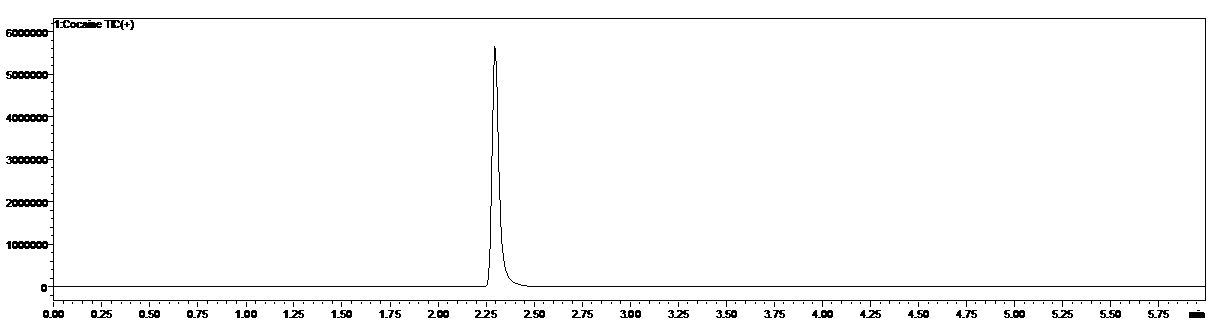
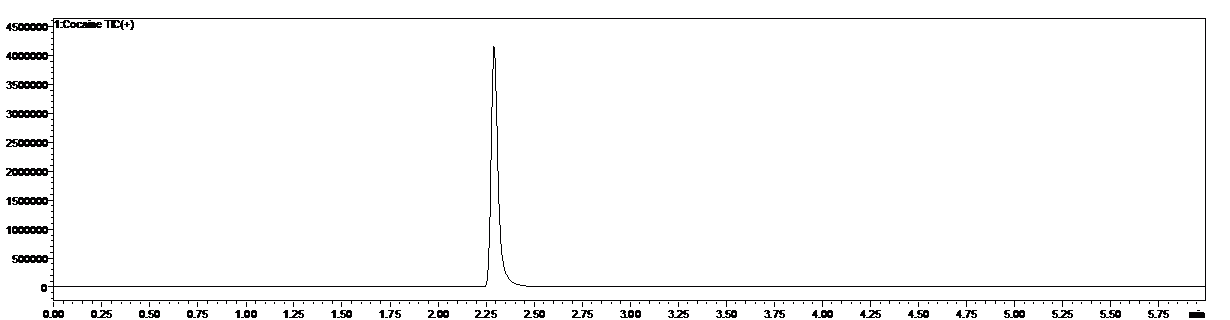
Table 3. Comparison of peak area for optimized versus literature settings.
| Analyte | Peak Area (Optimized Settings) |
Peak Area (Unoptimized Settings) |
% Decrease |
| Cocaine | 12293511 | 8656042 | -29.58% |
| Morphine | 436044 | 238450 | -45.31% |
| Δ9-THC | 597953 | 521493 | -12.78% |
Table 4. Comparison of peak height for optimized versus literature settings.
| Analyte | Peak Height (Optimized Settings) |
Peak Height (Unoptimized Settings) |
% Decrease |
| Cocaine | 4690398 | 3341265 | -28.76% |
| Morphine | 149075 | 81472 | -45.34% |
| Δ9-THC | 239200 | 211382 | -11.63% |
When using the literature settings, peak area and height significantly decreased for all analytes compared to when using the optimized settings. This loss of sensitivity would have definite consequences for achieving low analytical detection limits such as limit of detection (LOD) or limit of quantification (LOQ) for these analytes. This experiment demonstrates the importance of optimizing compound settings per individual LC-MS/MS instruments.
Literature values can still provide useful information. In some instances, it may be acceptable to use the literature settings as is. You might use literature values if they meet your performance goals, as a starting point for compound optimization, or simply as confirmation that the settings you are using are appropriate.
While compound optimization might add an extra step to the method development process, your detection limits will suffer without it. If you aren’t sure how to effectively tune compounds on your lab’s LC-MS/MS, instrument manufacturers can provide step-by-step instructions on how to optimize compounds using your particular system. Happy tuning!
References
- Marilia S Cardoso, Rafael Lanaro, Raul C Dolores, Damila R Morais, Ana Carolina Furiozo Arantes, Karina Diniz Oliveira, Jose Luiz Costa, Determination of Drugs of Abuse in Hair by LC–MS-MS: Application to Suicide Attempts Investigation, Journal of Analytical Toxicology, Volume 46, Issue 5, June 2022, Pages 577–581, https://doi.org/10.1093/jat/bkab058