

Fast, 3.5 Minute Analysis of Psilocin and Psilocybin in Urine by LC-MS/MS
This application note details a fast, 3.5-minute LC-MS/MS method for quantitative analysis of psilocin and psilocybin in human urine.
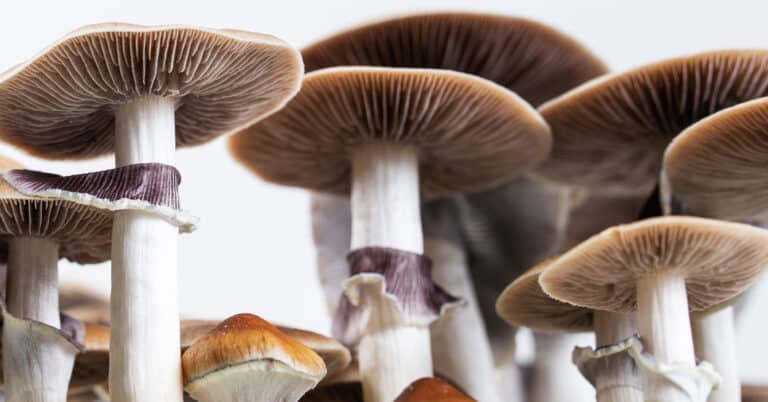
This application note details a fast, 3.5-minute LC-MS/MS method for quantitative analysis of psilocin and psilocybin in human urine.
At Restek, we understand that cannabis testing labs demand reliable information to help them make the right choices when developing robust methods capable of complying with stringent regulations. With this in mind, we developed a simple approach for the determination of pesticides, mycotoxins, and cannabinoids in chocolate samples.

Model more than 60 common inhalants of abuse and develop methods within minutes, without taking your instrument offline.
Two of my RESTEK colleagues, Landon Wiest and Jana Hepner, have posted parts one Pesticides are like Siblings – some get along well and some don’t – No. . .Really? and two Pesticides are like Siblings, They Don’t Always Get Along part 2 – now with the GC mix! on this topic showing what happens to the 200+ pesticides in our LC and GC multiresidue CRM kits when the mixes are all combined together into a single mixture then used to detect pesticides in celery matrix. Both confirmed with their study results that once pesticides ampules are mixed together and stored for a number of days some pesticides degraded immediately while others degraded over a longer timeframe.
As medical marijuana is more frequently prescribed, patient safety must be ensured. Pesticide residue testing is an important part of assuring safe product is dispensed, but analysis can be extremely challenging due to matrix complexity. The use of QuEChERS, cartridge SPE cleanup, and GCxGC-TOFMS as presented here, produces high-quality quantitative data for this difficult analysis.
QuEChERS extraction, dSPE cleanup, and GC-TOFMS analysis were used to assess pesticide residue levels in strawberry and spinach from both commercial and Amish growers. Various dSPE sorbent products were compared to determine which were most effective.

This application note describes the development of an analytical method for PAHs in tea that allows analysts to more quickly and accurately characterize target PAHs. Sample preparation is based on a modified QuEChERS extraction and solid phase extraction sample cleanup. Both GC-TOFMS and GC-MS/MS techniques were used and analyses were optimized for resolution of isobaric compounds, as well as for maintaining a reasonable analysis time.
We compared the efficacy of dSPE and cSPE cleanup methods for multiresidue pesticide analysis of QuEChERS extracts of finished tobacco products using GCxGC-TOFMS. Cleanup with dSPE tubes containing 7.5 mg of GCB and 25 mg of PSA produced better results than other methods, with average recoveries of 92% and 91% for 500 ppb and 50 ppb fortifications respectively.
Conditions are established for analyzing both derivatized and underivatized cholesterol on a highly inert Rxi-5ms column. Methods described include both an isothermal analysis for use when interferences are minimal, but sample throughput is critical, and a temperature program for use when separation of analytes from contaminants or interfering compounds is the primary concern. Results for both derivatized and underivatized samples were highly reproducible.
The Rtx-Dioxin2 column has a unique selectivity for dioxins and furans, including specificity for 2,3,7,8-TCDD and 2,3,7,8-TCDF. Here we characterize all 136 tetra- through octachlorine dioxins and furans and define all possible coelutions. While commonly used cyanopropyl columns are limited by a low maximum operating temperature of 240°C, the Rtx-Dioxin2 column is stable up to 340°C, extending column lifetime and improving the analyses of dioxins and furans.