


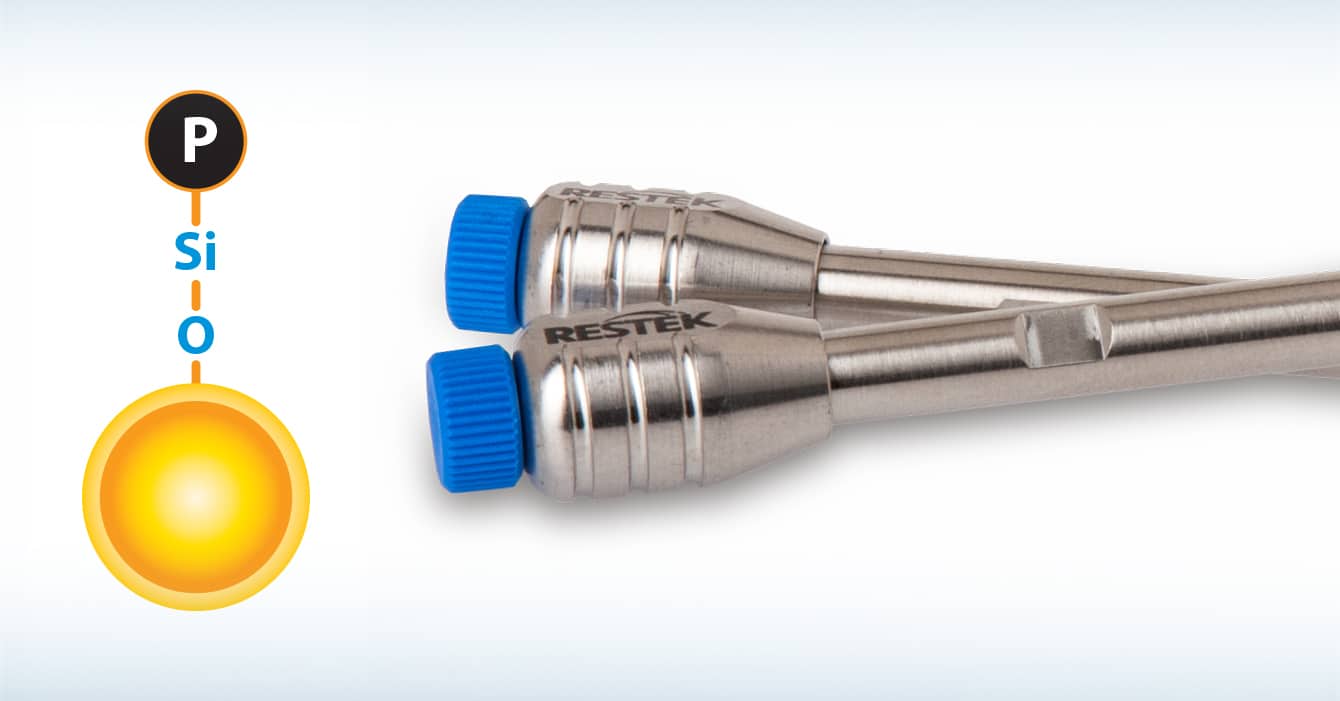
How often are matrix interferences affecting your EtG/EtS analysis? Restek’s EtG/EtS solution consistently resolves analytes away from matrix interferences in a fast, 4-minute, dilute-and-shoot method.
- Proven performance for accurate, reliable ethyl glucuronide (EtG) and ethyl sulfate (EtS) analysis.
- Strong retention consistently resolves analytes from matrix interferences.
- Long column lifetime ensures consistent performance injection after injection.
- Fast, 4-minute, dilute-and-shoot LC-MS/MS analysis supports high sample throughput.
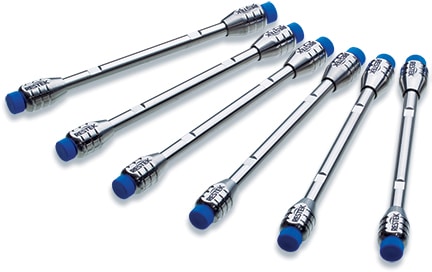
Switch to a Raptor EtG/EtS column when you need consistent resolution of EtG and EtS from matrix interferences and long column lifetimes.
Order yours today at www.restek.com/raptor
Column Description:

Pore Size:
90 Å
Particle:
2.7 μm superficially porous particle (SPP or “core-shell” particle) silica
Surface Area:
130 m2/g
End-Cap:
Proprietary
Carbon Load:
Proprietary
USP Phase Code:
NA
Phase Category:
Proprietary
Ligand Type:
Proprietary
Recommended Usage:
pH Range: 2.0–8.0
Maximum Temperature: 40 °C
Maximum Pressure: 600 bar/8700 psi
Properties:
- Resolution of EtG and EtS from matrix interferences.
- Increased retention of EtG and EtS compared
to traditional phases.
Switch to a Raptor EtG/EtS when:
- Other columns can’t resolve EtG and EtS from matrix components.
- You need high-throughput EtG/EtS analysis.
- Low-level detection limits are desired.
Definitive Results for Alcohol Monitoring
Restek has developed a new Raptor column that significantly improves EtG and EtS analysis for alcohol monitoring programs. The Raptor EtG/EtS column consistently retains and resolves these important biomarkers from matrix interferences, providing accurate, reliable results injection after injection (Figure 1). Dependable performance, a fast 4-minute analysis, and long column lifetime make this column ideal for high-throughput labs. Paired with our quality reference standards and the optimized, verified method shown below, Restek’s Raptor EtG/EtS column is part of a complete solution that will help testing labs save time and increase certainty.
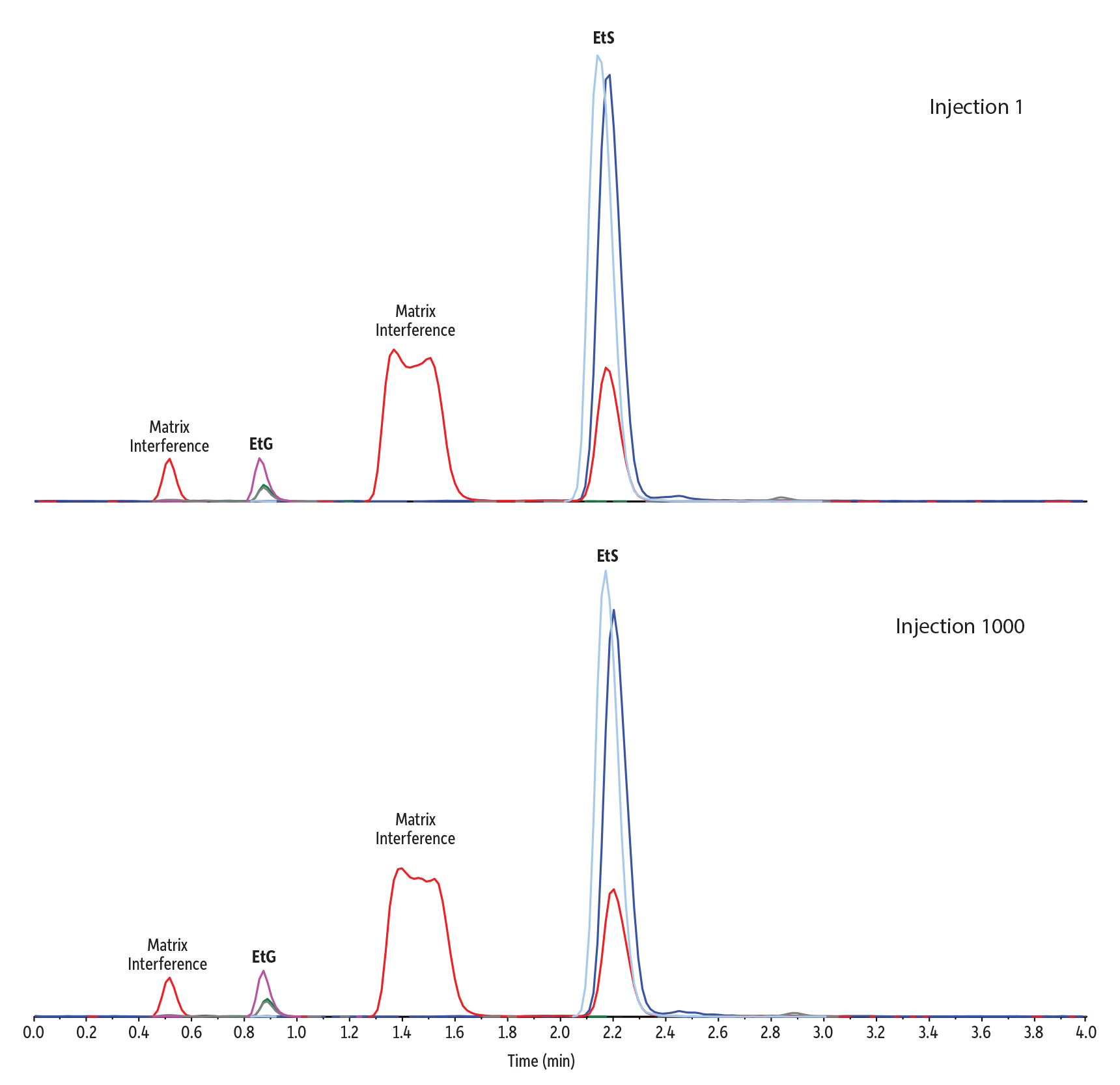
LC_CF0706
Peaks
| Peaks | Precursor Ion | Product Ion | Product Ion | |
|---|---|---|---|---|
| 1. | Ethyl-β-D-glucuronide-d5 | 225.9 | 84.9 | – |
| 2. | Ethyl-β-D-glucuronide | 220.8 | 84.9 | 74.8 |
| 3. | Ethyl sulfate-d5 | 129.7 | 97.7 | – |
| 4. | Ethyl sulfate | 124.7 | 96.8 | 79.7 |
Conditions
| Column | Raptor EtG/EtS (cat.# 9325A12) | ||||||||||||||||||||
|---|---|---|---|---|---|---|---|---|---|---|---|---|---|---|---|---|---|---|---|---|---|
| Dimensions: | 100 mm x 2.1 mm ID | ||||||||||||||||||||
| Particle Size: | 2.7 µm | ||||||||||||||||||||
| Pore Size: | 90 Å | ||||||||||||||||||||
| Guard Column: | UltraShield UHPLC precolumn filter, 0.2 µm frit (cat.# 25809) | ||||||||||||||||||||
| Temp.: | 35 °C | ||||||||||||||||||||
| Standard/Sample | |||||||||||||||||||||
| Diluent: | 0.1% Formic acid in water | ||||||||||||||||||||
| Conc.: | A 500 ng/mL QC sample was prepared in urine. 50 µL of the sample was diluted with 950 µL of a working internal standard (25 ng/mL EtS-d5/100 ng/mL EtG-d5 in 0.1% formic acid in water). The sample was vortexed at 3500 rpm for 10 seconds to mix. The sample was then centrifuged at 3000 rpm for 5 minutes at 10 °C. The autosampler needle was adjusted to inject from the supernatant. | ||||||||||||||||||||
| Inj. Vol.: | 10 µL | ||||||||||||||||||||
| Mobile Phase | |||||||||||||||||||||
| A: | 0.1% Formic acid in water | ||||||||||||||||||||
| B: | 0.1% Formic acid in acetonitrile | ||||||||||||||||||||
|
| Detector | MS/MS |
|---|---|
| Ion Mode: | ESI- |
| Mode: | MRM |
| Instrument | HPLC |
| Notes | Reference Standards Ethyl-β-D-glucuronide (cat.# 34101) Ethyl-β-D-glucuronide-d5 (cat.# 34102) Ethyl sulfate sodium salt (cat.# 34103) Ethyl sulfate-d5 sodium salt (cat.# 34104) |