


In the winter of 1692, the people of colonial Salem, Massachusetts (United States of America) began accusing one another of witchcraft. Hundreds of townspeople were tried, resulting in 20 executions and additional negligent deaths in jails. Evidence” of bewitchment included the sensation of being pricked, bitten, or burned, temporary loss of senses (sight, hearing, and touch), flashes of light, unexplained joint tension, limb swelling, and stomach upset all lacking a discernable cause1. Looking back, Salem was just one of multiple witch trials around the world where evidence of “bewitchment” coincided with another, naturally occurring, condition: Ergotism.
The causal agent of ergotism is the fungus, Ergot. Ergot is an ascomycete in the genus Claviceps, and a common pathogen of cereal grains such as barley or rye – popular grains in colonial America. Infections in grain are often recognized by the fungi’s dark, sickle-shaped, sclerotia, which protrude from grain ears (Figure 1), and are ultimately mixed into the final harvest. These sclerotia contain ergot alkaloids, a group of mycotoxins which interact with neurotransmitters including dopamine, noradrenaline, and serotonin 2. Wet, cool, conditions – such as those experienced in late winter and early spring in America when the Salem witch trials occurred – contribute to proliferation of Ergot fungi and the production of mycotoxins 1,3.
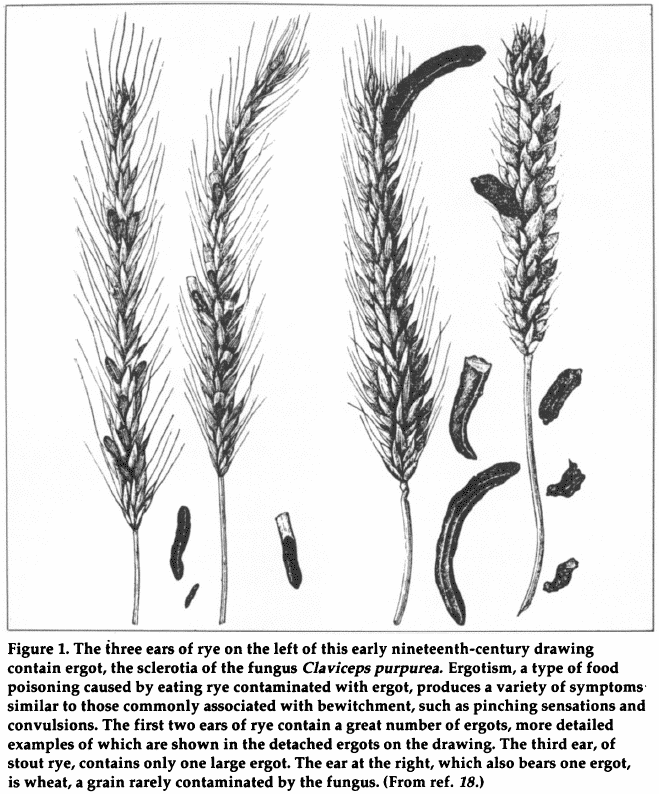
Figure 1: Depiction of ergot sclerotia in rye 1
Records from the Vardø witch trials in Norway (1662) describe similar symptoms as those experienced in Salem, with the addition of testimony that witchcraft has been “consumed” through bread and beverages (…perhaps beer?), rather than being practiced or learned 3. These direct references to grains provide additional evidence that ergot may have played a significant role. Similar to Salem, these trials took place in the winter and spring, but in this case over 100 people were executed 3. But I am not a historian – other cultural factors I am less familiar with are likely to have played a role in the witch trials too (check out the ‘further reading’ section to learn more) 4,5!
Severe symptoms of ergot poisoning are categorized as “convulsive” or “gangrenous”, and both can be attributed to the ergot alkaloids’ vasoconstrictive properties. Convulsive ergotism is also associated with paranoia and hallucinations, supposedly related to interactions with serotonin 6. Figure 2, shows the basic structure of ergot alkaloids, categorized as clavine alkaloid and lysergic acid amine alkaloids. Lysergic acids may sound familiar, as this group includes the therapeutic and recreationally used hallucinogen lysergic acid diethylamide (LSD). While LSD is not typically produced by ergot, this group of compounds result in similar symptoms with varying degrees of potency and subsequent symptoms in humans and animals 2,7.
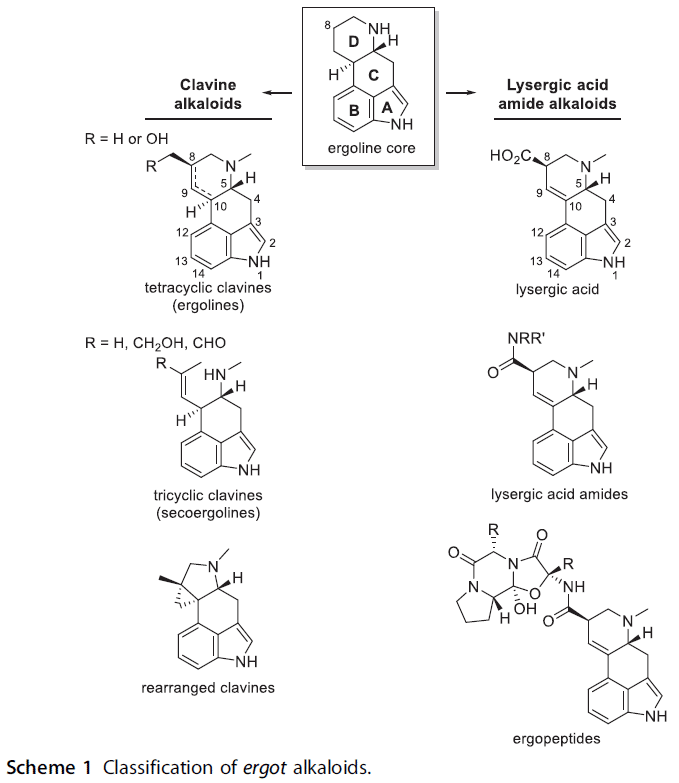
Figure 2: Common structure of ergot alkaloids 7
The popularity of grains as food for humans and livestock, combined with a …developing… understanding of fungal contamination and safe food storage, led to some other, relatively well-recorded instances of mass ergotism in localized communities, with one of the earliest being “St. Anothony’s Fire” disease, which plagued France in the middle ages and was named for its symptoms: burning sensations in limbs, often followed by gangrene 2. Obvious physical symptoms such as gangrene and convulsions are easy to spot in historic reports, while instances of paranoia and hallucinations may be less obvious to parse out from other quirks of the time. Many experts disagree on the root cause of witch trials around the world, but, short of time-travel, it is unlikely that we will know for sure if the witch trials were the result of social unrest, food poisoning, or true witchcraft.
More recently, ergot alkaloids have been introduced into the EU’s mycotoxin regulations, with thresholds ranging from 2×10⁻⁵ – 0.5 g/kg in various matrices 8. Liquid chromatography is expected to play an important role in the detection and quantification of ergot alkaloids. Chung et al. reports a need for isotopic standards and sample clean-up that can control matrix effects in grain matrices 9. Recent outbreaks of ergot around the world are prompting new strategies to detect and control outbreaks in cereal-crop staples 10.
We can’t completely demonize ergot alkaloids though. Like many poisons, controlled doses of ergot alkaloids can serve some significant therapeutic roles. Historically, women were intentionally fed ergot to increase the speed of labor and reduce the risk of hemorrhaging 2. However, likely due to difficulties controlling dosage, this practice stopped as risk of harm to mother and child prevailed. As early as 350 B.C. (Persees) there were descriptions of “noxious grasses that cause pregnant women to drop the womb and die in childbed” 2,3 which many believe is a reference to Ergot. Luckily, today we have the means to control dosage a bit better. The United States Food and Drug Administration has approved dozens of drugs derived from ergot alkaloids which may be used to treat migraines, ease uterine contractions, control lactation, and control tremors related to Parkinson’s disease, AND there is rapidly growing interest in ergot alkaloids (particularly LSD) for treatment of mental health conditions 7,11.
But, that doesn’t mean we need ergot alkaloids in our food. I, for one, am interested to see if more countries follow the EU in this new legislation, and how LC techniques will evolve to keep up with this new demand alongside clinical applications.
For further reading:
- Matossian, M. K. Ergot and the Salem Witchcraft Affair. Am. Sci. 1982, 70 (4), 355–357.
- Haarmann, T.; Rolke, Y.; Giesbert, S.; Tudzynski, P. Ergot: From Witchcraft to Biotechnology. Mol. Plant Pathol. 2009, 10 (4), 563–577. https://doi.org/10.1111/j.1364-3703.2009.00548.x.
- Alm, T. The Witch Trials of Finnmark, Northern Norway, during the 17th Century: Evidence for Ergotism as a Contributing Factor. Econ. Bot. 2003, 57 (3), 14.
- Duncan, K. Was Ergotism Responsible for the Scottish Witch-Hunts? R. Geogr. Soc. 1993, 25 (1), 30–36.
- Sharpe, J. Witchcraft in Early Modern England, 2nd ed.; Routledge, 2019.
- Eadie, M. J. Convulsive Ergotism: Epidemics of the Serotonin Syndrome? Lancet Neurol. 2003, 2 (7), 429–434. https://doi.org/10.1016/S1474-4422(03)00439-3.
- Tasker, N. R.; Wipf, P. Biosynthesis, Total Synthesis, and Biological Profiles of Ergot Alkaloids. In The Alkaloids: Chemistry and Biology; Elsevier, 2021; Vol. 85, pp 1–112. https://doi.org/10.1016/bs.alkal.2020.08.001.
- Commission Regulation (EU) 2021/1399 of 24 August 2021 Amending Regulation (EC) No 1881/2006 as Regards Maximum Levels of Ergot Sclerotia and Ergot Alkaloids in Certain Foodstuffs (Text with EEA Relevance); Regulation No 1881/2006; Regulation 32021R1399; The European Commission, 2021.
- Chung, S. W. C. A Critical Review of Analytical Methods for Ergot Alkaloids in Cereals and Feed and in Particular Suitability of Method Performance for Regulatory Monitoring and Epimer-Specific Quantification. Food Addit. Contam. Part A 2021, 38 (6), 997–1012. https://doi.org/10.1080/19440049.2021.1898679.
- Agriopoulou, S. Ergot Alkaloids Mycotoxins in Cereals and Cereal-Derived Food Products: Characteristics, Toxicity, Prevalence, and Control Strategies. Agronomy 2021, 11 (5), 931. https://doi.org/10.3390/agronomy11050931.
- Sharma, N.; Sharma, V.; Manikyam, H.; Krishna, A. Ergot Alkaloids: A Review on Therapeutic Applications. Eur. J. Med. Plants 2016, 14 (3), 1–17. https://doi.org/10.9734/EJMP/2016/25975.