



In our previous blog we discussed the use of a shorter column to reduce run time. We could do that because in our application we have plenty of resolution. This works very nice, but we have to cut our existing column in 2, or buy a new, shorter column. When analyzing challenging samples, like extracts of biological tissues or sediments, a shorter column usually will “age” faster. That means that we cannot do the same nr of analysis on a short column as we can expect on the long column. This should not be an issue as one can already benefit from a 2x faster analysis time and a lower purchase price.
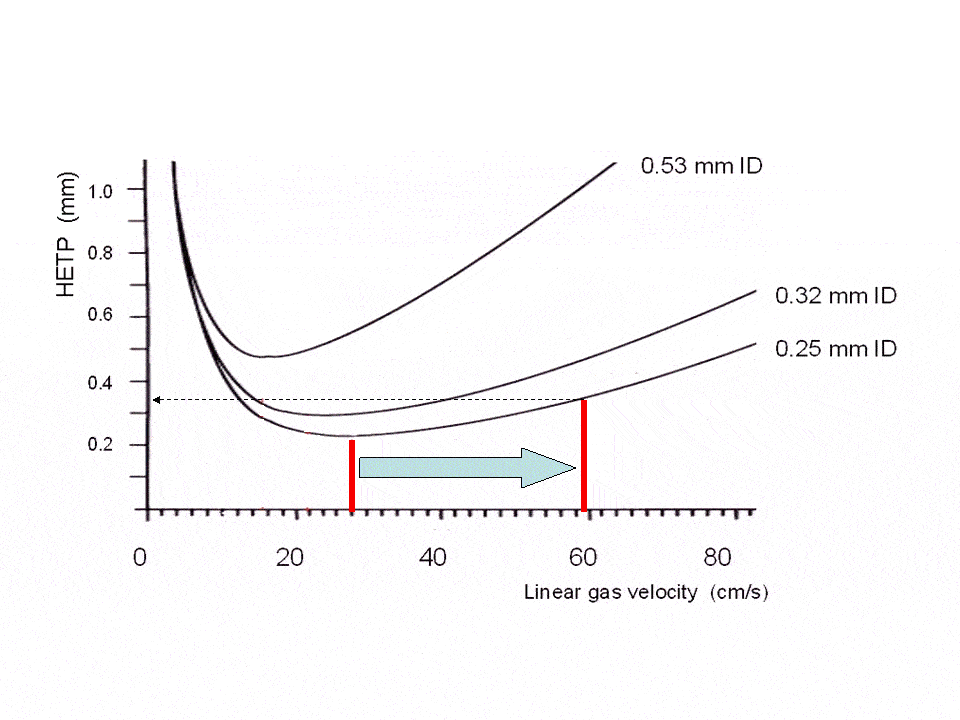
Fig 1: Van Deemter plot. Increasing velocity will cause some efficiency loss. No issue for “simple” separations
There is another way to speed up analysis and that is to operate the column under a higher flow. Now we are not replacing the column, we are only changing the linear gas velocity.
As shown in the van Deemter plot in fig. 1, operating a capillary at higher velocity will result in a loss of efficiency. That’s exactly what we needed as we are still discussing situation 1, where we have enough resolution and we like to speed up the separation at the cost of efficiency.
If we increase the linear velocity a factor 2, we lose efficiency, but the impact is lower then using a column of half the size.
It depends on the carrier gas. The loss of efficiency is the least using hydrogen, followed by helium and nitrogen.
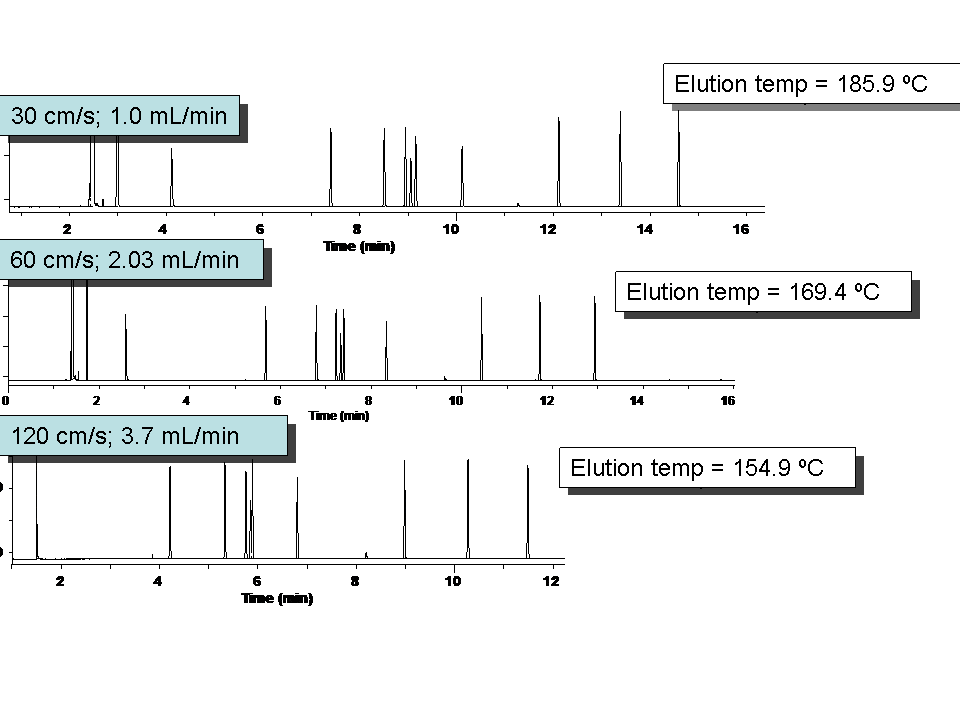
Fig.2 Impact of using Higher column flow rate (same temp program) 60ºC, 2 min → 250 ºC @ 10ºC/min
For isothermal analysis it is pretty straight forward we can reduce run time a factor 2 if we use twice the gas velocity.
In temperature programmed analysis we can also benefit from a factor 2 speed increase, but we have to change the temperature program to get the same elution temperatures. Figure 2 shows a separation of a test mixture where we have set the column at 30, 60 and 120 cm/s using the same temperature program. This is a practical mistake that is made quite often: because of using the same temperature program, we get little gain in analysis time. Here we win only 3 minutes. Additionally by using the same program with a higher linear velocity, the elution-temperatures will decrease, which result in relative peak shifting. If we zoom into the area where we have more peaks eluting, we observe that peaks start to shift relative from each other, see Fig. 3.
This effect will always happen when we change conditions that affect the elution temperature.
If we adjust the program also , we get results as shown in figure 4. By using a faster temperature program we can also reduce analysis time with the same factor as we used to increase the linear gas velocity.
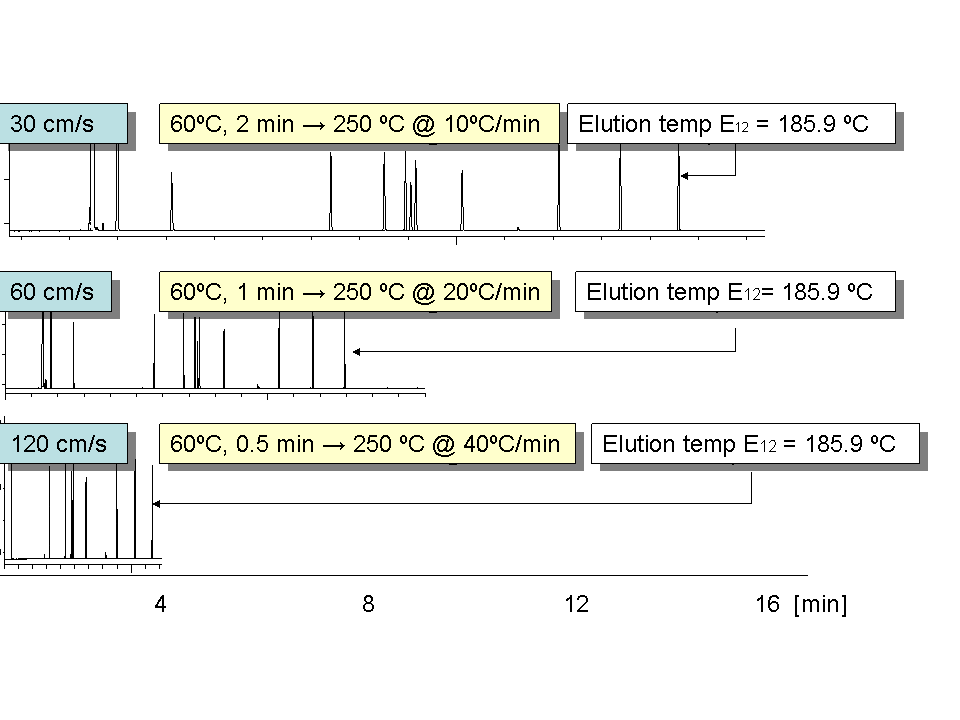
Fig. 4 Temperature programs needed to get the SAME elution temperature: Now the run times are also much shorter
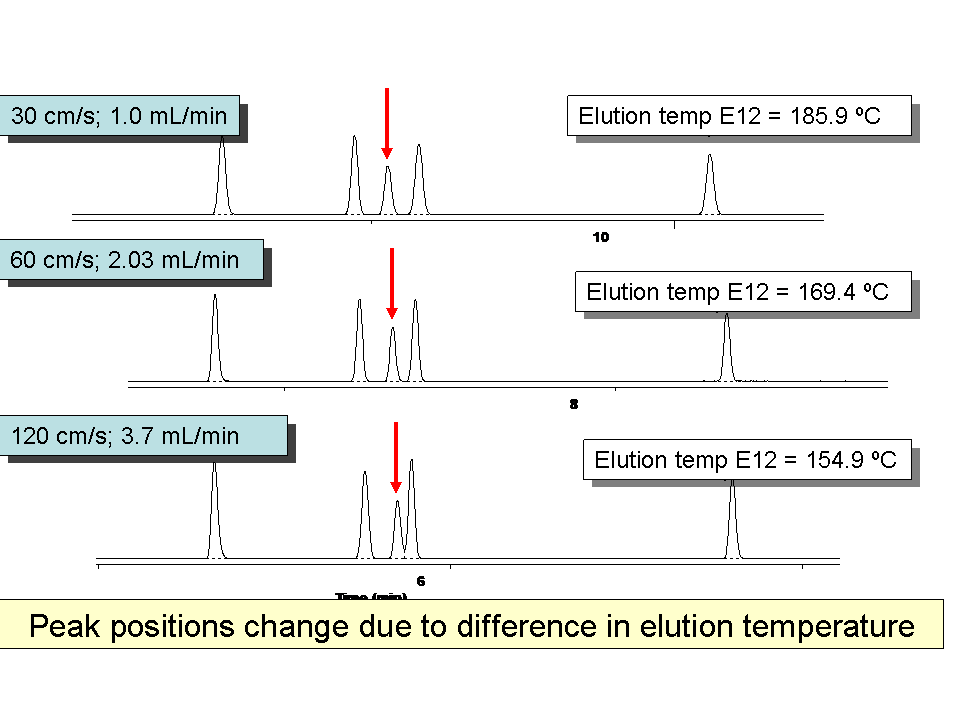
Fig.3 Peak positions change due to difference in elution temperatures
How much separation do we loose?
We only started to do this exercise for separations where we had plenty of resolution. We did an analysis of a complex sample (perfume eternity) on a 30m x 0.25mm Rxi 5Sil MS, using linear velocity of 60 cm/s.
Then we did the same analysis at 2x higher linear velocity, 120 cm/s.
Figure 5 shows the result. Peak elution profile is very similar. Analysis time was a bit longer because the 6890 GC oven could not keep up with the 40C/min temperature program. Fig 6 shows an expansion of a “crowded area”. Here we indeed see we have lost some efficiency, but this was also to be expected.
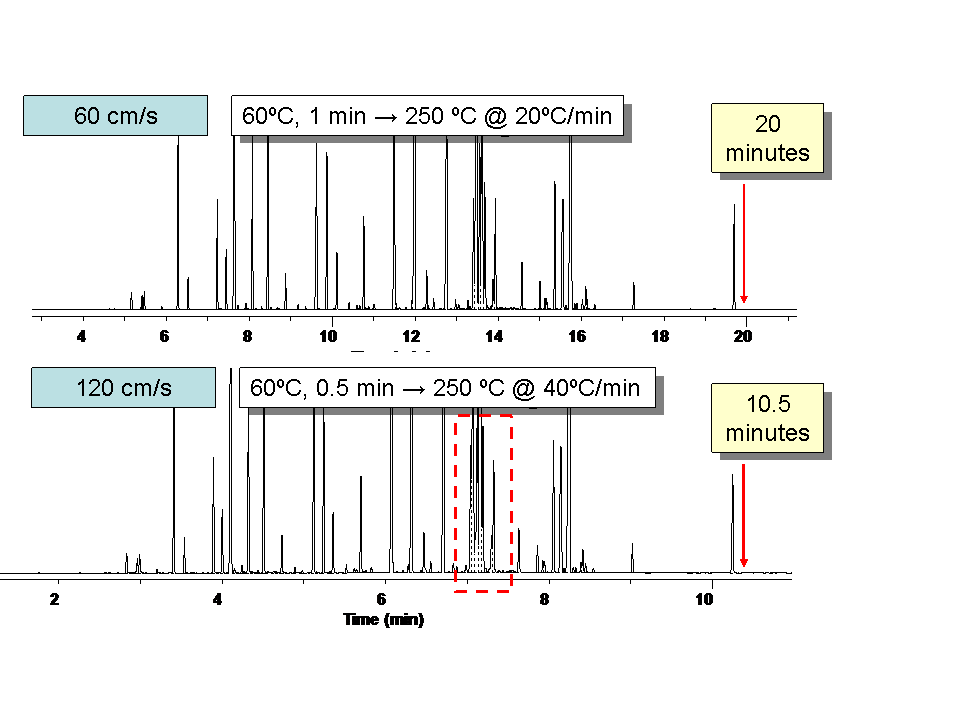
Fig.5 Perfume analysis on Rxi-5Sil MS, 30/0.25/0.25 at 60 and 120 cm/s
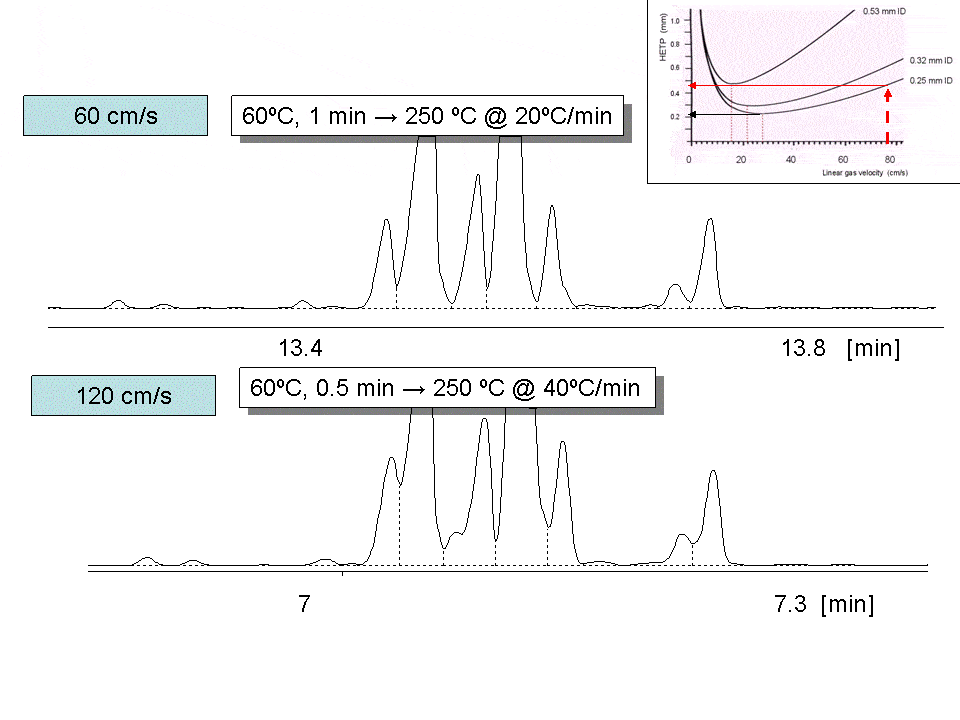
Fig. 6 Detail of peak-cluster from fig. 5
The temperature program for the faster method depends on the increase in gas velocity. In formula, see fig. 7. Fig 8 gives an example calculation.
Interesting advantage of using higher linear velocity, is that eluting peaks will be higher which benefits sensitivity. We can inject less onto the column by reducing sample volume, extra sample dilution or operating at a higher split-ratio. This all will result in increased life time as less contamination will be brought on to the column.
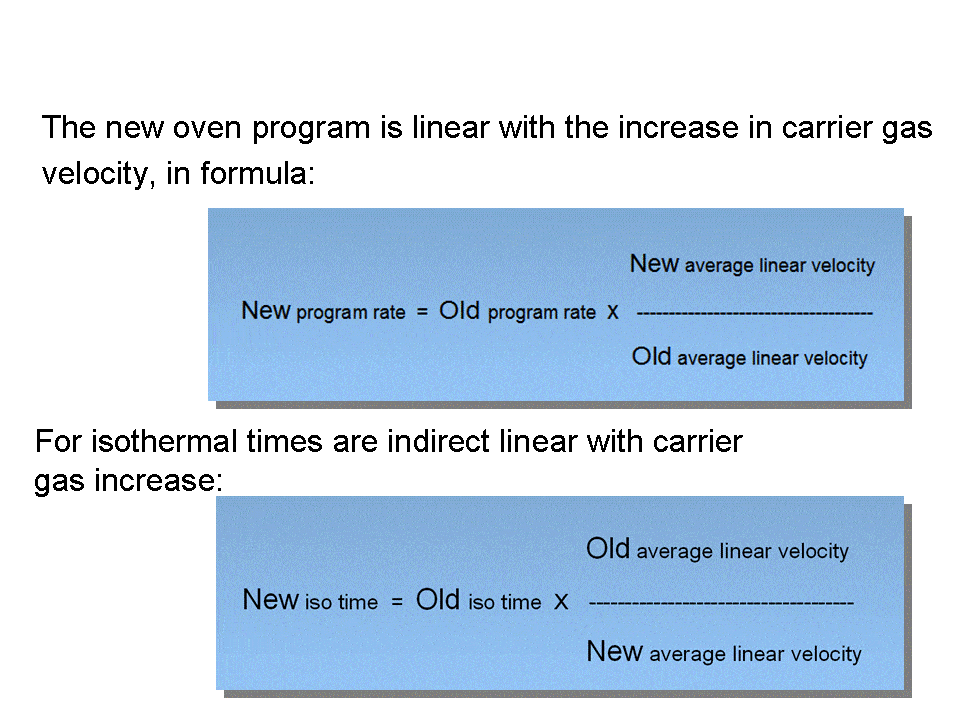
Fig.7 To get the same elution temperatures we have to “calculate” the oven program rate and the Iso-times. (Iso temperatures must remain the same)
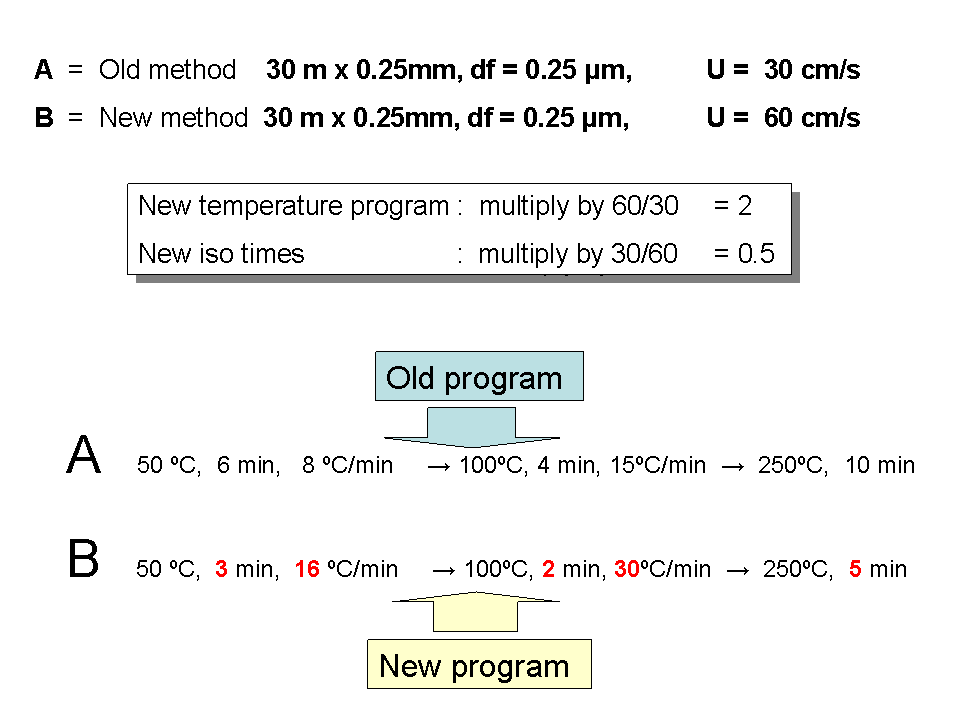
Fig.8 Example of calculation for a 30m column moving from 30 to 60 cm/s
Additionally, if the column ”ages” and efficiency is decreasing, one can decide to operate the column more optimal at a lower velocity and still get the separation.