



Restek Corporation, 110 Benner Circle, Bellefonte, PA, US
*Restek Corporation, Weerhaan 9, Middelburg, The Netherlands
Content previously published in Petro Industry News
A unique deactivation for alumina PLOT columns has recently been developed to control the high activity of alumina surfaces. Rt-Alumina BOND/CFC columns provide high retention and high selectivity for volatile halogenated hydrocarbons, without the activity that is usually observed with alumina adsorbents. Chlorofluorocarbon analysis, in particular, can benefit from this new technology.
Chlorofluorocarbons (CFCs) are a group of halogenated hydrocarbons that were heavily used as refrigerants and propellants, until their role in the depletion of the earth’s ozone layer became known. In addition to being active ozone depleting substances, CFCs are also greenhouse gases that contribute to global warming. Now, the manufacture of CFCs is prohibited in most countries and the use of recycled material is restricted. Because of this, CFC analysis has become a priority, particularly in the environmental field and for industry as companies develop alternative compounds.
CFCs are highly volatile and amenable to gas chromatography, but an extremely retentive GC column is needed for successful analysis. Thick film nonpolar capillaries can be used, but these are low in efficiency and generally do not perform optimally. Separations of CFCs have also been done with packed columns, as they can be made with adsorbents or liquid phases with a low phase ratio which allows the resolution of volatile compounds with very specific selectivity. Separations on packed columns are mainly possible due to selectivity combined with high k values; efficiency is still relatively poor as the number of theoretical plates is very low.
The introduction of chemically bonded phases and porous layer open tubular (PLOT) capillary columns allowed selectivity to be combined with a high number of theoretical plates, which provided more opportunity for resolution. Alumina, in particular, offers high retention and good selectivity for a large range of CFCs, but historically these columns have been limited by high activity. Restek recently developed the Rt-Alumina BOND/CFC column, a new alumina PLOT column which uses a unique deactivation that is quite promising for CFC analysis.
Alumina: Limited by Reactivity
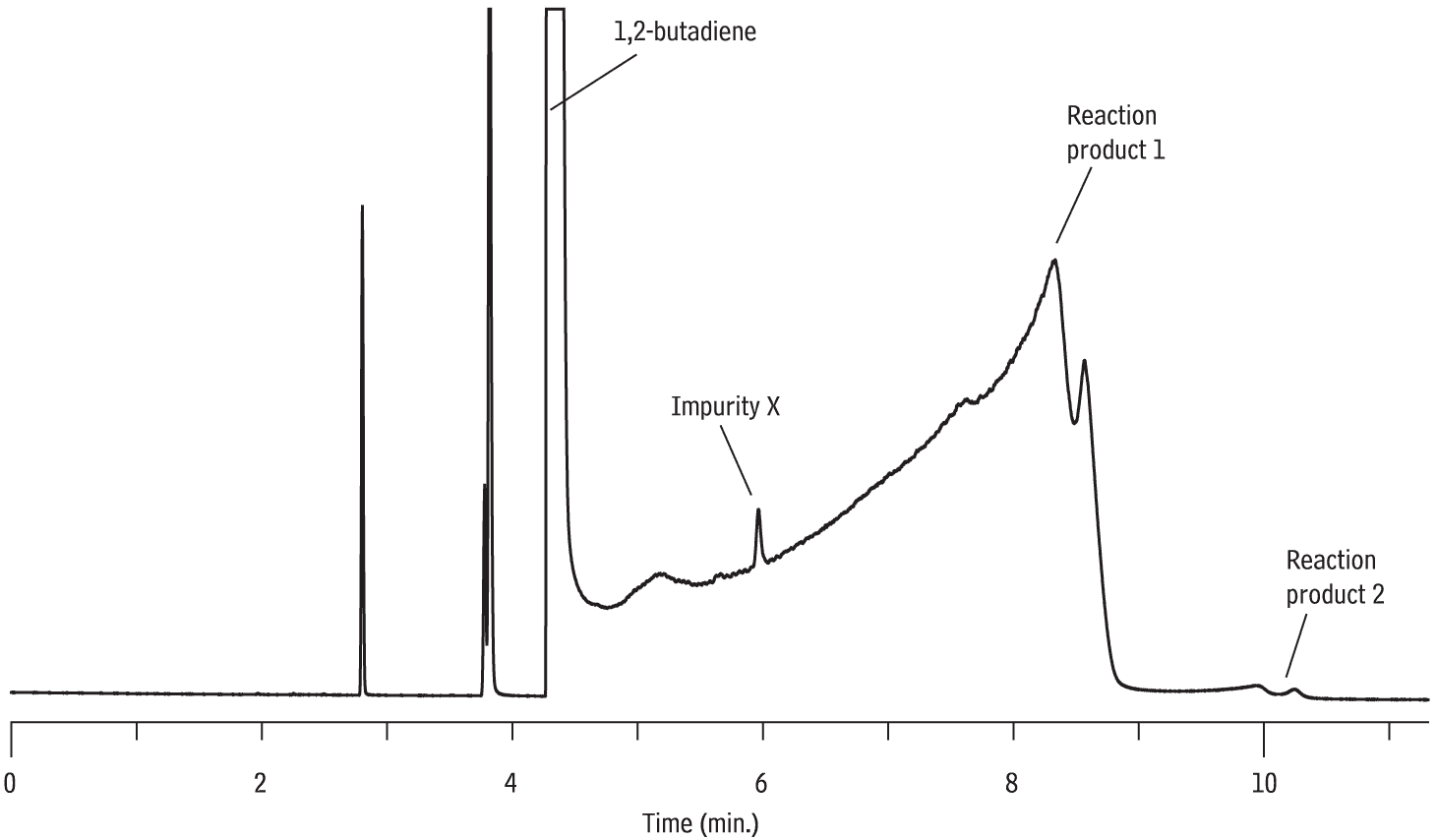
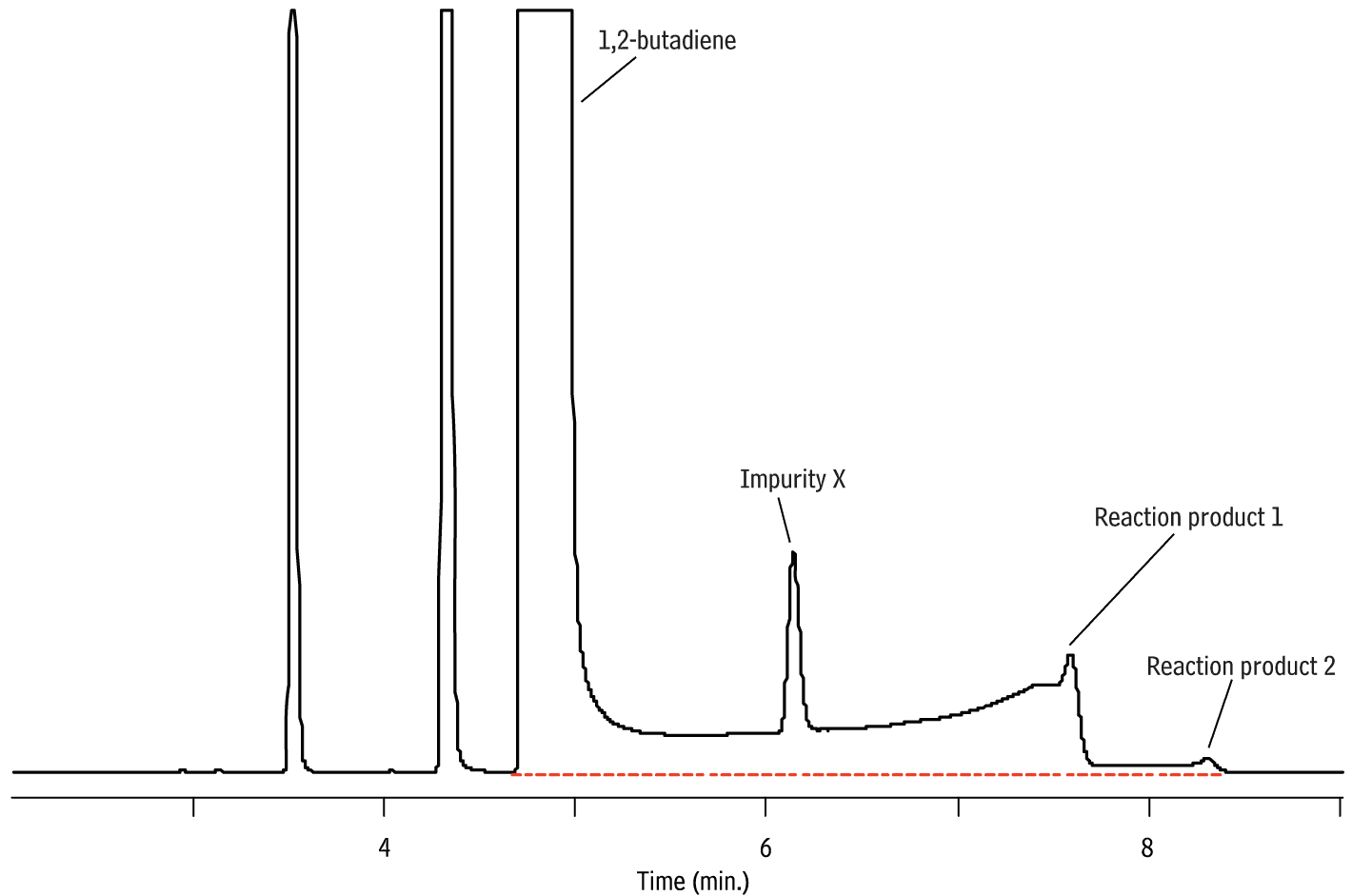
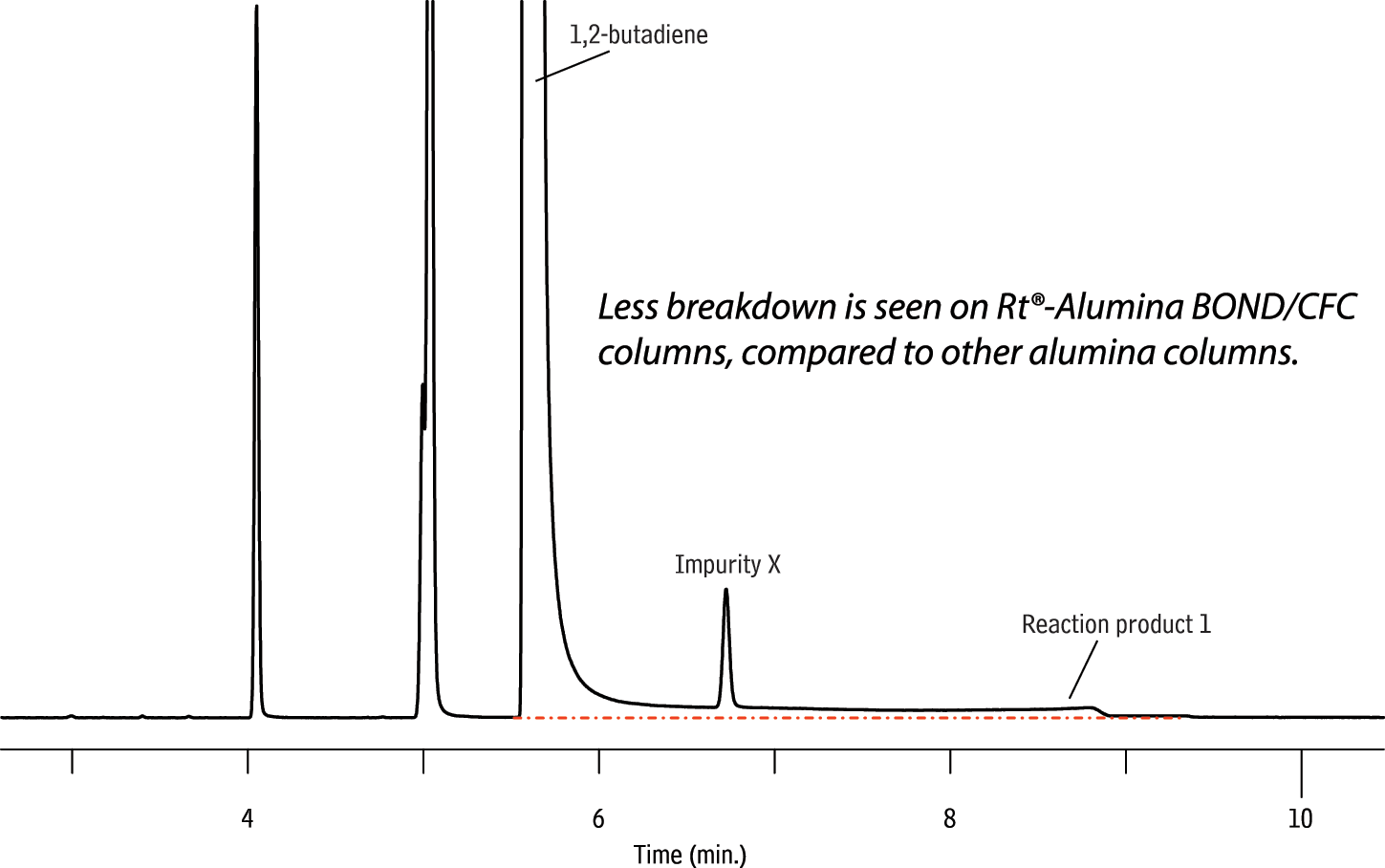
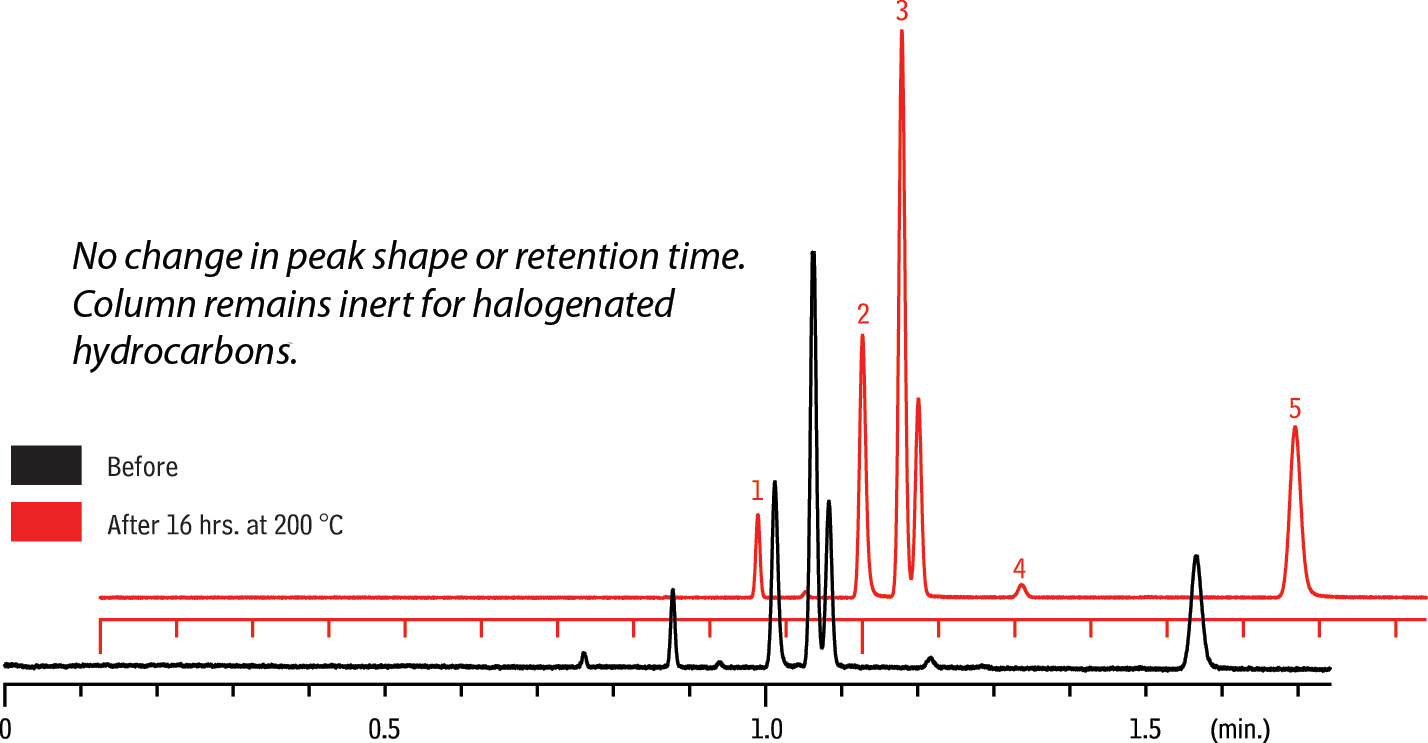
In order to benefit from the retention and selectivity of alumina columns for volatiles analysis, the reactivity of the alumina must be reduced. This is usually accomplished through salt deactivations, often using sodium sulfate or potassium chloride. Even with these conventional deactivations, reactivity is often a problem. For example, using 1,2-butadiene as a test probe, column activity is revealed by the formation of reaction products (Figures 1 and 2). In contrast, the new CFC deactivation developed by Restek results in a more fully passivated surface (Figure 3). The deactivation is also quite robust, as the column can be held at the maximum temperature for alumina (200 °C) for 16 hours and no change in the retention or response of volatile halogenated hydrocarbons is seen (Figure 4).
A Promising New Alumina for CFCs
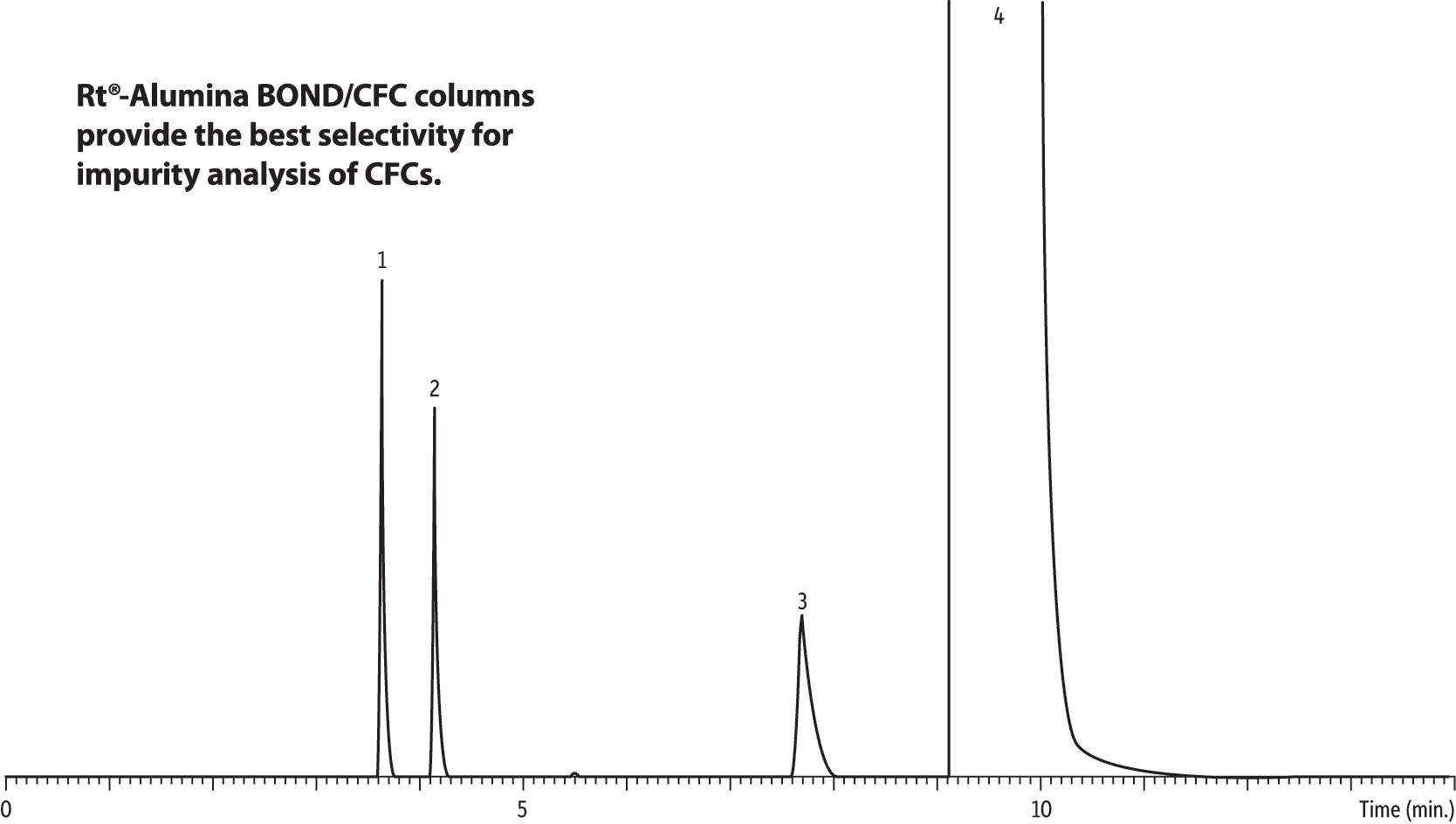
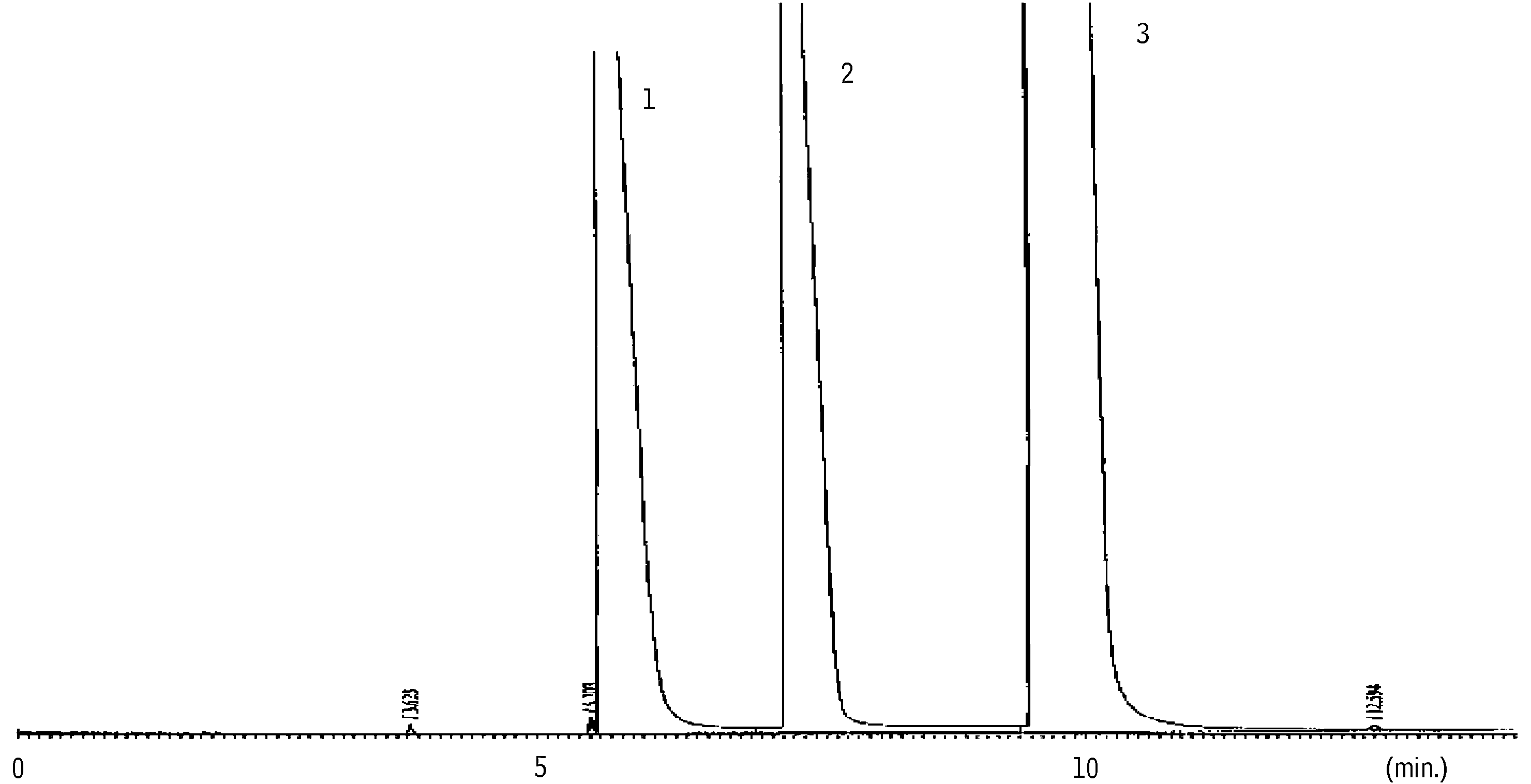
The Rt-Alumina BOND/CFC column provides excellent retention and selectivity for CFC analysis. Figures 5 and 6 show practical applications of this new technology for CFC impurities analysis. Different components are fully resolved and show no signs of decomposition. Although this new column is highly inert, residual reactivity for some mono- or di-substituted halogenated hydrocarbons remains, however the majority of these compounds can be accurately quantified from mainstream processes or in impurity analyses.
Summary
Overall, early results from our lab, as well as feedback from users in the field, show the new Rt-Alumina BOND/CFC column to be quite promising for CFC separations. The unique deactivation effectively reduces column reactivity and allows the benefits of alumina retention and selectivity to be realized for laboratories testing these priority compounds.
GC_PC1196
Conditions
| Column | Alumina PLOT (Na2SO4), 50 m, 0.32 mm ID |
|---|---|
| Standard/Sample | 1,2-butadiene |
| Injection | |
| Inj. Vol.: | 40 µL split (split ratio 30:1) |
| Oven | |
| Oven Temp.: | 150 °C |
| Carrier Gas | H2, constant pressure (23 psi, 158.6 kPa) |
| Temp.: | 150 °C |
| Detector | FID |
|---|---|
| Notes | Major decomposition of 1,2-butadiene is seen due to reactivity with a Na2SO4 deactivated alumina surface. |
GC_PC1197
Conditions
| Column | CP-Al2O3/KCl, 50 m, 0.32 mm ID |
|---|---|
| Injection | |
| Inj. Vol.: | 40 µL split (split ratio 30:1) |
| Oven | |
| Oven Temp.: | 150 °C |
| Carrier Gas | H2, constant pressure (23 psi, 158.6 kPa) |
| Temp.: | 150 °C |
| Detector | FID |
|---|---|
| Notes | Major reactivity of 1,2-butadiene on a KCl deactivated alumina PLOT column. |
GC_PC1198
Conditions
| Column | Rt-Alumina BOND/CFC (custom), 50 m, 0.32 mm ID, 5.0 µm |
|---|---|
| Injection | |
| Inj. Vol.: | 40 µL split (split ratio 30:1) |
| Oven | |
| Oven Temp.: | 150 °C |
| Carrier Gas | H2, constant pressure (23 psi, 158.6 kPa) |
| Temp.: | 150 °C |
| Detector | FID |
|---|
GC_PC1192
Peaks
| Peaks | |
|---|---|
| 1. | Dichlorodifluoromethane |
| 2. | Chloromethane |
| 3. | Vinyl chloride |
| 4. | Trichlorofluoromethane |
| 5. | Chloroethane |
Conditions
| Column | Rt-Alumina BOND/CFC, 30 m, 0.53 mm ID, 10 µm (cat.# 19763) |
|---|---|
| Injection | split (split ratio 20:1) |
| Liner: | Single Gooseneck w/ Wool |
| Oven | |
| Oven Temp.: | 135 °C |
| Carrier Gas | H2, constant pressure (5 psi, 34.5 kPa) |
| Temp.: | 135 °C |
| Detector | FID |
|---|---|
| Notes | High temperature stability test conditions: 16 hours at 200 °C. |
GC_GN1155
Peaks
| Peaks | |
|---|---|
| 1. | Chloropentafluoroethane (CFC-115) |
| 2. | Dichlorodifluoromethane (CFC-12) |
| 3. | Chlorodifluoromethane (CFC-22) |
| 4. | 1,1,1,2-Tetrafluoroethane (CFC-134a) |
Conditions
| Column | Rt-Alumina BOND/CFC, 30 m, 0.53 mm ID (cat.# 19763) |
|---|---|
| Standard/Sample | 1,1,1,2-Tetrafluoroethane |
| Conc.: | Neat |
| Injection | |
| Inj. Vol.: | 500 µL split |
| Oven | |
| Oven Temp.: | 80 °C (hold 6 min) to 140 °C at 10 °C/min (hold 2 min) |
| Carrier Gas | He |
| Detector | FID |
|---|---|
| Notes | Gas sampling, purity analysis Note that tailing peaks are common in CFC analyses due to overloading normally employed for this type of work. |
GC_PC1199
Peaks
| Peaks | |
|---|---|
| 1. | Difluoromethane |
| 2. | Pentafluoroethane |
| 3. | 1,1,1,2-Tetrafluoroethane |
Conditions
| Column | Rt-Alumina BOND/CFC, 30 m, 0.53 mm ID, 10 µm (cat.# 19763) |
|---|---|
| Injection | |
| Inj. Vol.: | 500 µL split |
| Oven | |
| Oven Temp.: | 80 °C (hold 6 min) to 140 °C at 10 °C/min (hold 2 min) |
| Carrier Gas | He |
| Detector | FID |
|---|---|
| Notes | Gas sampling was the injection method used in this application. |
| Acknowledgement | Andre Hahnel, Westfalen AG |