

Chromatograms are like fingerprints. If you can “read” chromatograms well, you often can find a plausible cause. In this series, we will show a series of GC-chromatograms that are obtained from users and discuss some potential causes for the phenomena. Then we can move into some solutions for improvement
Chromatogram in fig. 1 show multiple peaks for one component. All the peaks indicated with a * are identified as dichlobenil peaks. Somehow multiple injection bands are formed during injection.
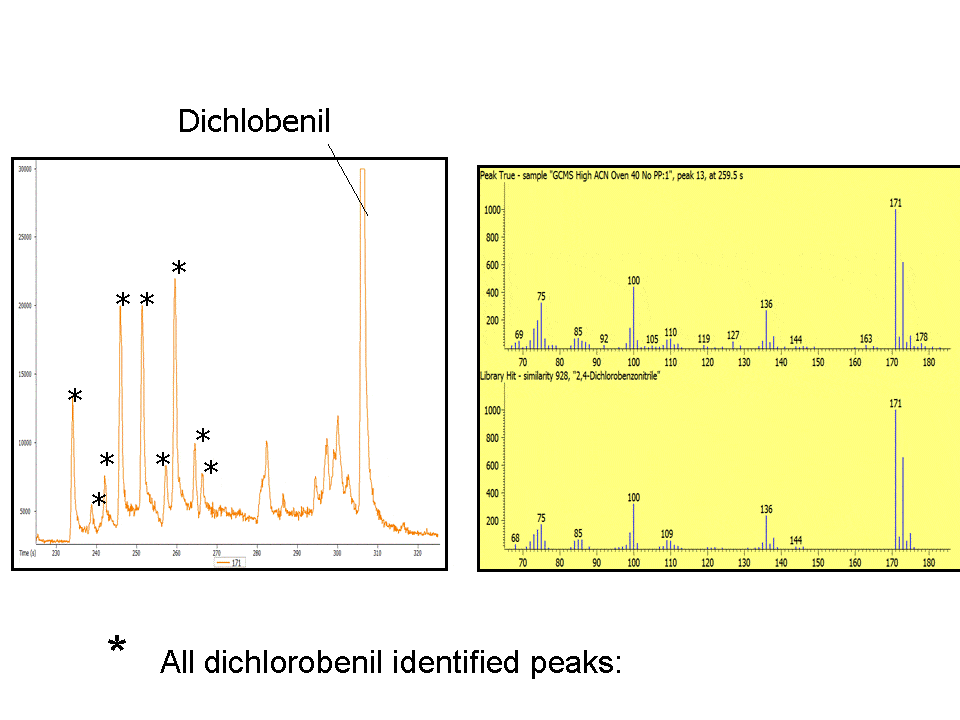
Fig. 1 multiple peaks are observed for ONE component… Injection problem
In this case acetonitrile was used as the solvent. This is a polar solvent and when a splitless injection is performed using a non-polar stationary phase, like the Rxi-5Sil MS, the condensed acetonitrile will form concrete droplets. Such droplets can easily move several meters in the column and form an extra injection band. The result is that multiple peaks are formed and detected for the same component.
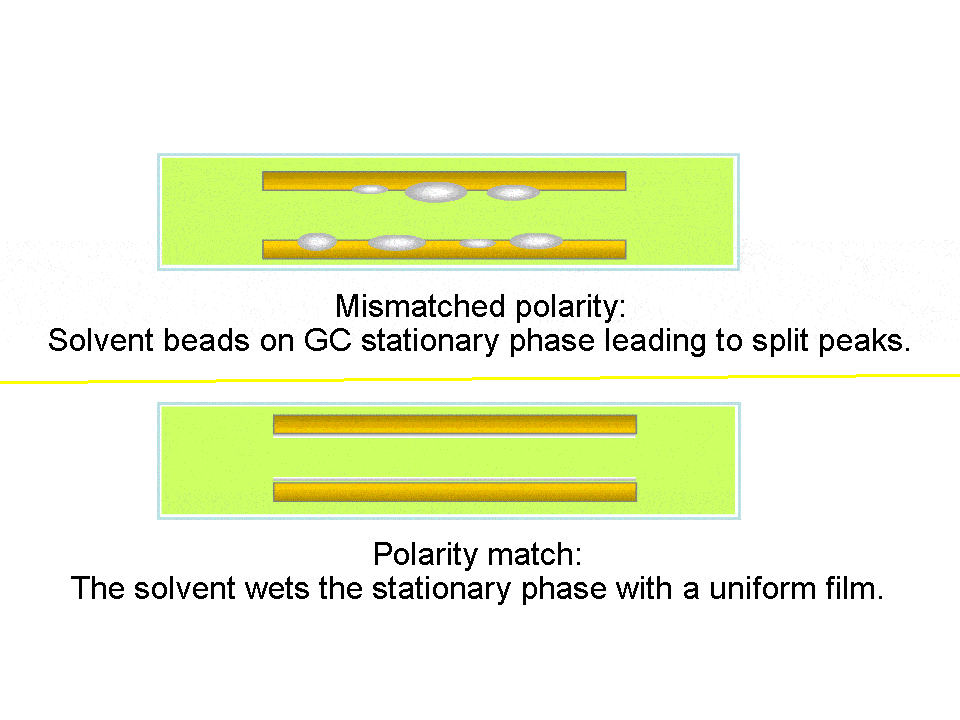
Fig.2 Polar solvents on a non-polar surface cause droplets. these droplets form multiple injection bands
The cause is that there is a “mismatch” in polarity between solvent and stationary phase, see fig. 2. The impact strongly depends on the stationary phase, the type of solvent, the oven temperature and the amount of solvent that is introduced.
The effect of formation of droplets can be minimized by:
- using non-polar solvents on non-polar stationary phases
- using polar solvents on polar stationary phases
- injection of smallest possible sample volume
- using higher oven temperatures
- using retention gaps or different polarity pre-columns
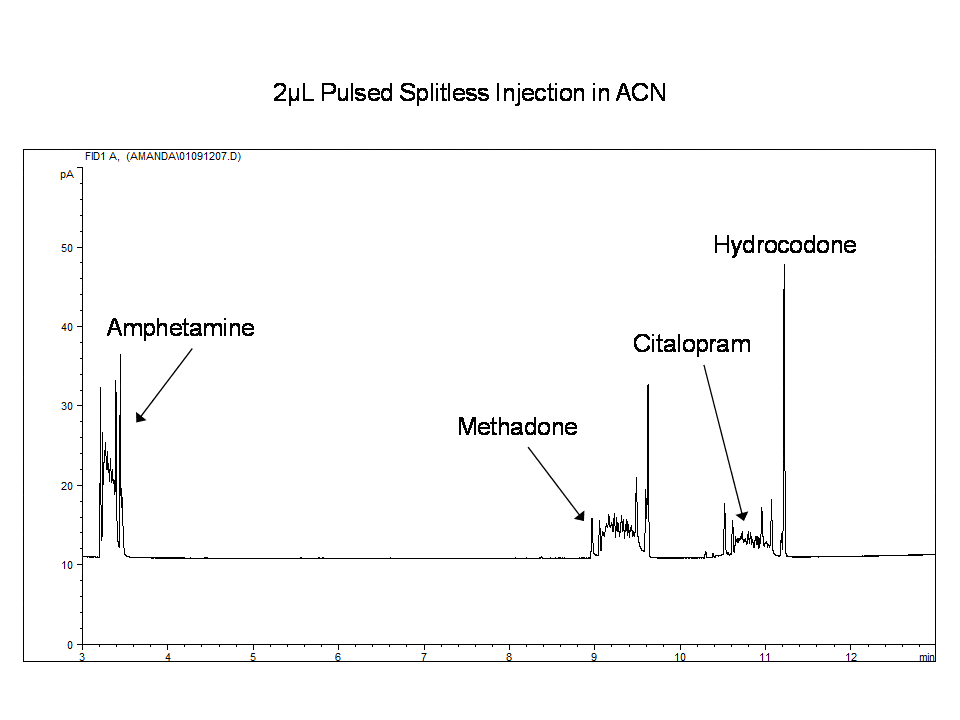
Fig. 3 Example what can happen if there are many droplets formed.. a forest of peaks elute before the main component.
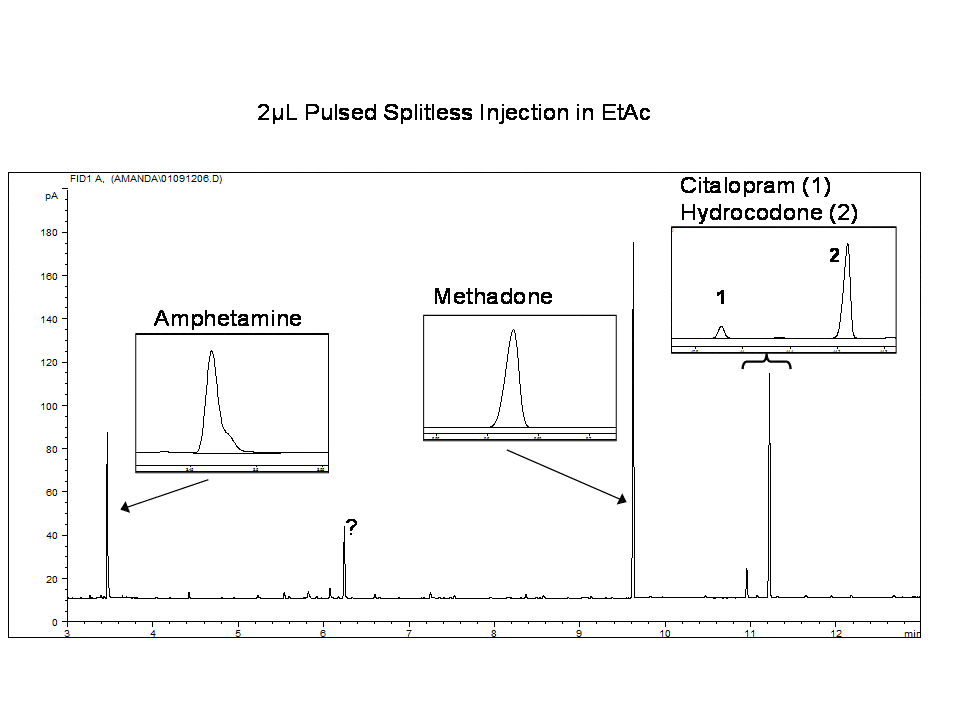
Fig. 4 Adding some Toluene to the acetonitrile reduced the “droplet” formation significantly. This approach can be quite interesting to explore a bit more
Another solution is to use a solvent that is more compatible with the polarity of the stationary phase. Fig. 3 shows another example of the impact of multiple peaks using 2 ul acetonitrile and a non-polar column. If the solvent is replaced for ethyl acetate, and using similar conditions, the components elute as sharp, single-focused peaks, see fig.4.
Also Mixing with another solvent, like toluene, may also help.