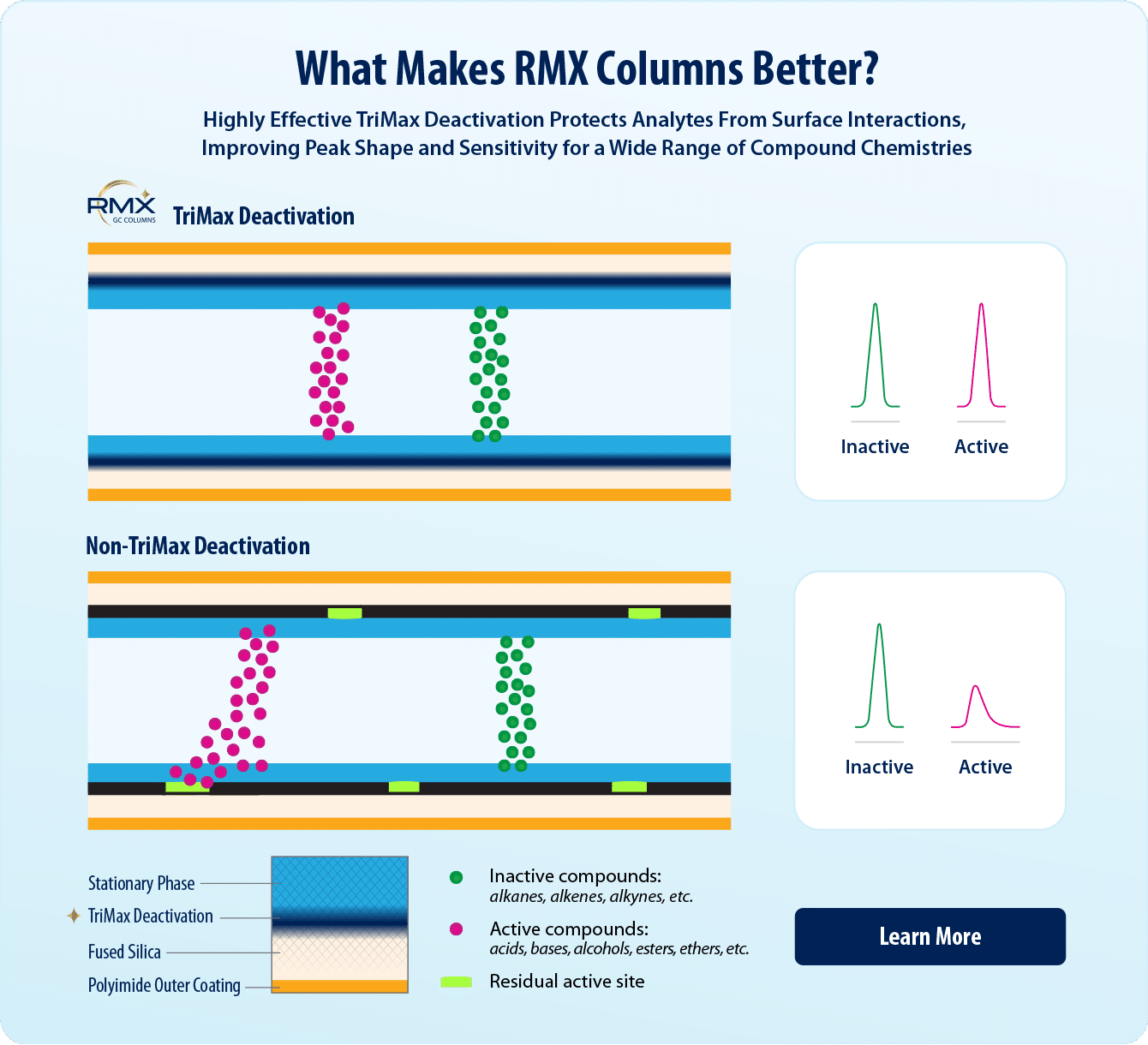
Next-generation TriMax column deactivation creates a robust neutral surface and exceptionally inert sample flow path.
Maximum inertness improves peak symmetry for a wide range of challenging drug classes.
Stable, symmetrical peaks mean more accurate identification for even the most problematic drugs.
Seized drug labs frequently analyze samples via GC-MS to determine if an unknown substance is an illicit drug, and GC column choice plays an integral role in data quality and method reliability. Since a wide variety of chemical compounds need to be identified, midpolarity columns, such as “5 type” columns, are a common choice for drug analysis. Silarylene polymers are structurally modified “5 type” phases that provide enhanced thermal stability, making a “5sil” column the perfect choice for extended lifetime and consistent performance with a mass spectrometer. When analyzing a wide range of drugs, some compound classes exhibit worse behavior than others, which can make drug identification more complex due to tailing peaks and drifting retention times. Acidic compounds (e.g., barbiturates) are prone to uneven phase partitioning due to strong interactions between weakly acidic N-H groups and silanols on the surface of the GC column. Other drugs may have basic functionalities (e.g., amines) and form hydrogen bonds with the surface, again delaying partitioning out of the column phase, or sometimes being completely adsorbed. By preventing surface silanol interactions, seized drug labs can see improved performance for the most problematic compounds across a wide range of functionalities.
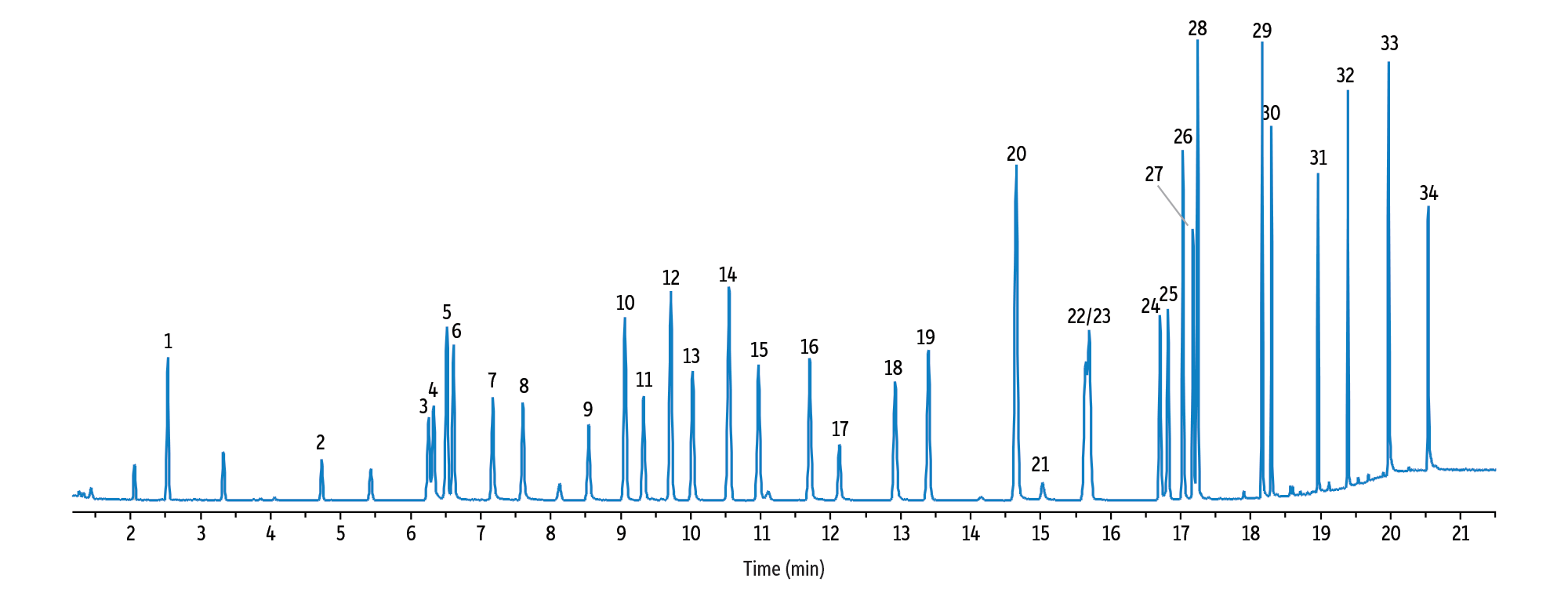
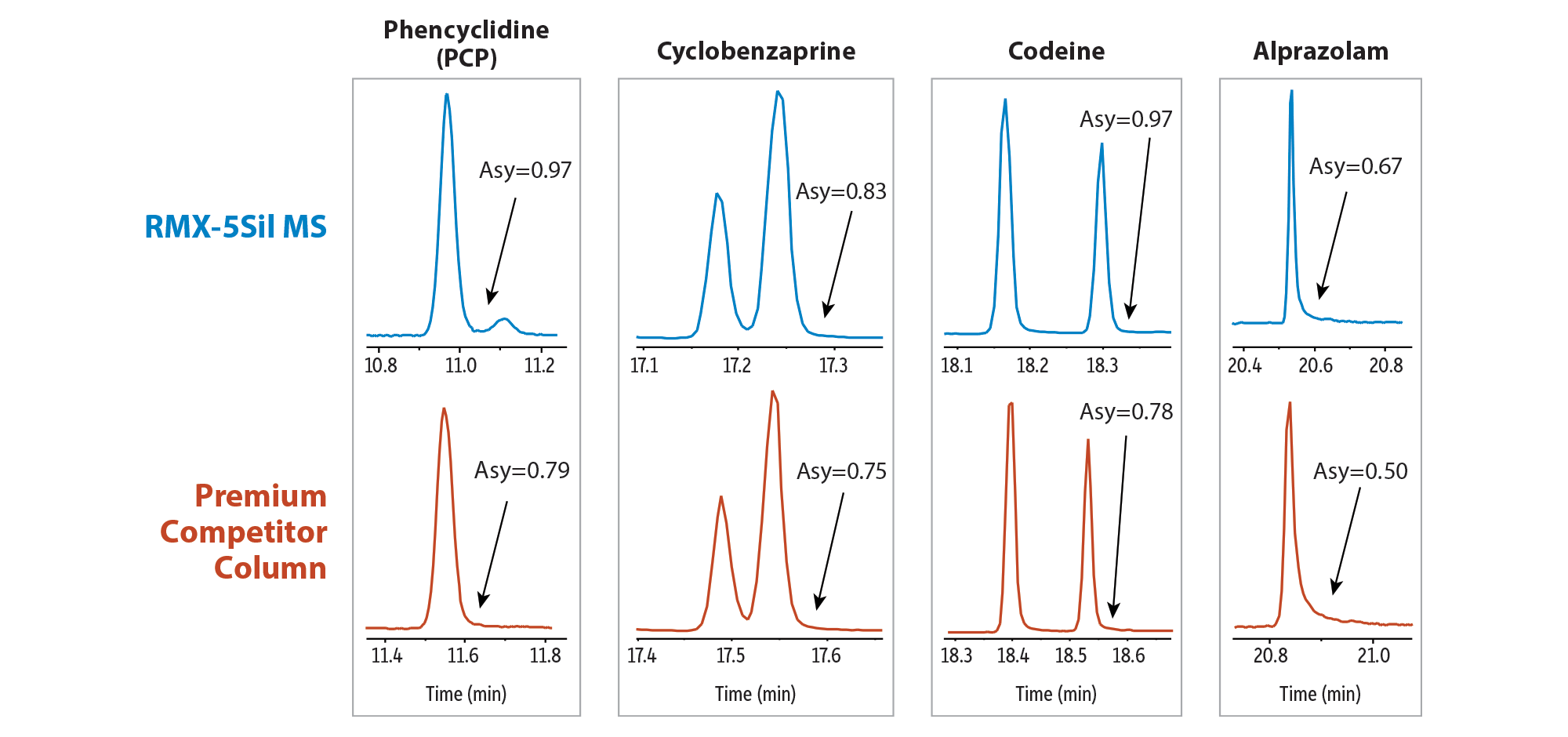
To minimize the impact of silanols, Restek has developed a next-generation TriMax deactivation that is applied to all columns in the RMX family. This revolutionary treatment creates a robust, highly inert surface that improves peak shape for a wide range of drug classes. Further, analysts can be confident in column performance because each column is individually QC tested with acidic, basic, and neutral compounds to ensure deactivation effectiveness and process control. This makes RMX-5Sil MS columns—which combine plug-in 5sil polarity, high thermal stability, and maximum surface inertness—ideal for improving seized drug identification (Figure 1). Further, as shown in Figure 2, the RMX-5Sil MS column outperforms a competitor’s premium column when comparing peak shape for several difficult basic analytes (doxylamine, cyclobenzaprine, codeine) as well as a weakly acidic analyte (alprazolam). Under the same instrument conditions, we can see an improvement in peak shape that can only be attributed to the maximum inertness of the RMX-5Sil MS column surface, which minimizes secondary analyte interactions with silanols that would otherwise cause peak tailing and poor symmetry.
Figure 1: RMX-5Sil MS columns provide excellent chromatographic results for 34 drugs of abuse analyzed by GC-MS in less than 21 minutes.
Corby Hilliard started his Restek career in the Quality Assurance department where he spent his first seven years as a QA analyst and worked his way up to a senior QA analyst. He then moved on to the Innovations department in 2009 as a GC Solutions Advanced Scientist. His experience is predominately in gas chromatography (GC) using various detectors and mass spectrometry as well as troubleshooting and method development. His primary work for Restek is generating product application data, using new and existing products in food safety, petrochemical, environmental, and the GC accessories line. He also is involved with quality and R&D as well as new product development.
Erica is an interdisciplinary GC applications and technologies scientist at Restek. She obtained her bachelor's degree in forensic biology from The Pennsylvania State University, and her doctorate from Virginia Tech in plant pathology, physiology, and weed science. Since joining Restek in 2021, she has worked with a wide variety of GC columns, including fused silica, MXT, PLOT, and packed columns as well as accessories, such as liners, valves, and methanizers.
Dr. Ramkumar Dhandapani is a seasoned analytical chemist with over 23 years of experience in the chromatography industry and a Ph.D. in analytical chemistry. During his career, he has specialized in method development, validation, and the troubleshooting of chromatography methods. He has developed numerous regulatory-compliant methods across diverse sectors, including environmental analysis, food quality and safety, pharmaceutical, fuels, and chemical industries. Currently, Dr. Dhandapani is the Director of Product Management at Restek, he is keen on innovation in chromatography and scaling breakthrough innovations to market as commercial products.
Colton Myers is the R&D manager for sample preparation at Restek Corporation with over 10 years of experience in product development and application innovation, particularly in solid phase microextraction (SPME) and volatile analysis. He has made contributions across various industries, authoring multiple peer-reviewed publications. Starting his career in quality control before transitioning to the GC Innovations team, Colton now leads a team dedicated to advancing sample preparation and collection technologies. He holds a BS in chemistry from Juniata College.