

- 3D radial design outperforms 2D axial samplers.
- Excellent low-level detection, even in short sampling times.
- High capacity ensures accurate long-term sampling.
- Easy to use—no pump required.
Now available from Restek, radiello passive diffusive air samplers feature a unique 3D radial design that provides several performance advancements compared to standard 2D flat axial air samplers. These samplers are a reliable, cost-effective alternative that offers both high sensitivity for low-level detection in short sampling periods, as well as higher capacity so accurate results can be obtained over longer sampling times. Versatile radiello air samplers are available for a wide range of chemical classes, so the choice of sampling material can be tailored to specific applications.
What Makes It Better?
The 3D cylindrical, coaxial design of radiello passive air samplers creates a large diffusive surface at a fixed, uniform distance from an adsorbent center column. Air enters from all sides and analytes are trapped on the large inner adsorptive surface. This results in a much higher sample uptake rate and capacity compared to standard 2D flat axial samplers.
Why Use radiello Air Samplers?
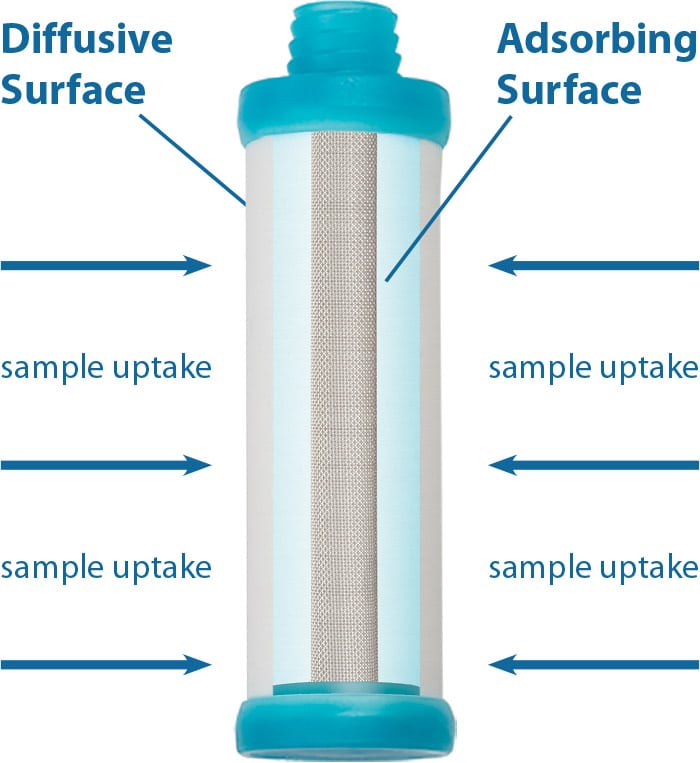
- Unique 3D radial design is not prone to face velocity effects and delivers higher uptake rates than standard 2D flat axial devices.
- Higher uptake rates give excellent low-level sensitivity, even for short sampling periods (down to 15 min).
- Higher capacity allows you to sample accurately up to 30 days without bias from breakthrough or back diffusion.
- Versatile, easy-to-use air sampler for a wide range of chemical classes is ideal for environmental monitoring, vapor intrusion, industrial hygiene, and personal air sampling.
- Solvent and thermal desorption options available.
- Features water repellant diffusive body and reusable holders.
- Easy to use—no pump required.
Unique 3D Radial Design Means radiello Air Samplers Have a Much Higher Sample Uptake Rate than 2D Axial Samplers.
| Compound | 3D Radial radiello Sampler Uptake Rate (mL/min) |
2D Axial Sampler Uptake Rate (mL/min) |
|---|---|---|
| Methanol | 125 | NS |
| Ethanol | 102 | 44 |
| Acetone | 77 | 40 |
| Benzene | 80 | 36 |
| Methyl ethyl ketone | 79 | 36 |
| Toluene | 74 | 31 |
| Ethylbenzene | 68 | 27 |
| n-Octane | 53 | 27 |
| Naphthalene | 25 | 25 |
| NS – Not suitable | ||
Higher Sample Uptake Rates Mean High Sensitivity and Good Low-Level Detection, Even in Short Sampling Periods
The radiello Advantage
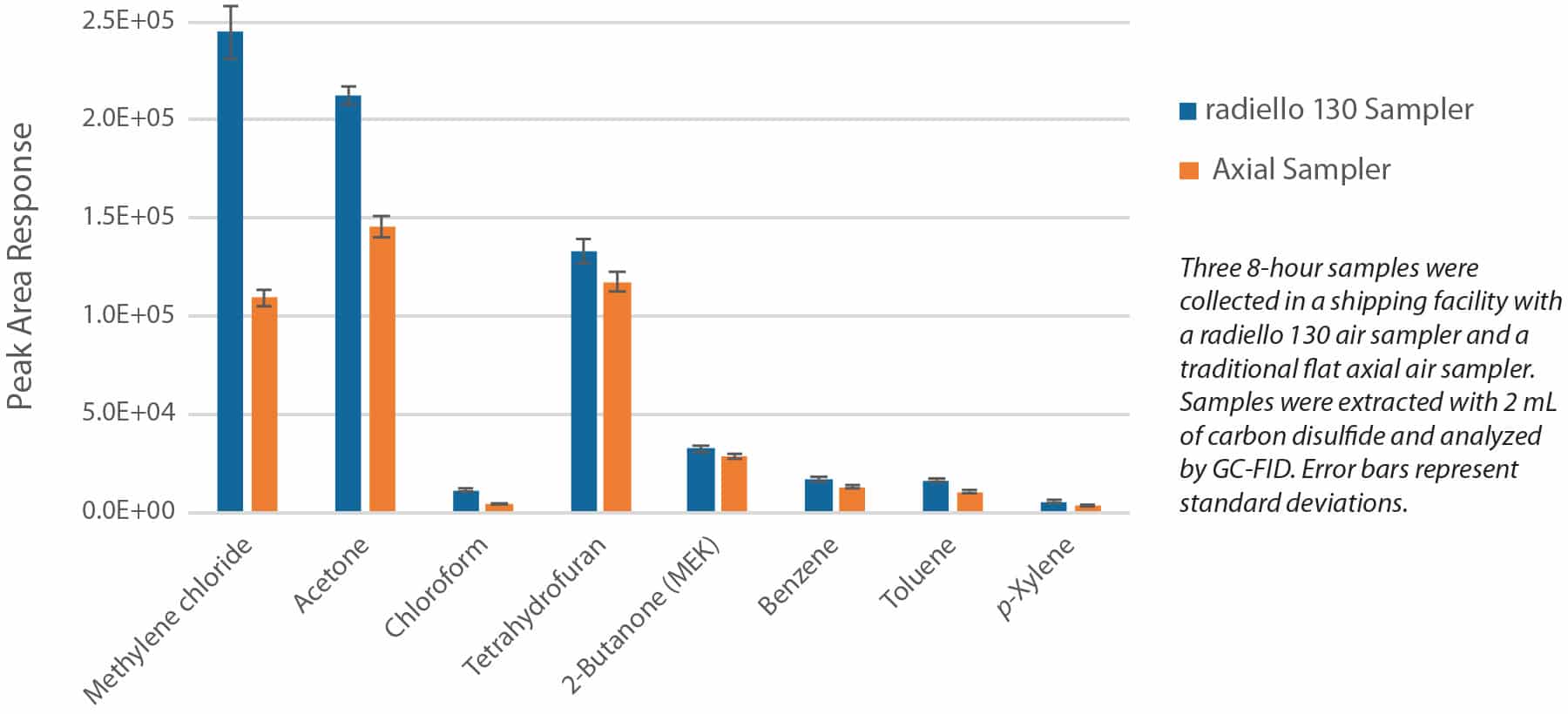
- Increased response for all compounds compared to axial samplers.
- Average increase in response of 163% for the 8 compounds shown below.
- Excellent reproducibility with an average RSD of 5.6%.
radiello Samplers Have Higher Capacity than Axial Samplers, so You Can Report Accurate Results over Long Sampling Periods
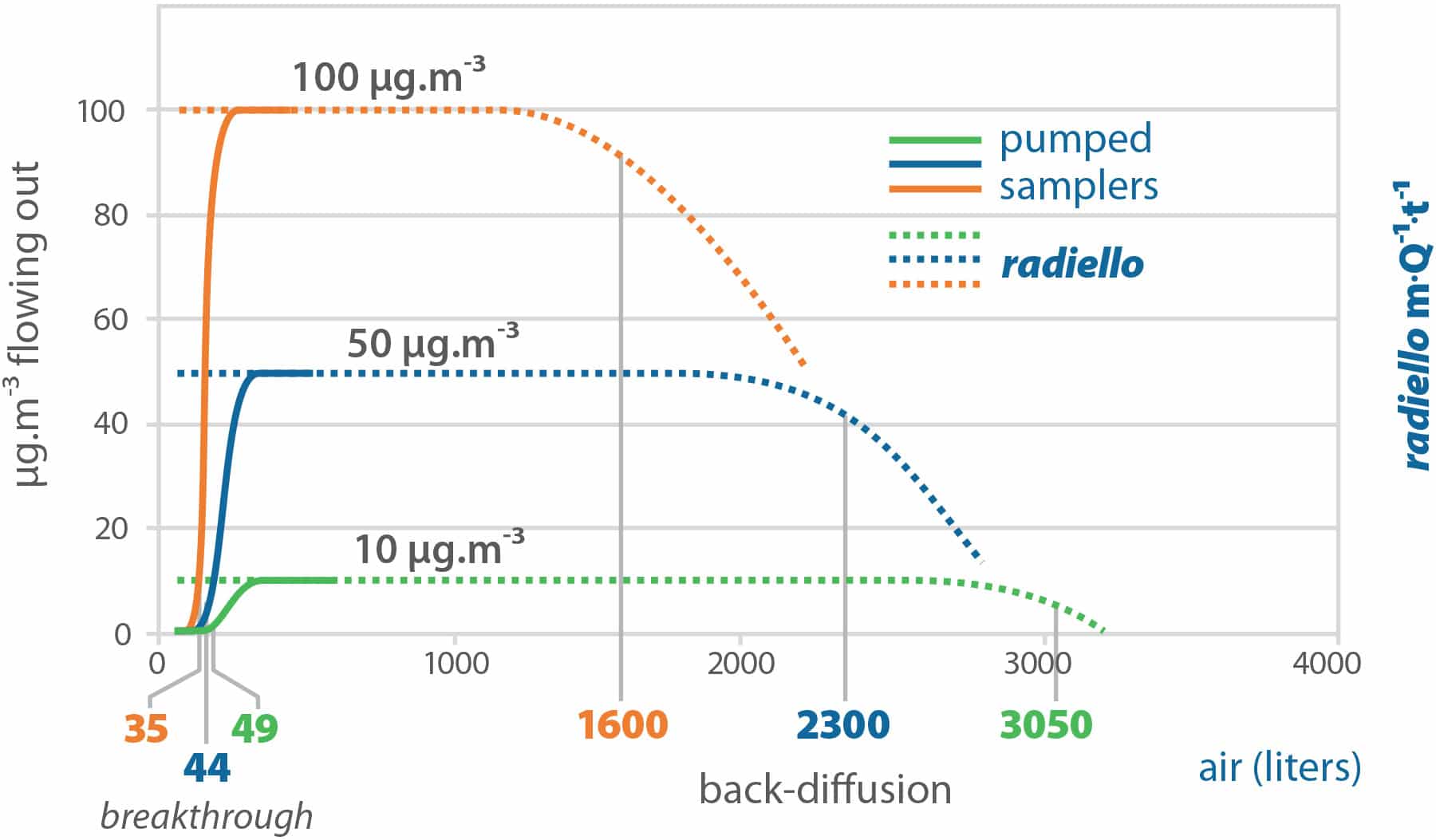
In active sampling using a vacuum pump, the phenomenon of “breakthrough” occurs when the analyte band begins to move out of the adsorbent bed. If the concentration of analyte in the outlet air exceeds 10% of the concentration in the sampled air, any further pumping leads to analyte loss and an underrepresentation of the true environmental concentration. A similar situation, called “back diffusion,” occurs with diffusion sampling. Although, radiello air samplers can exhibit back diffusion, the high capacity of these devices allows much higher sample volumes to be processed before this effect is observed.
In this comparison, benzene is actively sampled (pumped) onto an activated charcoal adsorbent and also diffusively sampled using a radiello 130 sampler (both at 25 °C). For the pumped charcoal adsorbent (solid lines), breakthrough is reached at 35, 44, and 49 L when the benzene concentration is 100, 50, and 10 μg/m³, respectively. Whereas, for the radiello sampler (dotted lines) back diffusion does not occur until 1600, 2300, and 3050 L at the same concentrations.
Example Applications: radiello 145
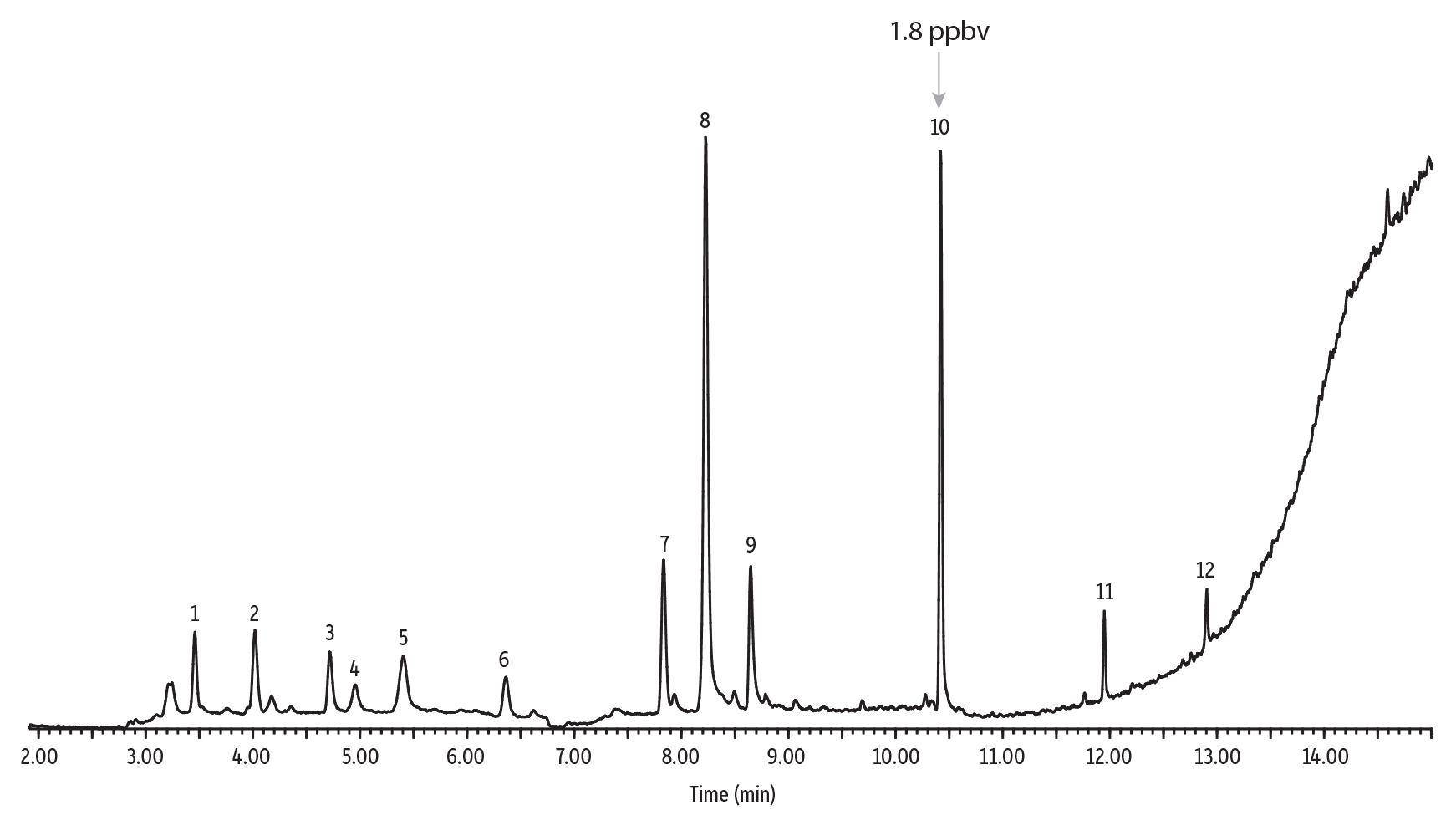
The radiello 145 (RAD145) air sampler is designed specifically for airborne volatile organic compounds (VOCs). The 3D radial, diffusive design provides much higher uptake rates and more capacity than standard 2D flat axial, diffusive samplers. The higher sample uptake rate means that ppbv levels of VOCs can be detected in very short sampling times.
4-Hr Shipping Facility Air Sample with radiello 145
GC_AR1171
Peaks
| Peaks | |
|---|---|
| 1. | Propene |
| 2. | 2-Methyl-1-propene |
| 3. | Acetaldehyde |
| 4. | 2-Methylbutane |
| 5. | Pentane |
| 6. | Furan |
| Peaks | |
|---|---|
| 7. | Methylene chloride |
| 8. | Hexane |
| 9. | Acetonitrile |
| 10. | Benzene |
| 11. | Toluene |
| 12. | Chlorobenzene |
Conditions
| Column | Rtx-VMS, 60 m, 0.25 mm ID, 1.40 µm (cat.# 19916) |
|---|---|
| with MXT low-dead-volume connector (cat.# 20536) | |
| Standard/Sample | Shipping facility air sample |
| Injection | on-column |
| Oven | |
| Oven Temp.: | 40 °C (hold 7 min) to 250 °C at 30 °C/min (hold 2 min) |
| Carrier Gas | He, constant flow |
| Flow Rate: | 2.0 mL/min |
| Detector | MS | ||||||||
|---|---|---|---|---|---|---|---|---|---|
| Mode: | Scan | ||||||||
| Scan Program: | |||||||||
| |||||||||
| Transfer Line Temp.: | 250 °C | ||||||||
| Analyzer Type: | Quadrupole | ||||||||
| Source Type: | Extractor | ||||||||
| Extractor Lens: | 6 mm ID | ||||||||
| Source Temp.: | 230 °C | ||||||||
| Quad Temp.: | 150 °C | ||||||||
| Electron Energy: | 70 eV | ||||||||
| Tune Type: | BFB | ||||||||
| Ionization Mode: | EI | ||||||||
| Preconcentrator | Markes Unity | ||||||||
| Trap 1 Settings | |||||||||
| Type/Sorbent : | radiello 145 | ||||||||
| Desorb temp.: | 350 °C | ||||||||
| Desorb flow: | 50 mL/min | ||||||||
| Desorb time: | 300 sec | ||||||||
| Trap 2 Settings | |||||||||
| Type/Sorbent: | Air Toxics | ||||||||
| Cooling temp.: | 30 °C | ||||||||
| Desorb temp.: | 310 °C | ||||||||
| Desorb time: | 3 sec | ||||||||
| Instrument | Agilent 7890B GC & 5977A MSD | ||||||||
| Sample Preparation | The radiello 145 passive air sampler (RAD145) utilizes a stainless steel net cartridge packed with 350 mg of graphitized charcoal (Carbograph 4). Airborne volatile organic compounds (VOCs) were adsorbed to the charcoal and then thermally desorbed and analyzed by GC-MS. Trap 1 conditions were used for radiello desorption. Trap 2 conditions were used for Unity desorption. | ||||||||
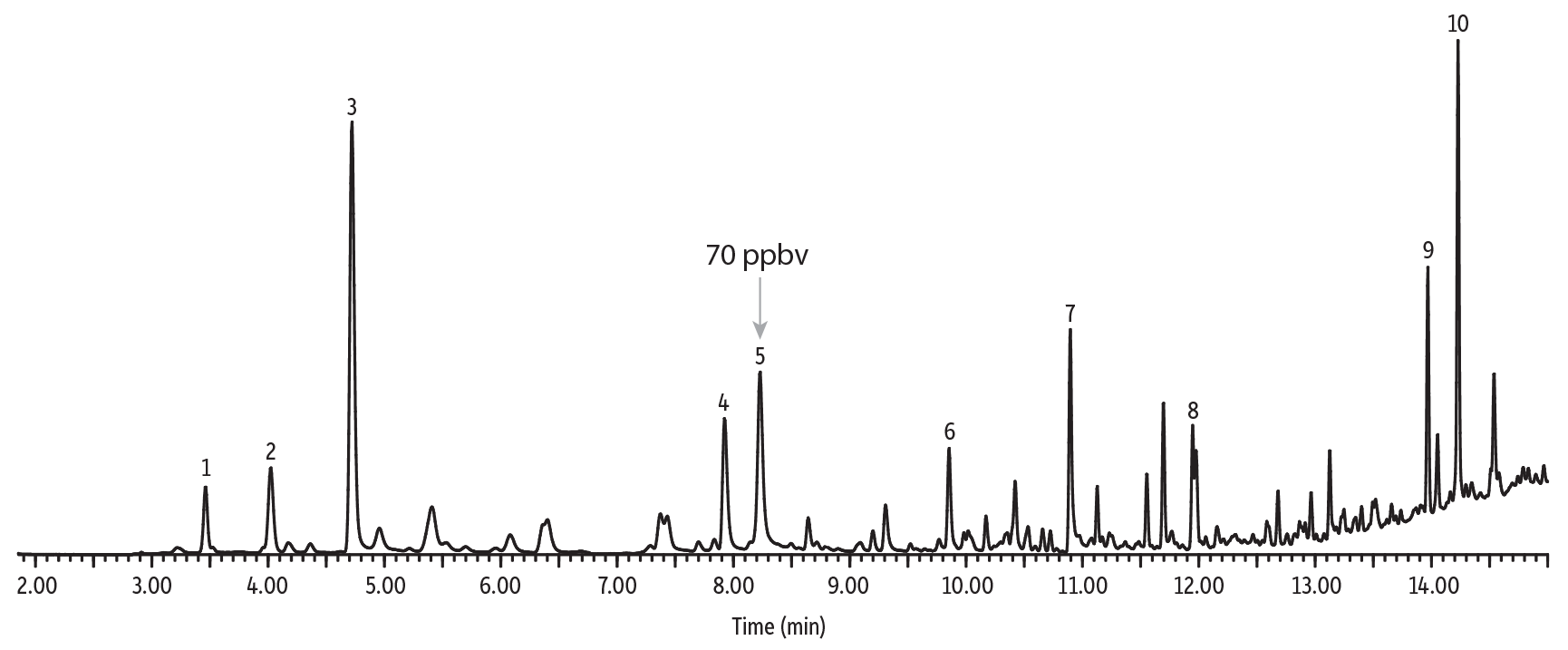
GC_AR1170
Peaks
| Peaks | |
|---|---|
| 1. | Propene |
| 2. | 2-Methyl-1-propene |
| 3. | Acetaldehyde |
| 4. | Acetone |
| 5. | Hexane |
| 6. | Butanal |
| 7. | Acetic acid |
| 8. | Toluene |
| 9. | D-Limonene |
| 10. | Benzaldehyde |
Conditions
| Column | Rtx-VMS, 60 m, 0.25 mm ID, 1.40 µm (cat.# 19916) |
|---|---|
| with MXT low-dead-volume connector (cat.# 20536) | |
| Standard/Sample | Laboratory air sample |
| Injection | on-column |
| Oven | |
| Oven Temp.: | 40 °C (hold 7 min) to 250 °C at 30 °C/min (hold 2 min) |
| Carrier Gas | He, constant flow |
| Flow Rate: | 2.0 mL/min |
| Detector | MS | ||||||||
|---|---|---|---|---|---|---|---|---|---|
| Mode: | Scan | ||||||||
| Scan Program: | |||||||||
| |||||||||
| Transfer Line Temp.: | 250 °C | ||||||||
| Analyzer Type: | Quadrupole | ||||||||
| Source Type: | Extractor | ||||||||
| Extractor Lens: | 6 mm ID | ||||||||
| Source Temp.: | 230 °C | ||||||||
| Quad Temp.: | 150 °C | ||||||||
| Electron Energy: | 70 eV | ||||||||
| Tune Type: | BFB | ||||||||
| Ionization Mode: | EI | ||||||||
| Preconcentrator | Markes Unity | ||||||||
| Trap 1 Settings | |||||||||
| Type/Sorbent : | radiello 145 | ||||||||
| Desorb temp.: | 350 °C | ||||||||
| Desorb flow: | 50 mL/min | ||||||||
| Desorb time: | 300 sec | ||||||||
| Trap 2 Settings | |||||||||
| Type/Sorbent: | Air Toxics | ||||||||
| Cooling temp.: | 30 °C | ||||||||
| Desorb temp.: | 310 °C | ||||||||
| Desorb time: | 3 sec | ||||||||
| Instrument | Agilent 7890B GC & 5977A MSD | ||||||||
| Sample Preparation | The radiello 145 passive air sampler (RAD145) utilizes a stainless steel net cartridge packed with 350 mg of graphitized charcoal (Carbograph 4). Airborne volatile organic compounds (VOCs) were adsorbed to the charcoal and then thermally desorbed and analyzed by GC-MS. Trap 1 conditions were used for radiello desorption. Trap 2 conditions were used for Unity desorption. | ||||||||
Example Applications: radiello 165
Monitoring airborne carbonyls (aldehydes and ketones) is important for protecting human and environmental health. A radiello 165 (RAD165) passive sampler is ideal for collecting these compounds from either indoor or outdoor air. The 3D radial design ensures high sample uptake rates, allowing ppbv level detection. The large capacity allows for longer sampling periods to be used when desired.
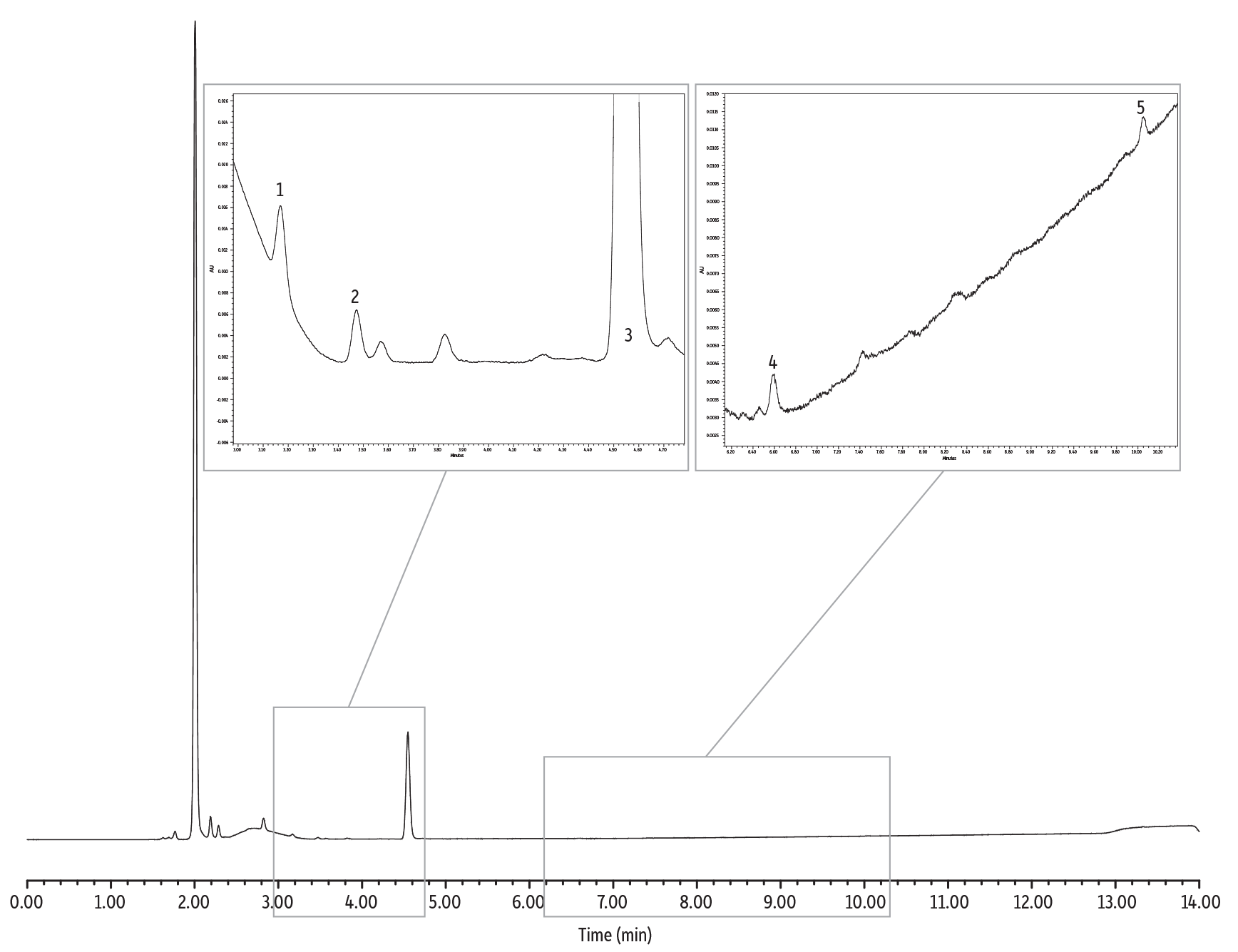
LC_AR0508
Peaks
| Peaks | tR (min) | |
|---|---|---|
| 1. | Formaldehyde-DNPH | 2.80 |
| 2. | Acetaldehyde-DNPH | 3.47 |
| 3. | Acetone-DNPH | 4.55 |
| 4. | n-Butyraldehyde-DNPH | 6.58 |
| 5. | Hexanal-DNPH | 10.10 |
Conditions
| Column | Raptor C18 (cat.# 9304A65) | ||||||||||||||||||||||||||||||||
|---|---|---|---|---|---|---|---|---|---|---|---|---|---|---|---|---|---|---|---|---|---|---|---|---|---|---|---|---|---|---|---|---|---|
| Dimensions: | 150 mm x 4.6 mm ID | ||||||||||||||||||||||||||||||||
| Particle Size: | 2.7 µm | ||||||||||||||||||||||||||||||||
| Pore Size: | 90 Å | ||||||||||||||||||||||||||||||||
| Temp.: | 30 °C | ||||||||||||||||||||||||||||||||
| Standard/Sample | Laboratory air sample | ||||||||||||||||||||||||||||||||
| Diluent: | 2 mL acetonitrile extract | ||||||||||||||||||||||||||||||||
| Inj. Vol.: | 5 µL | ||||||||||||||||||||||||||||||||
| Mobile Phase | |||||||||||||||||||||||||||||||||
| A: | Water | ||||||||||||||||||||||||||||||||
| B: | Methanol:acetonitrile (650:50)* | ||||||||||||||||||||||||||||||||
|
| Detector | UV/Vis @ 365, 4.8 nm |
|---|---|
| Preconcentrator | radiello 165 |
| Instrument | Waters ACQUITY UPLC H-Class |
| Sample Preparation | The radiello 165 passive air sampler (RAD165) utilizes a stainless steel net cartridge filled with 2,4-dinitrophenylhydrazine (DNPH) coated Florisil adsorbent. Airborne carbonyls react with the DNPH to form stable hydrazones. The derivatives were subsequently extracted for 30 minutes with 2 mL of acetonitrile. The extract was then analyzed by LC-UV. |
| Notes | *Mobile phase B was prepared by combining 650 mL methanol and 50 mL acetonitrile. |
Autoren