

HPLC


Your Chromatography. Our Passion.
Whether you’re running HPLC or LC-MS/MS, one thing’s clear—your analysis deserves more than “good enough.” At Restek, we combine deep chromatography know-how with smart solutions to keep your lab moving and your data rock solid.
Here’s how we’re helping scientists like you push boundaries:
- Inert Columns, Game-Changing Performance. Meet the next generation of LC columns – incredibly inert, highly selective, and made to tackle your toughest analytes. From PFAS to pharma to food safety, our columns help you see what others miss, with cleaner baselines and sharper peaks.
- 20 Years of Biphenyl: A Bold Move That Paid Off. Two decades ago, we broke the mold with Biphenyl – and it’s still changing the way labs think about selectivity. Curious how one phase shook up an industry? We’ve got stories to tell.
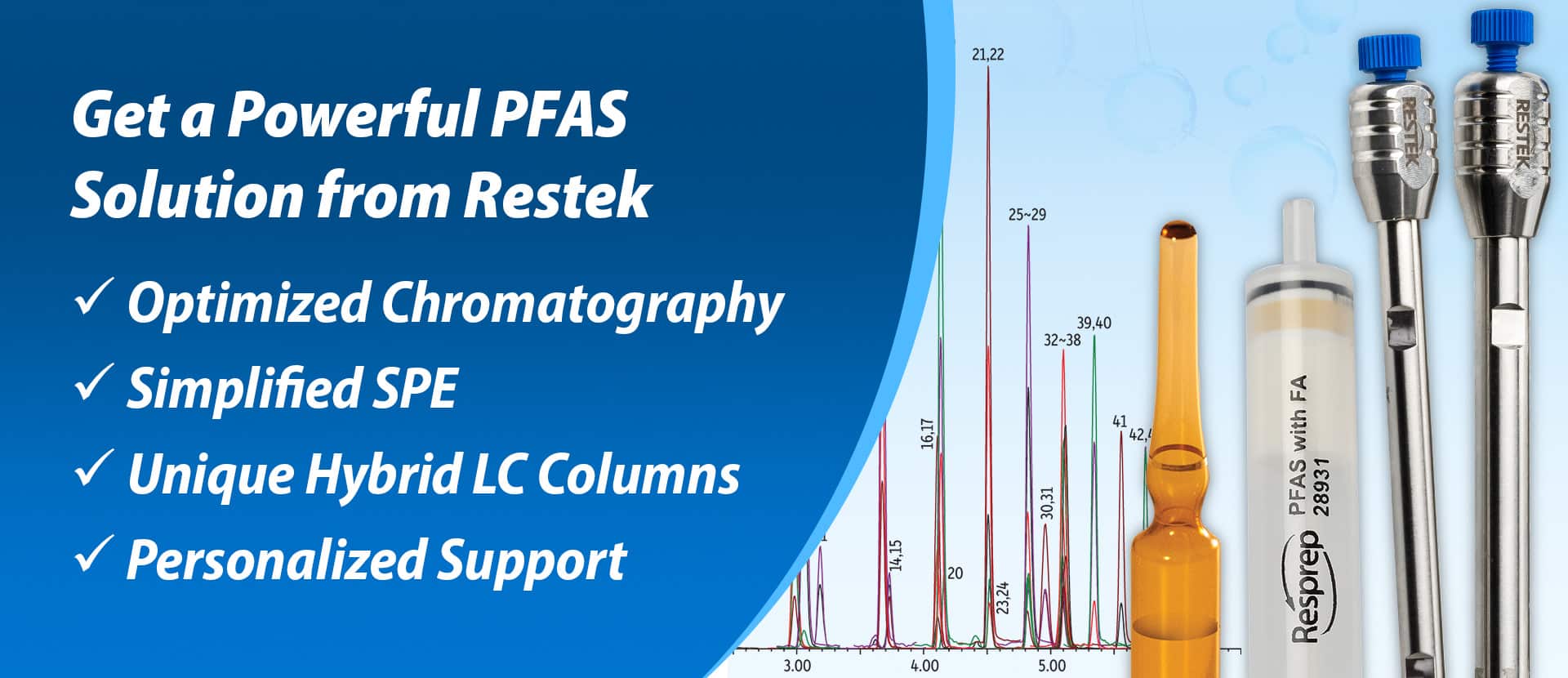
- PFAS Problems? We’re Here to Help. PFAS methods can be tricky, but you’re not on your own. Whether you’re developing a new protocol or troubleshooting a stubborn signal, our PFAS specialists have the experience to get you back on track—fast.
See details on an exciting promotion for our customers in Germany, France, Italy, UK, and Spain by clicking here!


Solutions
Learn from Restek’s experts with this curated selection of articles, blog posts, and more. Want to learn more? Access our full resource hub.
Is Inert LC Column Hardware Beneficial for Pesticide or Mycotoxin Analysis?
Explore how inert LC column hardware improves pesticide and mycotoxin analysis. Read Now→
How to Maximize Performance with Restek’s Inert LC Columns and Guards (PDF)
Are you struggling with poor peak shape? Experiencing low sensitivity? Performing extensive conditioning steps to achieve reproducible peak intensity? If you answered yes to any of these questions, inert LC columns and guards may be a solution for you! Read Now→
Raptor LC Columns: Selectivity Accelerated
Raptor LC columns combine the speed of superficially porous particles (i.e., SPP or “core-shell”) with the resolution of highly selective USLC technology. Read Now→
A Two-in-One Solution for PFAS SPE Sample Preparation
See how Resprep PFAS cartridges—with WAX and carbon in a single cartridge and an optional filter aid—can help you improve PFAS sample prep. Read Now→
Advanced Analytical Solutions for PFAS Analysis (PDF)
Explore our latest selection of PFAS standards, columns, and sample prep products in this helpful guide. Read Now→
Growing Analytical Solutions for Hemp and Cannabis Analysis (PDF)
Restek has developed industry-leading GC and LC columns, comprehensive certified reference materials (CRMs), and innovative sample preparation products designed for hemp and cannabis analysis. Read Now→
Restek’s Biphenyl LC Column: Two Decades of Pioneering Innovation
For over 20 years, Restek’s Biphenyl LC Column has been setting the standard for reliable performance. See for yourself how Biphenyl beats traditional C18 columns with sharper separation and unique selectivity. Read Now→
|
Liquid Chromatography Biphenyl Columns→ Inert Columns→ Pro EZLC Chromatogram Modeler→ |
 |
Reference Standards
|
 |
|
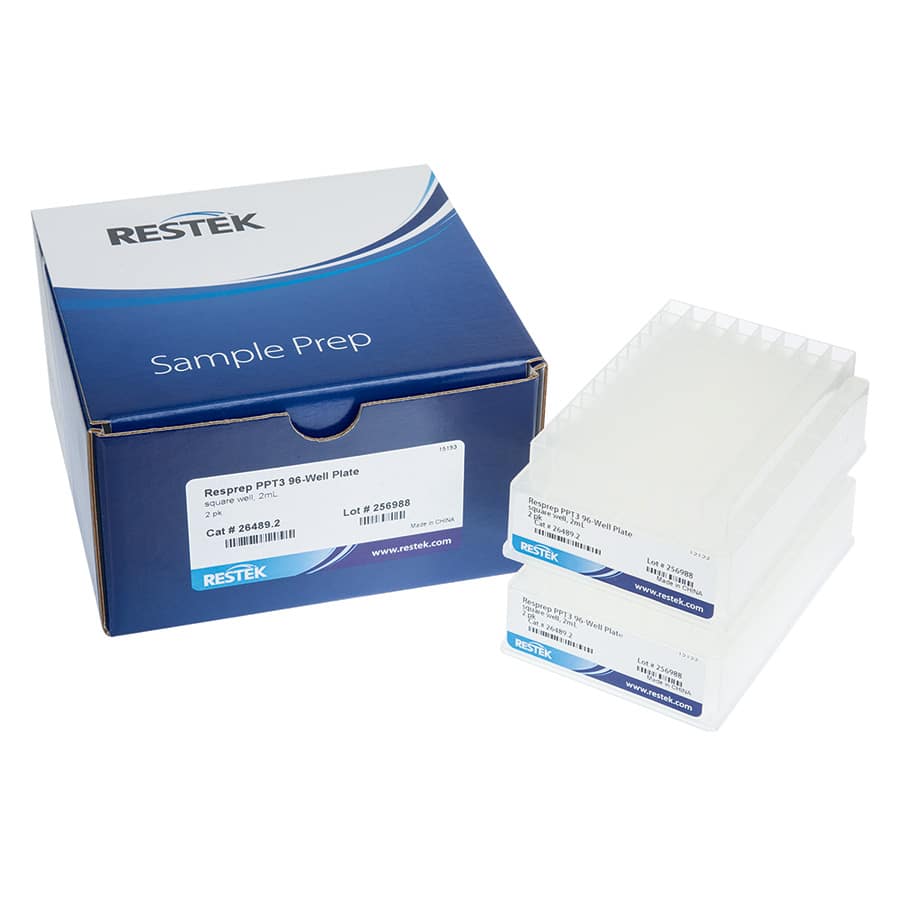
Sample Preparation Q-sep QuEChERS Products→ SPE→ Resprep Sample Prep Products→ |
 |
|
Presentations
Vendor seminar
The Chemicals That Never Leave (And the Peaks That Never Show Up)
Tuesday, June 17, 1:30-1:45 p.m., Room 12
Presenter: Tina Brandscher
View Details
Per- and polyfluoroalkyl substances (PFAS) are everywhere – in the environment, food, and even the human body. Although they are prevalent in all areas chemists are interested in, their analysis remains a challenge. Different matrices require tailored sample preparation strategies, and the getting sensitivity and selectivity for a given analyte panel requires the choice of the correct analytical column.
In this talk, we explore how modern LC-MS/MS methods can be optimized to reliably quantify PFAS in complex samples; which columns provide the best separation performance, and which sample preparation techniques maximize recovery whilst minimizing matrix effects. We will highlight best practices, common pitfalls, and innovative approaches for robust and precise PFAS analysis – from environmental samples to clinical research.
Demo Zone
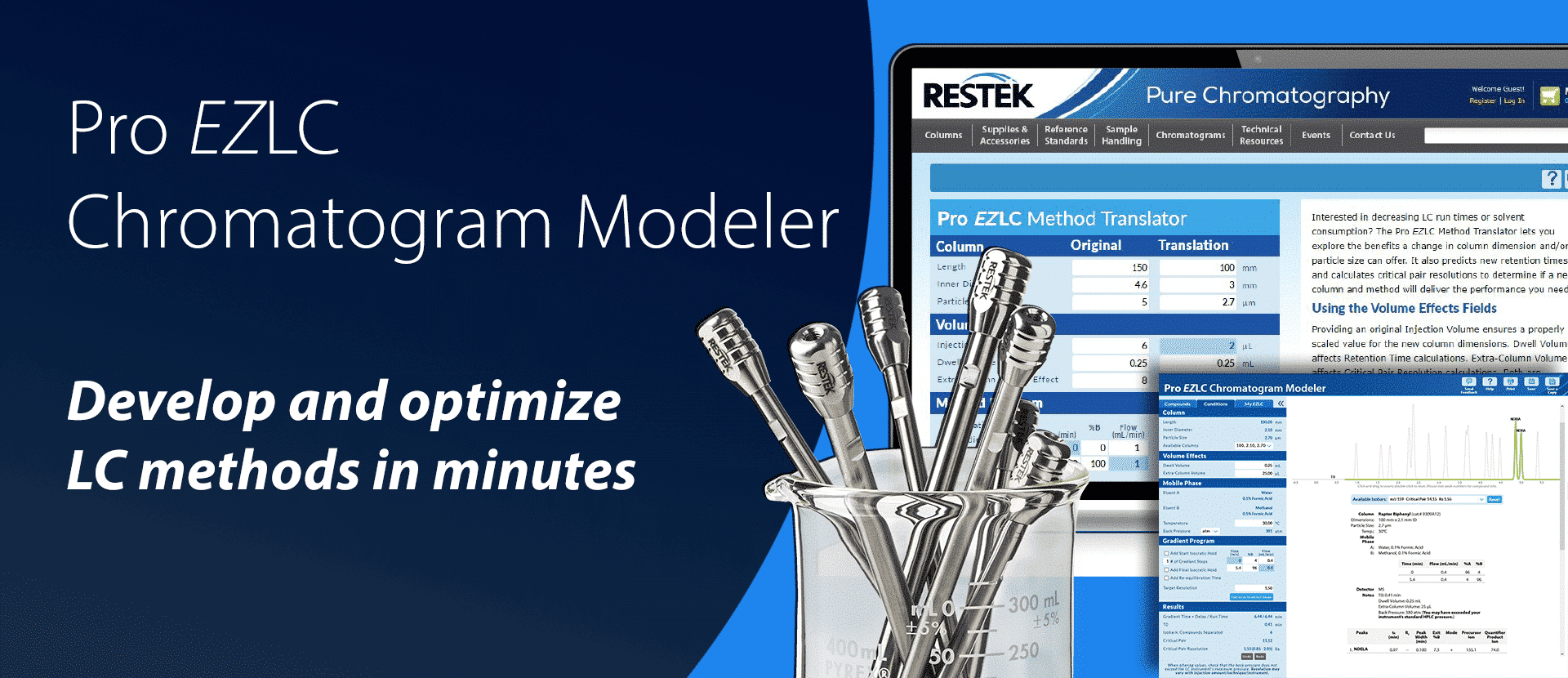
Method Development made EZ with EZLC
June 15-19, Booth 2
View Details
LC method optimization, in general, is labor intensive. It requires unique skill sets to understand column chemistry, analyte chemistry, and method goals to optimize methods. With expert chromatographers at work, Restek scientists have mastered the skills of method development and have created a seamless platform that can transform your method development and optimization experience along with column recommendations. In this learning exercise, we will demonstrate the benefits of Restek’s Pro EZLC platform.
Poster
Development of an LC-MS/MS Method for the Analysis of Δ8-THC, Δ9-THC, and Their Metabolites in Whole Blood
Presenter(s)/Co-Author(s): Cyrille Lamboley, Haley Berkland
Download Now
View Details
Cannabis consumption (and commercialisation) has been on the rise globally, with numerous countries decriminalising or legalising medical or personal consumption across the last decade. With this has come an increased interest in the various forms of the psychoactive compound tetrahydrocannabinol(THC) which are present in varying quantities within the cannabis plant. Even with decriminalisation or legalisation of cannabis, the vast majority of workplaces require staff to carry out their duties unimpaired for legal purposes, and it remains a criminal offence to perform tasks like operating heavy machinery under the influence of substances. These circumstances have combined to require more robust blood testing programmes focussed not only on the historically prevalent Δ-9-THC, but increasingly Δ-8-THC along with each of their hydroxylated and carboxylated metabolites (11-OH-Δ8/9-THC and Δ8/9-THC-COOH).
The separation of Δ-8- and Δ-9-THC along with their metabolites pose a particular chromatographic challenge, with three pairs of isomers differentiated positionally by one double bond, making quantification of these compounds particularly challenging. In this paper we explore the impact C18, Biphenyl and Fluorophenyl (PFP) HPLC column phases have upon separation of these isomers and their metabolites. With a suitable candidate phase selected, a method was then developed for optimal separation for these analytes in whole blood samples. This method demonstrated suitable response across a biologically relevant calibration range, and with suitable separation to minimise interference from other structurally similar or commonly encountered cannabinoids.
Comparing C18-Type Stationary Phases to Biphenyl Using an LC Virtual Method Development Tool
Presenter(s)/Co-Author(s): John Gallant, Melinda Urich
Download Now
View Details
As LC-MS/MS continues to grow as the dominant separation technique within a host of industries, more laboratories are trying to run broad panels of analytes from single injections, requiring robust chromatography capable of separating analytes, isobars, and matrix elements suitably to afford suitable detector sensitivity for qualification and quantitation. Column selection is the single most impactful factor when it comes to tackling these issues, and yet the most common method development approach globally remains scanning gradients using a C18-type column.
In this poster we leverage a virtual method development tool to compare the selectivity of a Biphenyl column against several C18-type phases for a panel of pesticide standards. Initial runs were performed to verify modelled retention times against real-world LC-MS/MS data utilising a Biphenyl phase, RT differences were compared, with results demonstrating no greater than 10.8s across a 14 minute programmed gradient. Various C18-type columns were then similarly modelled, with the Biphenyl column demonstrating enhanced retention and selectivity for molecules containing phenyl rings, and increased retention for compounds which eluted early into the run (which may typically overlap with matrix elements otherwise).