


Come and meet us at the Postillion Hotel & Convention Centre at booth 15!
We’re off to Rotterdam for the 16th European Pesticide Residue Workshop, the key event dedicated to the latest developments in pesticide residue analysis in food, monitoring and control. Drop by booth 15 to:
- Discover the possibilities of our new RMX column and explore the future of GC.
- Play our “Guess the Length of the GC Column” game for a chance to win fantastic Restek prizes!
- Experience a demo to learn how
- our EZ software suite could allow you to perform method development in minutes.
- The new Restek Rerefence standards tool streamlines searching for the compounds you need
- Meet our knowledgeable LC, GC, Standards, and Sample Prep specialists: they will be available to answer your questions and help you optimize your analyses with our flagship products and analytical solutions.
Technical Presentations
Seminar: Unleash Your Performance with the Next Generation GC Column Technology for the GC-MS/MS analysis of pesticides in difficult food Matrices
Session Time and Location: Thursday 11 June 2026, 14:10 – 14:45 | Mees Room 1&2, Ground floor
Presenter(s)/Co-Author(s): Dr. Javier Arrebola, Colton Myers, Laura Schuetz, Alexander Zahm, Olivier Griffaton
Gas Chromatography is a proven technique for the analysis of pesticide compounds in food matrix. Recent changes in regulations including chlorinated solvent ban, method consolidation for pesticides methods, and reduced volume extraction, and sensitivity requirements has lead to a need for a GC solution that can meet and exceed the detection requirements. In addition, there is a need for matrix resilience and extended lifetime and continued calibration. This presentation will unleash how the latest column deactivation technology and unique formats in GC can address these challenges. Real and challenging food matrices were subjected to analytical testing to demonstrate robustness and resilience of the next generation GC Column, enhancing GC-MS/MS analysis of fruits, vegetables, cereals, and legumes in a high-throughput Laboratory.
Poster: Virtual Chromatographic Modeling Software for Optimizing Separation of Isobaric Compounds
Presenter(s)/Co-Author(s): Colton Myers, Erika Pack, Chris English, Jennifer Lindner, Jessi Collier
Download
See this poster presented:
- Poster Session 2: 10 June, 15:45 – 17:00
- Poster Session 3: 11 June, 17:00 – 18:00
Per- and Polyfluoroalkyl Substances (PFAS) are synthetic organofluorine chemicals that have been linked to a range of health effects, including decrease immune response, vaccine effectiveness, cancer risk, among others.
In this work we show a comprehensive analysis of 40 target PFAS compounds in different aqueous, solids, and tissue matrixes. This method uses a weak anion exchange (WAX) solid phase extraction (SPE), coupled with a dispersive graphitized carbon black (GCB) clean-up step prior to LC-MS/MS analysis on a C18 column.
Poster: Cutting Downtime, not Columns: Performance of a Next-Generation Inert Capillary Column for Multiresidue GC-MS/MS Analysis
Presenter(s)/Co-Author(s): Colton Myers, Jessi Collier, Jennifer Lindner, Jonathan DeCenzi, Rima Juskelis, Carlos Parra
Download
See this poster presented:
- Poster Session 1: 9 June, 17:00 – 18:00
- Poster Session 3: 11 June, 17:00 – 18:00
A recent advancement in gas chromatography (GC) column deactivation balances chromatographic performance of acidic, basic and neutral analytes at trace level concentrations. Deactivation is a critical step in GC column manufacturing that modifies the fused silica capillary surface activity to promote coating and adhesion. Residual surface silanols, which result from incomplete deactivation or surface contamination, adsorb acidic and basic compounds resulting in peak area loss or tailing.
Deactivation procedures vary between products and manufacturers, with individual benefits and drawbacks that become exacerbated during sensitive applications. There is increasing demand to improve identification and quantification of reactive analytes with complex or consolidated methodologies. New GC deactivation technology improves polymer adhesion and minimizes residual surface activity for a long lasting, broadly inert surface. Columns built with the new GC deactivation technology were challenged with a wide variety of applications, and against traditional 5-type columns.
Overall, the new deactivation presents an advancement over traditional GC columns, providing unparalleled inertness to a broader range of acids, bases, and neutrals. These improvements offer opportunity for method consolidation and trace level analysis that would not be successful with traditional technology.
Poster: Improved Baseline Stability And Sensitivity In GC–MS Using A Novel Column With A Unique Interface Section
Presenter(s)/Co-Author(s): Javier Arrebola , Colton Myers , Ramkumar Dhandapani, Jaap de Zeeuw
Download
See this poster presented:
- Poster Session 1: 9 June, 17:00 – 18:00
- Poster Session 3: 11 June, 17:00 – 18:00
A novel gas chromatography–mass spectrometry (GC–MS) column design has been developed to enhance analytical performance by addressing persistent challenges in baseline stability and sensitivity. This innovation integrates a unique interface configuration that minimizes stationary phase degradation and thermal stress effects, particularly under elevated transfer line temperatures. Comparative evaluations using a diverse panel of pesticide analytes demonstrated significantly faster baseline stabilization and reduced background noise relative to conventional columns.
The new column architecture consistently delivered improved signal-to-noise ratios across full-scan and SIM modes, with pronounced benefits observed for high-boiling-point and late-eluting compounds. These enhancements suggest a substantial reduction in analyte loss and column bleed, enabling more reliable detection of thermally labile substances. The findings underscore the potential of this design to advance GC–MS methodologies in trace-level contaminant analysis and complex sample matrices.
Featured Products & Analytical Solutions

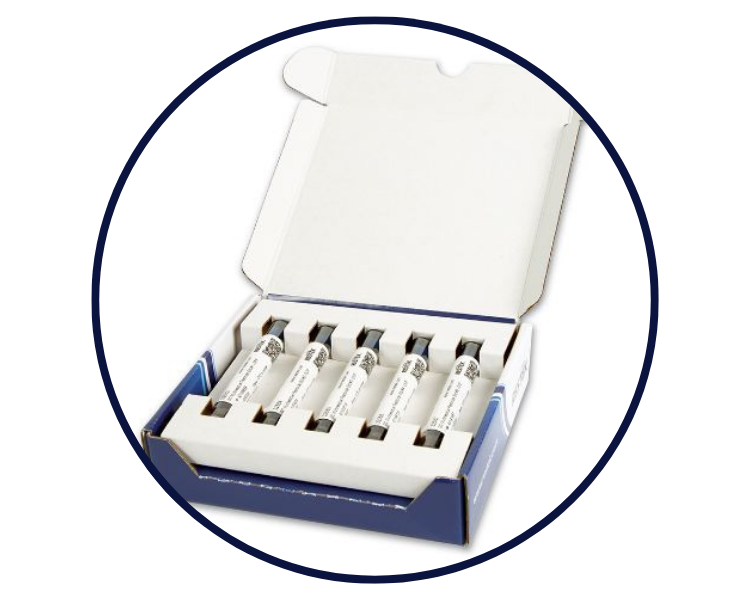

Unleash your performance with RMX GC Columns→
By maximizing data quality, RMX GC columns generate more compliant results—even for the most challenging semivolatiles—so accurate results are reported, and samples keep moving through the lab. Ask us about the future of GC!
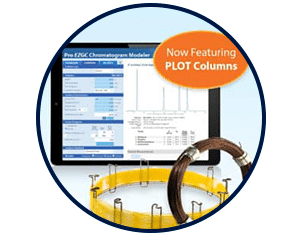
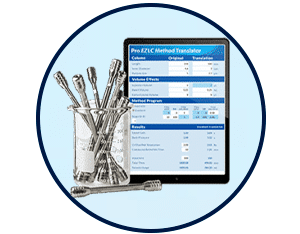
EZ suite: refine methods online for free in real time.→
Optimize or amend your GC and LC methods in minutes from your desk. Our online software and calculators are reliable, easy to use and allow you to perform method development without guesswork. Stop by for a demo!
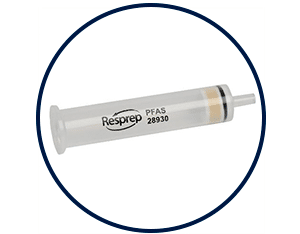
PFAS Problems? We’re Here to Help.→
The landscape of PFAS testing regulations and methods continues to evolve around the world, yet the needs of analytical labs are universal. You need fast, accurate, and dependable products supported by personalized advice and expert technical service from people who understand the challenges of these demanding analyses. That’s where Restek come in!
Perform improved analysis of metal-sensitive compounds with Inert LC columns.→
Inert LC column technology reduces nonspecific binding of chelating analytes, enabling sensitive analysis and smooth integration of peaks. Talk to our Restek team about how it could support your LC.