


Pittcon


From cannabis to biopharma, our chromatography experts understand the importance of your analysis. We’re here to help.
- Are Cannabis Products Safe? Take advantage of our expansive cannabis experience and rely on a Restek solution for assessing cannabis safety. Ask us how!
- Need Chromatography Consumables? We’ve got you covered! With industry-leading GC and LC columns and accessories, rugged sample prep solutions, certified reference materials, and more, turn to Restek for your chromatography needs.
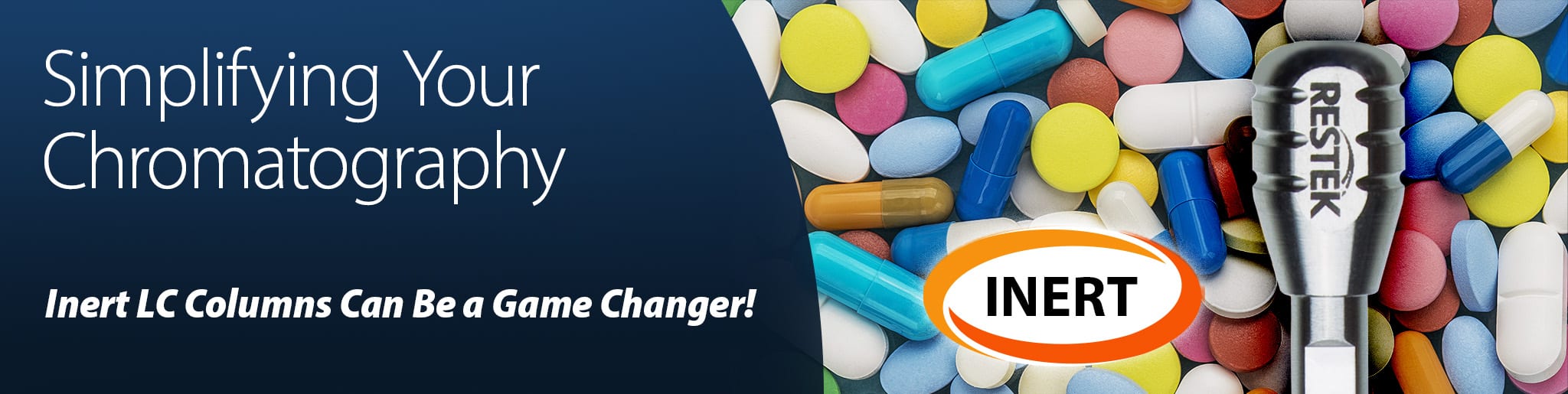
- Are LC Columns Jeopardizing Your Pharmaceutical Analysis? Our new inert LC columns can be a gamechanger for pharmaceutical analysis. Speak to us to learn more!


Solutions
Learn from Restek’s experts with this curated selection of articles, blog posts, and more. Want to learn more? Access our full resource hub.
Is Inert LC Column Hardware Beneficial for Pesticide or Mycotoxin Analysis?
Explore how inert LC column hardware improves pesticide and mycotoxin analysis. Read Now→
How to Maximize Performance with Restek’s Inert LC Columns and Guards (PDF)
Are you struggling with poor peak shape? Experiencing low sensitivity? Performing extensive conditioning steps to achieve reproducible peak intensity? If you answered yes to any of these questions, inert LC columns and guards may be a solution for you! Read Now→
Raptor LC Columns: Selectivity Accelerated
Raptor LC columns combine the speed of superficially porous particles (i.e., SPP or “core-shell”) with the resolution of highly selective USLC technology. Read Now→
A Two-in-One Solution for PFAS SPE Sample Preparation
See how Resprep PFAS cartridges—with WAX and carbon in a single cartridge and an optional filter aid—can help you improve PFAS sample prep. Read Now→
Advanced Analytical Solutions for PFAS Analysis (PDF)
Explore our latest selection of PFAS standards, columns, and sample prep products in this helpful guide. Read Now→
Growing Analytical Solutions for Hemp and Cannabis Analysis (PDF)
Restek has developed industry-leading GC and LC columns, comprehensive certified reference materials (CRMs), and innovative sample preparation products designed for hemp and cannabis analysis. Read Now→
Rxi-624Sil MS Columns: Exceptionally Inert, Low Bleed Columns for Volatiles Analysis
Analyze volatile compounds and polar analytes with greater confidence using Rxi-624Sil MS columns. Optimized selectivity, higher inertness, and lower bleed result in reliable separations and accurate, trace-level determinations. Includes environmental and pharmaceutical applications. Read Now→
Restek Biphenyl: Better Selectivity than a C18—Separate a Wider Range of Analytes in Highly Complex Samples
Biphenyl LC columns from Restek provide heightened selectivity and retention for compounds that are hard to resolve or elute early on C18 and other phenyl chemistry columns. Read Now→
|
Liquid Chromatography Biphenyl Columns→ Inert Columns→ Pro EZLC Chromatogram Modeler→ |
 |
Gas Chromatography Rxi-624Sil MS Columns→ Rxi-SVOCms Columns→ Topaz Inlet Liners→ Pro EZGC Chromatogram Modeler→ |
 |
|
Sample Preparation Q-sep QuEChERS Products→ SPE→ Resprep Sample Prep Products→ |
 |
Reference Standards |
 |
Presentations
Short Courses
Practical Maintenance and Troubleshooting in Gas Chromatography
Monday, March 3, 1:00-5:00 p.m., Room 153A
Presenters: Jaap de Zeeuw
View Details
In gas chromatography, 90% of the trouble experienced is happening in the injection system. In this course, we will discuss the purpose and impact of the critical parts (consumables) present in split and splitless injection and how this impacts a maintenance schedule. We will zoom in on carrier gas choice and purity, tubing, connections, septa, ferrules, seals, liners, column coupling, installation, and column maintenance. At the end, we will discuss a series of practical examples via troubleshooting exercises.
Method Translation and Modelling in Gas Chromatography (LAPTOP REQUIRED)
Tuesday, March 4, 8:30 a.m.-12:30 p.m., Room 153A
Presenter: Jaap de Zeeuw
View Details
In gas chromatography, there is often a wish to maximize uptime of instrumentation. This can be done using higher flows, different column dimensions, using a different detector, or using a different carrier gas. If you want to get the same peak elution order (same chromatogram), you must make sure that the elution temperatures of components are the same in the new method. This is only possible using a different oven temperature program. Additionally, it is now also possible to model separations for your analytes, which allows you to change all parameters using your laptop. There are free, powerful programs available on the web that we will explore. We also will look at GC modeling you can use for the best separation of your components of interest. Using free internet software, you can see the immediate impact of changing the carrier gas, changing the linear velocity, changing the stationary phase and column dimensions, changing the oven program, and switching from FID to MS. For this course, you will have to bring a laptop as you will have to do exercises yourself to master these tools.
Learning Labs
Sample Prep Made Easy with Dual Bed SPE
Monday, March 3, 11:30 a.m., Park 1, Show Floor
Presenter: Ramkumar Dhandapani
View Details
Sample prep plays an important role in analytical methods. It helps in removing matrix impurities, preconcentrating analytes, and making the sample amenable to different analytical instruments. The solid phase extraction technique is quite complex, and it requires understanding of chemical structure and the impurities. Complexity increases as matrix components and analyte lists expand. In this learning lab, we will discuss advanced sample prep products with dual medium, which helps cut multiple steps and simplifies your workflow. Practical examples, including PFAS methods and other complex analyte methods, will be reviewed in this session.
Advancement in LC Hardware for Challenging Separations
Tuesday, March 4, 11:30 a.m., Park 1, Show Floor
Presenter: Ramkumar Dhandapani
View Details
With the increase in matrix complexity, analyte interaction with column hardware, and the need for low-level detection, there are immense challenges to account for in HPLC separation. This learning lab will focus on inert analytical and guard columns that can address these analytical challenges.
Demo Zone
Method Development made EZ with EZGC & EZLC
Tuesday, March 4, 10:00 a.m., Park 2, Show Floor
Presenter: Ramkumar Dhandapani
View Details
GC & LC method optimization, in general, is labor intensive. It requires unique skill sets to understand column chemistry, analyte chemistry, and method goals to optimize methods. With expert chromatographers at work, Restek scientists have mastered the skills of method development and have created a seamless platform that can transform your method development and optimization experience along with column recommendations. In this learning exercise, we will demonstrate the benefits of Restek’s Pro EZGC & Pro EZLC platforms.
Symposium
Exploring the Variance Among Cannabinoid Certified Reference Materials Based on Testing Data
Sunday, March 2, 9:30-11:40 a.m., Room 209
Moderator: Dan DeLurio | Panelists: Jeff Rawson, Kathleen Calati, Sarah Otis, Jini Glaros
View Details
A collaborative ACIL Cannabis Working Group study involving five testing laboratories and five CRM suppliers examined the variability of cannabinoid CRMs used in the testing industry. Presenters will detail the variance in CRM concentrations across suppliers and laboratories and discuss the implications of these findings on the accuracy of real-world cannabinoid testing results.
Challenges of Analytical Method Development for Entheogenic Psychedelic Products, Part 2: A Focus on In-Matrix Psilocybe Cubensis Testing
Tuesday, March 4, 2:30-4:30 p.m., Room 209
Moderator: Dan DeLurio | Panelists: Kyle Meyer, Melinda Urich, Sarah Otis, Dr. Anthony Fontana
View Details
Entheogens, natural psychoactive substances, have historically been used for spiritual and social purposes and are now emerging as alternative treatments for psychological disorders. With growing legalization, understanding their safety and quality is crucial. This session will focus on exploring novel analytical testing methods for analyzing psilocybe cubensis and its derivatives.
Orals
Exploration of New Low-Pressure GC Columns for Food and Environment Emerging Contaminants
Sunday, March 2, 10:10-10:30 a.m., Room 109A
Presenter: Jaap de Zeeuw
View Details
The low-pressure GC (LPGC technique) has been successfully used in the past for pesticide residues analysis. However, the technique is very versatile, and it allows for other applications, especially if different column phases are used. So far, the majority of the applications have been using the “5”-type phase (95% dimethylpolysiloxane, 5% diphenyl polymer). To expand on the previous applications, four additional column phases were selected (cyanopropylphenyl dimethylpolysiloxane; 50% dimethylsiloxane, 50% diphenyl; 65% dimethylsiloxane, 35% diphenyl; and trifluoropropylmethyl polysiloxane phases) to analyze various food and environmental contaminants, such as nitrosamines, alkylfurans, phthalates, arylamines, and fluorotelomer alcohols. The LPGC techniques provided significant reduction in run times (up to 3.3x faster runs) and helium consumption reduction (up to 81% less helium used) while keeping an acceptable resolution.
Intermediate Volume Liners for Splitless Injections on Narrow-Bore Columns
Sunday, March 2, 11:40 a.m.-12:00 p.m., Room 109A
Presenter: Jaap de Zeeuw (for Erica Pack)
View Details
Background: Sample introduction to narrow-bore columns can often result in widened peaks when using a standard liner (ex: 4 mm ID) due to inefficient sample transfer to the column head. Smaller ID liners (ex: 2 mm ID) allow for more efficient transfer but are limited by injection volume. Increasing injection volume to narrow ID liners can risk backflash and inlet contamination. An intermediate volume (IV) liner was developed to increase liner volume while reducing the risk of backflash and minimizing peak widening during sample transfer. To demonstrate the efficacy of the IV liner, chromatographic performance of semivolatiles, PAH, and pesticide compounds were evaluated using different liner dimensions and injection volumes.
Methods: All experiments were conducted using an Agilent 7890 system with a standard split/splitless inlet, operating in splitless mode. The IV liner (3 mm ID) was compared to larger (4 mm ID) and smaller ID (2 mm ID) liners for three classes of analytes: (1) semivolatiles, (2) PAHs, and (3) pesticides. Compounds were separated using narrow-bore (≤0.18 mm ID) columns. Average peak area, height, width, resolution, and tailing were determined by performing six 0.5 µL injections on the smaller and IV liners and six 1 µL injections on the larger (4 mm ID) and IV liners. Peak characteristics and resolutions were compared between liner dimensions and injection volumes within each compound class. Reproducibility was compared between injection volumes and between liner volumes across analyte classes. A total of 50 comparisons were conducted with differences determined using student’s t-test (p < 0.05).
Results: Of the 50 evaluation points, 43 (86%) showed the intermediate-volume IV liner provided improved (22/50) or equivalent (21/50) performance compared to smaller and larger volume liners. The most notable benefits were observed for reproducibility, peak area, and height, which are critical for accurate identification and quantification. Improvements were more varied for width, resolution, and symmetry.
Conclusions: The IV liner provides narrow-bore column users more flexibility and allows additional sample to be injected without risking backflash or compromising peak characteristics. Comparisons between liner volumes, across a variety of compounds and narrow-bore columns, demonstrate how the IV liner can improve critical peak characteristics, improving overall separation and quantitation in high-throughput analyses.
Mitigating Metal Surface Interactions in HPLC Hardware: Past and Present
Sunday, March 2, 2:30-2:50 p.m., Room 206B
Presenter: Samantha Herbick
View Details
Stainless steel has long been used across many industries, including HPLC instruments and consumables, for tubing, valves, fittings, pumps, and filter elements due to its abundant availability, corrosion resistance, and mechanical robustness. Despite these benefits, stainless steel has many disadvantages. It is not universally corrosion resistant as high acid and/or salt concentrations can cause catastrophic corrosion, and seemingly benign conditions, such as UHPLC grade water, acetonitrile, and methanol, can cause ppb to ppm levels of metal ion leaching from the steel. Additionally, the steel surface has been known to cause metal-analyte interactions that may lead to poor peak shapes, low recoveries, and overall poor performance for metal-sensitive analytes. This type of nonspecific adsorption has been documented in the literature, and many pharmaceutical separations from small molecule to protein analysis suffer from metal surfaces.
Here, we will review previous solutions to these metal-analyte interactions, such as passivation, priming, or changing from steel to a different material. We will then discuss a relatively new innovation for the HPLC industry: chemical vapor deposited silica-like coatings that can be applied to all metallic components in the flow path. Advantages over past solutions as well as case studies showing the benefits of these coatings will be presented.
Expanding the Utility of Virtual Method Development Tool
Monday, March 3, 10:40-11:00 a.m., Room 109B
Presenter: Melinda Urich
View Details
Background: The development and optimization of liquid chromatography (LC) separations can be time-consuming and costly, often requiring many steps, including literature research, column scouting, method development, and method optimization. To reduce cost and save time, an instrument-free software modeling tool was developed. This allows users to select compounds from a database and instantly model a separation by adjusting parameters, such as instrument/system effects (dwell and extra column volume); temperature; and mobile phase additives. The modeler delivers a fast, no-cost starting point for method development.
Method: Previous utility has been demonstrated for the virtual development of a method for the analysis of drugs of abuse (DoA). Since the initial successful demonstrations of the DoA library, the tool has since been expanded to include additional libraries for per- and polyfluorinated substances (PFAS) and cannabinoids. There is constant expansion to the DoA library, including novel psychoactive substances (NPS) and other trending compounds as they emerge. New parameters have also been added to include change in mobile phase B composition, change in concentration for mobile phase additives, and a multistep optimization. Methods were developed within the software to generate virtual chromatograms, and these method conditions were used to set up the instrument for analysis.
Results: To assess the accuracy of the modeler, experiments comparing compound retention time values between experimental and modeled data were conducted. To determine the software’s ability to model separations, acceptance criteria was chosen based on a retention time window of ±15 seconds and was selected to represent half of a typical MRM window. Results show that this virtual tool can be used across a variety of analyte classes to develop methods quickly and accurately.
Conclusions: This novel, virtual method development tool can improve turnaround time, increase throughput to existing methods, offer an on-demand consultative user experience, and a greener solution for method development.
A Comparison of Sample Preparations on the Analysis of Drugs of Abuse in Oral Fluids
Tuesday, March 4, 2:30-2:50 p.m., Room 210A
Presenter: Samantha Herbick
View Details
The analysis of drugs of abuse in oral fluids is a solution that is gaining popularity due to its less invasive collection technique as compared to blood or urine collection. However, there are some issues with the buffer used in the collection devices for oral fluid testing. It is often difficult to remove all of the surfactants from the buffer, which can cause matrix effects. Oftentimes solid phase extraction or lengthy extraction techniques are utilized. Finding a method that uses a simple sample preparation paired with accurate and robust quantitation of the analytes is important for laboratories running these tests. An LC-MS/MS method was developed for the quantitation of these compounds using a Raptor Biphenyl 50 x 2.1 mm, 2.7 µm analytical column equipped with a Raptor Biphenyl EXP 5 x 2 mm, 2.7 µm guard column. Samples were prepared in oral fluid and combined with Quantisal buffer. Samples were tested using three different sample preparation techniques: salt-assisted liquid-liquid extraction (SALLE); supported liquid extraction (SLE); and dilute and shoot. The results of these extraction techniques were investigated and compared using recovery, linearity, matrix effects, and accuracy and precision.
Homogenization, Extraction, Stability, and Testing by LCV-UV and LC-MS/MS of Psychoactive Alkaloids Found in Psychedelic Mushrooms
Tuesday, March 4, 3:00-3:30 p.m., Room 209
Presenter: Melinda Urich
View Details
Microdosing is the practice of regularly administering very low doses of a psychoactive substance. Recent studies have indicated microdosing shows promise for the management and treatment of anxiety, depression, and other mental health disorders. Emerging research has been focusing on microdosing psilocin and psilocybin, both of which are frequently found in psychedelic mushrooms. With recent legalization of psilocybin and psilocin in certain areas of the United States, there is a growing interest among research and production labs to understand more about the stability and testing of these compounds. This study examines four distinct strains of psilocybe mushrooms, focusing on the processes of homogenization, extraction efficiency, and extract stability. Primary analysis was performed using LC-UV while LC-MS/MS was employed for the confirmation of trace alkaloids. A total of seven psychoactive alkaloids commonly found in psychedelic mushrooms were monitored using a simple gradient on a Force Inert Biphenyl column with a total cycle time of eight minutes.
Validation of a Virtual Chromatogram Modeling Tool for PLOT Columns
Wednesday, March 5, 11:40 a.m.-12:00 p.m., Room 108
Presenter: Jaap de Zeeuw (for Erica Pack)
View Details
Background: Chromatographic modeling software allows users to develop and optimize methods to separate compounds of interest quickly without sacrificing lab or instrument time. Porous layer open tubular (PLOT) columns have historically been overlooked by modeling software, leaving a gap in technology that would benefit those analyzing permanent gases and other volatile compounds. This study evaluated the accuracy of a virtual chromatogram modeling tool (VCMT) when applied to PLOT column chromatography. The VCMT used in this study relies on parameters calculated from empirically obtained retention times. Small amounts of error are introduced to models when run conditions vary from those used to generate the model parameters, though modeled retention times are not expected to exceed a relative difference of 30 seconds (for retention times under five minutes) or 10% (for retention times over five minutes). Due to the increased volatility of analytes and inherent variability in PLOT column manufacturing, there is a need for more information regarding the accuracy and limitations of PLOT column modeling with VCMT’s.
Methods: Modeling parameters were generated for 19 solvent compounds to build a virtual “library.” Eight models were generated in the VCMT using the compound library. Models varied singularly in inlet pressure, oven ramp rate, initial oven temperature, or carrier gas. A total of eight models were generated. Empirical data was collected using the GC conditions from each model on three Q-polymer phase PLOT columns. Differences between modeled and empirical retention times were determined, and modeled retention times were deemed accurate if differences were <0.5 min or <10%. The average difference across the library was calculated for each model. Average differences were compared among models to determine how accuracy varies with changes in GC parameters.
Results: Nineteen compounds were modeled eight ways and run on three different columns resulting in 456 retention time comparisons. Of the 456 retention time comparisons performed, 448 fell within acceptance criteria. The average difference between empirical and modeled retention times for each model also fell within acceptance criteria. Qualitatively, changes in carrier gas and initial temperature had the greatest influence on modeled retentions times’ accuracy, though all models were considered accurate overall.
Conclusions: The VCMT accurately models retention times of solvent compounds separated by PLOT columns. Accuracy is maintained when GC parameters are changed relative to conditions used to generate initial modelling criteria.
Posters
Simultaneous Analysis of Ultrashort-Chain to Long-Chain (C1- C10) and Alternative Per-and Polyfluorinated Substances in Human Plasma and Serum
Monday, March 3, 1:00-3:00 p.m., Room PS-B146
Presenter: Samantha Herbick
Download Now
View Details
The per- and polyfluoroalkyl substances (PFAS) targeted for analysis in blood may vary based on the specific concern in a given region or population. Several studies have indicated a rapid increase in environmental concentration of USC PFAS, raising the concern of elevated human exposure. The measurement of USC PFAS in blood can not only monitor the human exposure but also provide a tool for studying the potential risks associated with USC PFAS exposure. An LC-MS/MS method was developed for the quantitation of C1 to C10 carboxylic acid and sulfonic acid PFAS. Chromatographic separation was achieved with the use of a mixed-mode LC column. The established method was then applied to measure PFAS in various human serum and plasma samples, including NIST SRM 1950 human plasma. The analytes in this study included C1 to C10 carboxylic acid and sulfonic acid PFAS along with four alternative compounds: hexafluoropropylene oxide dimer acid (HFPO-DA); 4,8-dioxa-3H-perfluoro-nonanoic acid; 9-chlorohexadecafluoro-3-oxanonane-1-sulfonic acid; and 11-chloroeicosafluoro-3-oxaundecane-1-sulfonic acid. For method accuracy and precision testing, charcoal-stripped fetal bovine serum (FBS) was chosen due to its absence of C1 to C10 PFAS, except for TFA. Therefore, a TFA isotope, 13C-TFA, was implemented as a surrogate to test the method accuracy for TFA in the serum sample. Additionally, ten isotopes of C3 to C10 PFAS were added to the samples at 1 ppb to serve as extracted internal standards to verify the accuracy of the entire workflow. Calibration standards were prepared in reverse osmosis water due to its cleanliness for all analytes. Phosphate-buffered saline was incorporated into the calibration standard solution to obtain the similar chromatographic performance between standard and sample solutions. All analytes demonstrated satisfactory accuracy and precision, making it a suitable method for the quantitation of PFAS in serum.
One-Dimensional Gas Chromatographic Analysis of European Union Fiscal Fuel Markers
Tuesday, March 4, 1:00-3:00 p.m., Room PS-B159/Expo Floor
Presenter: Jaap de Zeeuw (for Jessi Collier)
Download Now
View Details
Fuel laundering is the illegal process of removing chemical markers or dyes from government-subsidized fuel to sell as more expensive and higher-taxed fuel. In some nations, the subsidized fuel is used for agricultural purposes and residential heating as well as other specific uses. Some methods for removing the chemical markers and dyes include chemical treatment, filtration, and distillation. The illegal laundering of fuel has many negative consequences for the surrounding community, such as the government missing out on the tax revenue to maintain critical public services, the improper disposal of chemical waste contaminating the environment and exposing humans and animals to health risks, and the creation of negative economic aftereffects with market distortion. Countermeasures developed to combat this problem involve the development of a more sophisticated fuel marker that is harder to remove and easier to detect. This presentation details a one-dimensional GC-MS analytical method for identification and quantitation of a commercial fiscal marker and its preferred marker compound.
Exploring a New Capillary Gas Chromatography Column in the Analysis of Semivolatiles and Polyaromatic Hydrocarbons
Tuesday, March 4, 1:00-3:00 p.m., Room PS-B129/Expo Floor
Presenter: Jaap de Zeeuw (for Jessi Collier)
Download Now
View Details
The U.S. Environmental Protection Agency (EPA) developed a method for the analysis of semivolatiles using gas chromatography. This allows the determination of on-column amounts of target compounds to be detected at orders of magnitude lower concentrations than conventional single quadrupole mass spectrometers. New column requirements include enhanced robustness, thermal stability, improved PAH selectivity, and extended lifetime following highly contaminated extracts. This presentation will show the dynamic range of this column type with smaller internal diameters in the analysis of semivolatiles and polyaromatic hydrocarbons.